
Mobile Banking App Development: Complete Guide for Banks & FinTechs 2026
 18 min read
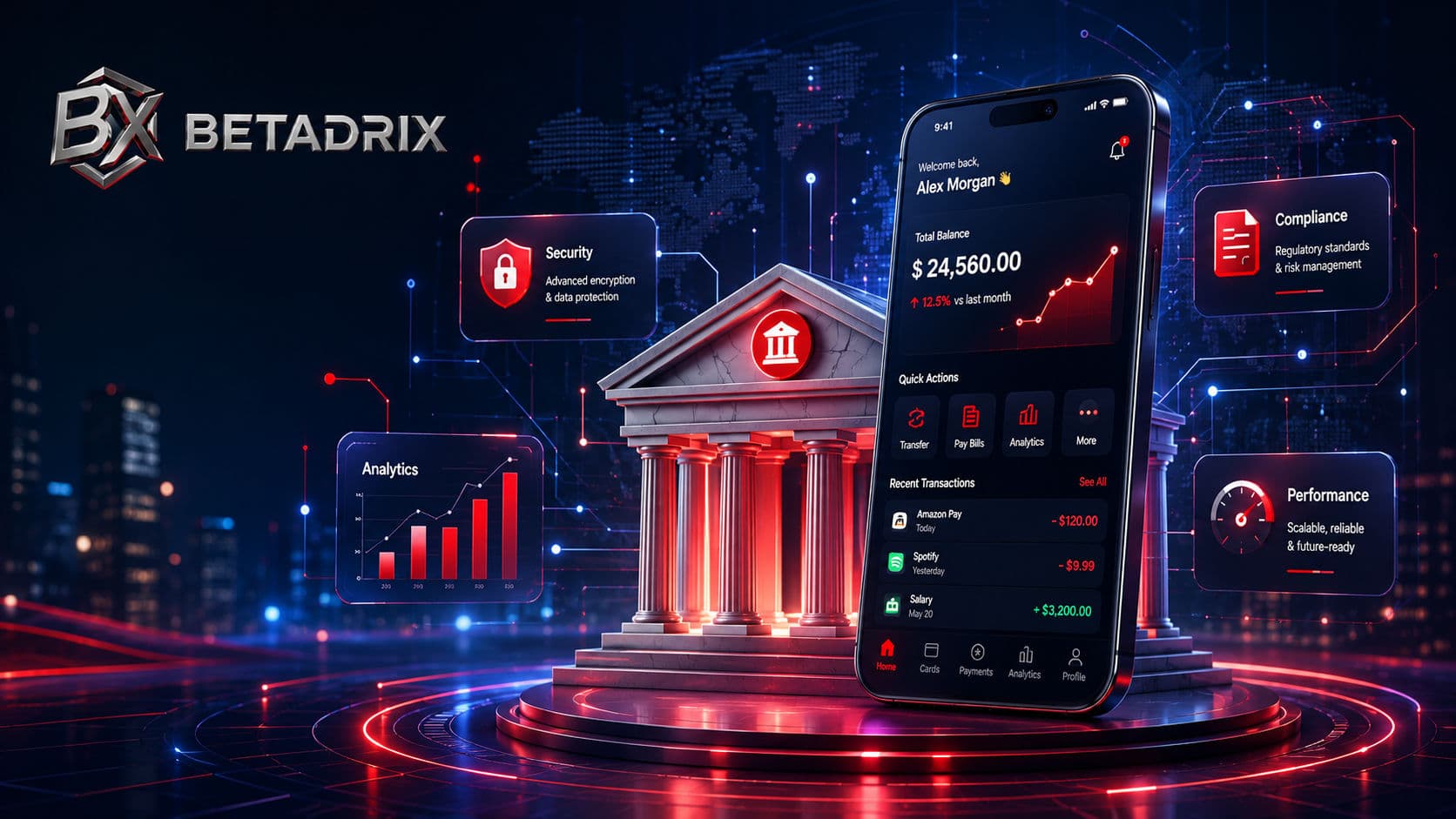
Comprehensive guide to mobile banking app development — architecture, security, compliance, tech stack, and costs. Written by Betadrix, a leading banking app development company.
What this guide covers: Everything you need to know about mobile banking app development in 2026 — from architecture patterns and security frameworks to compliance requirements and cost estimates. Written for CTOs, product managers, and engineering teams at banks and fintech startups. If you need a banking app development company to implement these solutions, Betadrix provides end-to-end banking software development services.
What Is Mobile Banking App Development?
Mobile banking app development is the process of designing, building, and deploying secure financial applications that allow users to manage accounts, transfer funds, pay bills, and access financial services from their smartphones. In 2026, this has evolved far beyond simple balance-checking apps — modern mobile banking platforms incorporate AI-driven personalization, real-time fraud detection, biometric authentication, and open banking integrations.
As a banking app development company, Betadrix has found that the most successful mobile banking applications share three characteristics: sub-second response times, bank-grade security, and intuitive user experiences that reduce support ticket volume by 60% or more.
Types of Mobile Banking Applications in 2026
Retail Banking Apps
The most common type — retail banking apps that handle everyday transactions. Features include account aggregation, fund transfers, bill payments, mobile check deposit, analytics, and savings goal tracking. These apps must handle peak traffic during salary days and festival seasons without performance degradation.
Corporate & Business Banking Apps
Enterprise-grade platforms designed for SMEs and corporations. These apps include multi-user approval workflows, bulk payment processing, payroll management, trade finance modules, and treasury dashboards. Security is paramount — these apps often handle transactions in the millions per batch.
Neobank & Digital-First Apps
Challenger banks built without legacy infrastructure constraints. These apps prioritize user experience rapid feature iteration, and AI-driven financial coaching. They typically launch with a narrow feature set and expand based on user behavior analytics.
Digital Wallet & Payment Apps
Contactless payment solutions with QR code scanning, NFC integration, P2P transfers, and multi-currency support. These apps require PCI-DSS Level 1 compliance and integration with Visa, Mastercard, UPI, and regional payment networks.
Investment & Wealth Management Apps
Portfolio management platforms with real-time market data, stock trading, mutual fund comparisons, research reports, and robo-advisory modules. These apps use machine learning for risk profiling and predictive analytics.
Mobile Banking App Architecture Patterns
Monolithic vs Microservices
Legacy banking apps often run on monolithic architectures — single, tightly-coupled codebases that are difficult to scale and update. Modern digital banking software development favors microservices: independent services for authentication, transactions, notifications, and analytics that can be deployed, scaled, and updated separately.
At Betadrix, we use microservices architecture for enterprise mobile banking software, enabling independent scaling of high-traffic services (like payment processing) without over-provisioning low-traffic modules (like admin dashboards).
Event-Driven Architecture
Banking is inherently event-driven — every transaction, login, and alert is an event. We implement Apache Kafka as the central nervous system of our banking platforms, streaming events between services in real-time. This enables:
- Real-time fraud detection across all channels
- Instant push notifications for transactions
- Audit logging that captures every system interaction
- Asynchronous processing that keeps the app responsive under load
API-First Design
Modern banking apps expose every capability through APIs — not just for the mobile app, but for third-party integrations, partner portals, and open banking compliance. We design REST and GraphQL APIs with strict versioning, rate limiting, and comprehensive documentation from day one.
Technology Stack for Mobile Banking Apps
Mobile Development Frameworks
| Technology | Best For | Banking Use Case |
|---|---|---|
| React Native | Cross-platform iOS/Android | Retail banking apps with native-like performance, shared codebase for faster updates |
| Flutter | Cross-platform with custom UI | Neobank apps requiring highly customized interfaces and rapid MVP development |
| Swift (iOS) | Native iOS performance | High-frequency trading apps, apps requiring deep iOS integration (Apple Pay, Wallet) |
| Kotlin (Android) | Native Android performance | Apps requiring deep Android integration (NFC, biometric APIs, background services) |
Backend & API Layer
| Technology | Role |
|---|---|
| Node.js | High-concurrency API gateways, real-time WebSocket connections for live transaction updates |
| Python | ML model serving for fraud detection, credit scoring, and recommendation engines |
| PostgreSQL | ACID-compliant transaction ledgers, audit trails, user account data |
| Redis | Session management, rate limiting, OTP caching, feature flags |
| Apache Kafka | Real-time transaction event streaming, inter-service communication, audit logging |
Cloud & DevOps
| Technology | Role |
|---|---|
| AWS / Azure | SOC 2 compliant infrastructure, auto-scaling compute, managed databases, disaster recovery |
| Docker | Containerized microservices for consistent deployments across environments |
| Kubernetes | Orchestration for zero-downtime deployments, auto-scaling, and multi-region redundancy |
| Grafana / Prometheus | Real-time monitoring of app performance, API latency, error rates, and security events |
Security & Compliance Framework
Security is not a feature — it is the foundation. Every mobile banking app we build includes:
Authentication & Authorization
- Multi-Factor Authentication (MFA): Biometrics (fingerprint, face recognition), PIN, and device binding
- Behavioral Biometrics: Keystroke dynamics, swipe patterns, and device tilt analysis to detect account takeover
- Device Fingerprinting: Each device is uniquely identified; new devices trigger additional verification
- Certificate Pinning: Prevents man-in-the-middle attacks by validating server certificates at the app level
Data Protection
- AES-256 Encryption: All data at rest — local storage, databases, backups
- TLS 1.3: All network communication encrypted in transit
- Tokenization: Card numbers replaced with non-sensitive tokens; actual data stored in HSM-backed vaults
- Secure Enclaves: Sensitive operations (cryptographic key generation, biometric matching) run in hardware-isolated environments
Regulatory Compliance
- PCI-DSS Level 1: Required for any app processing card payments
- SOC 2 Type II: Audited controls for security, availability, and confidentiality
- GDPR / PDPL: Data minimization, right to erasure, cross-border transfer safeguards
- PSD2 / Open Banking: Secure API standards for third-party provider integration
- RBI / ECB / UAE Central Bank: Jurisdiction-specific guidelines for data localization and reporting
Key Features of Modern Mobile Banking Apps
Real-Time Transaction Processing
Users expect instant confirmation for every transfer, payment, and deposit. We achieve this through event-driven architectures where transaction events are processed and acknowledged in under 200 milliseconds. Push notifications confirm the action before the user leaves the screen.
AI-Powered Personalization
Modern banking apps use machine learning to analyze spending patterns and deliver personalized insights: "You spent 30% more on dining this month," or "Based on your savings rate, you could afford a home loan of $X." We implement these using Python-based ML pipelines with RAG architectures for explainable recommendations.
Conversational AI & Chatbots
Banking chatbots have moved beyond simple FAQ bots. Modern implementations use large language models with retrieval-augmented generation (RAG) to answer complex queries about fees, loan terms, and investment options — grounded in the bank's actual policy documents. See our Generative AI in Banking guide for the full technical architecture.
Biometric Authentication
Passwords are obsolete for mobile banking. We implement Face ID, Touch ID, and Android Biometric APIs as primary authentication methods, with PIN fallback for device compatibility. Behavioral biometrics add a passive security layer that operates without user friction.
Offline Functionality
Users in areas with poor connectivity still need basic functionality. We implement offline transaction queuing — users can initiate transfers, bill payments, and check deposits offline; the app syncs when connectivity returns. Conflict resolution algorithms handle edge cases where the account state changed while offline.
Open Banking & Account Aggregation
Users want to see all their accounts in one place. We integrate with Open Banking APIs to pull data from external banks, credit cards, and investment accounts. This requires OAuth 2.0 with PKCE, consent management, and secure token storage.
Mobile Banking App Development Process
Phase 1: Discovery & Compliance Planning (2–3 weeks)
- Regulatory requirement analysis (PCI-DSS, GDPR, PSD2, local banking regulations)
- Competitive analysis of top banking apps in your target market
- User research and persona development
- Technical feasibility assessment and architecture planning
- Security threat modeling (OWASP Mobile Top 10)
Phase 2: UX/UI Design & Prototyping (3–4 weeks)
- User journey mapping for core flows (onboarding, transfer, bill pay, support)
- Wireframing and interactive prototyping in Figma
- Accessibility compliance (WCAG 2.1 AA for web portals)
- Design system creation for consistent branding across iOS and Android
- Usability testing with target user groups
Phase 3: Development & Integration (8–12 weeks)
- Mobile app development (React Native, Flutter, or native)
- Backend API development (Node.js, Python)
- Database design and implementation (PostgreSQL, Redis)
- Core banking system integration via middleware APIs
- Payment gateway integration (Stripe, Razorpay, regional providers)
- Third-party service integration (KYC providers, credit bureaus, push notification services)
Phase 4: Security Hardening & Testing (3–4 weeks)
- Penetration testing (OWASP ZAP, Burp Suite, custom exploit development)
- Static and dynamic code analysis (SonarQube, Checkmarx)
- Load testing (simulating 10x expected peak traffic)
- Compliance audit preparation (PCI-DSS SAQ, SOC 2 evidence collection)
- Device compatibility testing across 50+ device models and OS versions
Phase 5: Deployment & Post-Launch (Ongoing)
- App Store and Play Store submission with compliance documentation
- Blue-green deployment on Kubernetes for zero downtime
- Real-time monitoring and alerting (Grafana, Prometheus, PagerDuty)
- Feature flag management for gradual rollouts
- A/B testing for UI/UX optimization
- Regular security patches and dependency updates
Cost Breakdown for Mobile Banking App Development
| Component | MVP (10–14 weeks) | Enterprise (4–6 months) |
|---|---|---|
| Discovery & Design | $5,000 – $10,000 | $15,000 – $30,000 |
| Mobile App Development | $20,000 – $50,000 | $60,000 – $150,000 |
| Backend & API Development | $15,000 – $35,000 | $50,000 – $120,000 |
| Security & Compliance | $5,000 – $10,000 | $20,000 – $50,000 |
| QA & Testing | $3,000 – $8,000 | $15,000 – $40,000 |
| DevOps & Infrastructure | $2,000 – $5,000 | $10,000 – $30,000 |
| Total | $40,000 – $120,000 | $170,000 – $420,000 |
Note: Costs vary based on feature complexity, compliance requirements, legacy system integration needs, and team location. Contact Betadrix for a detailed estimate tailored to your project.
Common Challenges in Mobile Banking Development
Legacy System Integration
Most banks run on core banking systems that are decades old — COBOL-based mainframes, rigid data schemas, and limited API capabilities. We solve this by building middleware layers that translate between modern REST/GraphQL APIs and legacy protocols (ISO 8583, SOAP, flat files). Apache Kafka acts as the bridge, enabling real-time data sync without modifying the core system.
Balancing Security with User Experience
Every additional security step increases friction and abandonment rates. We implement risk-based authentication — low-risk actions (checking balance) require minimal friction, while high-risk actions (wire transfers) trigger stepped-up authentication. Behavioral biometrics provide passive security that users never notice.
Regulatory Fragmentation
A banking app serving India, UAE, and Germany must comply with RBI guidelines, UAE Central Bank regulations, and GDPR simultaneously. We architect apps with pluggable compliance modules — each jurisdiction's requirements are implemented as independent services that can be enabled per deployment region.
Scaling for Peak Loads
Banking apps experience massive traffic spikes — salary days, tax deadlines, festival shopping seasons. We design auto-scaling Kubernetes clusters that scale from 10 to 1,000 pods in under 60 seconds. Database read replicas and Redis caching layers handle the read-heavy traffic patterns.
Why Choose Betadrix for Mobile Banking App Development?
Betadrix is a banking app development company with deep expertise in financial technology. Our teams have built mobile banking platforms for institutions across India, UAE, Germany, and the UK — handling millions of daily transactions with 99.99% uptime.
- Full-Stack FinTech Teams: React Native developers, Flutter engineers, Node.js backend specialists, and Python ML engineers under one engagement
- Compliance-First Approach: PCI-DSS, SOC 2, and GDPR built into architecture from day one
- Legacy Integration Expertise: We connect modern mobile apps to Temenos, Finacle, T24, and custom legacy systems
- AI-Ready Infrastructure: Pre-built ML pipelines for fraud detection, credit scoring, and conversational AI
- 48-Hour Onboarding: Dedicated developers ready to start within two business days
Explore our Banking Software Development Services or Hire Dedicated Banking Developers to accelerate your project.
Frequently Asked Questions
How long does mobile banking app development take?
An MVP with core features (account management, transfers, bill pay) takes 10–14 weeks. A full-featured enterprise app with AI, legacy integration, and multi-jurisdiction compliance requires 4–6 months.
What is the best tech stack for mobile banking apps?
For cross-platform efficiency, we recommend React Native or Flutter for the mobile layer, Node.js for APIs, PostgreSQL for data, Redis for caching, and Apache Kafka for event streaming. Native Swift/Kotlin is preferred for apps requiring maximum performance or deep OS integration.
How do you ensure mobile banking app security?
We implement multi-factor authentication, behavioral biometrics, certificate pinning, AES-256 encryption, TLS 1.3, tokenized payment data, and regular penetration testing. All apps undergo OWASP Mobile Top 10 assessment before release.
Can you integrate with our existing core banking system?
Yes. We build middleware API layers and use message brokers to sync with legacy core banking systems including Temenos, Finacle, T24, and custom-built platforms — without disrupting live operations.
Do you offer dedicated mobile banking developers for hire?
Yes. You can hire dedicated developers including mobile banking specialists, backend engineers, and AI/ML experts to augment your internal team. Onboarding takes 48 hours.
Related Resources
- Banking Software Development Industry Page — Betadrix's complete banking & fintech capabilities
- Banking Software Development Services — Technical service details and engagement models
- Generative AI in Banking — Architecture guide for AI-powered banking solutions
- Dockerizing Node.js & Python Microservices — Security best practices for banking deployments
- Kubernetes Multi-Cluster Management — Scaling strategies for high-availability banking infrastructure
Related Services from Betadrix
At Betadrix, we specialize in delivering enterprise-grade solutions. Explore our related services to see how we can assist with your technology goals: Full Stack Development Company | Betadrix, Content Management System Development Company, Best eCommerce App Development Company | Betadrix, Shopify eCommerce Development Services | Betadrix, Magento eCommerce Development Company | Betadrix, Progressive Web App Development Company | Betadrix, AI Agent Development Services | Custom Autonomous Agents, SFU & Media Server Deployment, Banking Software Development, WebRTC Mobile App Development, Casino Sportsbook Development Services | Betadrix.
Hire Dedicated Banking Developers
Need dedicated mobile banking developers? Betadrix provides vetted React Native, Flutter, Node.js, and Python engineers ready to join your team within 48 hours.
Banking Software Development Services
Explore our complete banking software development services including mobile apps, digital banking platforms, and AI-powered fintech solutions.
Related Services
?Frequently Asked Questions
How long does mobile banking app development take?
What is the best tech stack for mobile banking apps?
How do you ensure mobile banking app security?
Can you integrate with existing core banking systems?

Shivam Swami
Founder & CEOShivam Swami is the Founder & CEO of Betadrix, driving technical vision and AI innovation. He specializes in distributed systems, enterprise generative AI, and full-cycle product engineering for fintech, healthcare, and iGaming platforms.
Recognized & Verified Excellence
Trusted by Technical Leaders Worldwide
Verified ratings across global enterprise review platforms for custom software, AI development, and cloud engineering.
More Articles in Technology


Related services built to solve your specific challenges




Watch.
Learn.
Grow.
Discover how our engineered solutions transform industries and propel client operations forward.


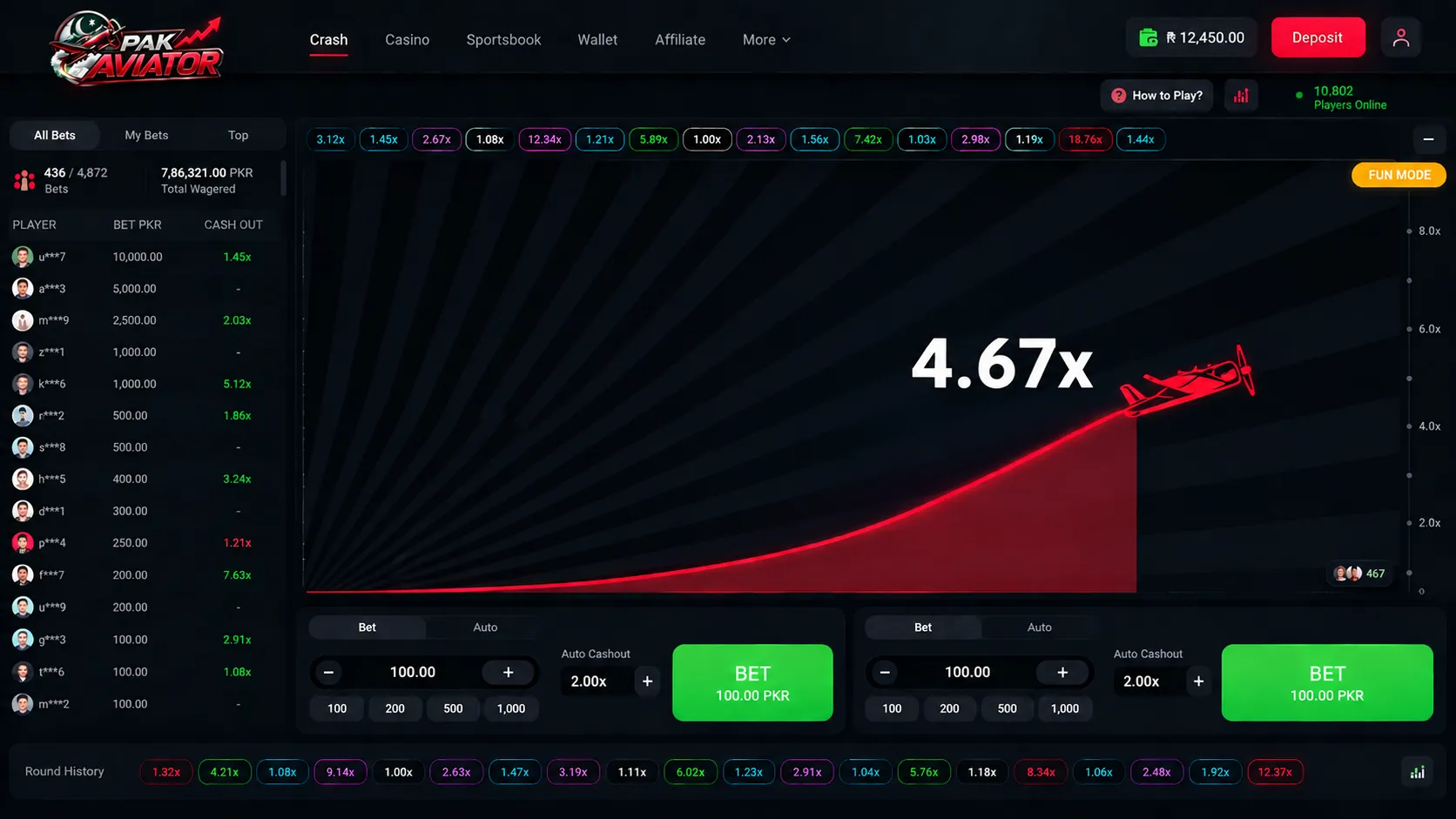
Owning the Game, Not Renting It: Custom Crash Game Development for a Lahore-Based iGaming Operator
READ CASE STUDYTechnologies & Frameworks Powering This Service





Hire Specialized Developers For Your Service Project

Python Developers
Pre-vetted senior Python Developers ready to deploy into your existing architecture in 3-7 days.
Flutter Developers
Pre-vetted senior Flutter Developers ready to deploy into your existing architecture in 3-7 days.

Nodejs Developers
Pre-vetted senior Nodejs Developers ready to deploy into your existing architecture in 3-7 days.
React Developers
Pre-vetted senior React Developers ready to deploy into your existing architecture in 3-7 days.
What Our Clients Say
“Mobile app development and cloud migration were handled smoothly. Strong technical skills, clear communication, and dependable post-launch support stood out throughout the engagement.”

Sarah Mitchell
Director of Operations, HealthFirst Clinics
Have a Project in Mind?
Let's Build It Together.
Connect directly with our senior software architects and technical leads. We evaluate your requirements and deliver an actionable technical proposal within 24 hours.
Strict NDA Protection
Your intellectual property and technical specs remain 100% confidential.
24-Hour Response Guarantee
Guaranteed evaluation and scoping reply from an engineering manager.
Zero Obligation Estimate
Get accurate cost breakdowns and tech stack recommendations free of charge.
Request Free Technical Consultation
Let's build something serious.
Diagnose your system architecture, budget ranges, and roadmap parameters with an expert.
Scoping Diagnostic
Analyze your workflows in 60 seconds. A senior AI architect reviews every parameter personally.
 4.9/5.0 Partner
 4.8/5.0 Leader
 4.9/5.0 Rated
 4.8/5.0 Excellent
Not sure where AI actually moves the needle for you?
Answer a few brief questions. We will deliver a highly concrete scoping plan within 24 hours including:
- Recommendations on automation use-cases and MVP components
- Calculations on expected ROI and engineering timelines
- A structural roadmap to make your legacy stack AI-native