
Generative AI in Banking: Use Cases, Architecture & Implementation Guide

Founder & CEO
 22 min read
A practical guide to generative AI in banking — fraud detection, credit scoring, compliance automation, and customer support. Covers architecture patterns, technology stacks, and implementation roadmaps.
What this guide covers: How generative AI is being applied in banking today, what architecture patterns work in production, and what banks should consider before implementation. This article is written for technology leaders, product managers, and engineering teams evaluating AI adoption in financial services.
What Is Generative AI in Banking?
Generative AI refers to systems that can create new content — text, code, synthetic data, or structured outputs — by learning patterns from existing data. In banking, this capability is being applied to tasks that previously required large teams of analysts, compliance officers, and customer support agents.
Unlike traditional automation, which follows rigid if-then rules, generative AI can interpret context, summarize complex documents, generate human-like responses, and adapt to inputs it has not seen before. This makes it useful for areas where the volume of data or variation in inputs is too large for manual processing.
The distinction between traditional machine learning and generative AI matters for banking. Traditional ML models are typically trained to classify or predict — for example, flagging a transaction as fraudulent. Generative AI goes further by producing new outputs: drafting a compliance report, explaining a loan denial to a customer in plain language, or generating a synthetic dataset that mirrors real transaction patterns without exposing customer identities.
Seven Practical Use Cases for Generative AI in Banking
1. Fraud Detection and Transaction Monitoring
Banks have used machine learning for fraud detection for years. Generative AI extends this by analyzing broader behavioral context — not just whether a transaction matches a rule, but whether the sequence of actions, device patterns, and geographic signals align with a customer's historical behavior.
How it works in practice: A transformer-based model processes sequences of a customer's transactions over time, learning what "normal" looks like for that individual. When a new transaction deviates — for example, a sudden change in spending velocity, an unusual merchant category, or a geographic jump that doesn't match travel patterns — the system generates a risk score. This score can trigger automated responses ranging from a soft block requiring SMS verification to an immediate hold pending manual review.
Technology typically used:
- Python with TensorFlow or PyTorch for model training
- PostgreSQL for structured transaction ledger storage
- Redis for low-latency feature caching
- Node.js microservices for real-time inference APIs
- Apache Kafka for streaming transaction events
Implementation consideration: Fraud models must retrain frequently because fraud patterns evolve. Banks typically need automated MLOps pipelines that can deploy updated models without downtime. The model must also explain its decisions — regulators and internal risk teams need to understand why a transaction was flagged.
2. Credit Scoring and Risk Assessment
Traditional credit scoring relies on credit bureau reports, income verification, and debt-to-income ratios. This works well for customers with established credit histories but excludes large populations — gig workers, immigrants, young adults — who lack traditional credit files.
Generative AI enables alternative credit scoring by analyzing non-traditional signals: cash flow patterns from bank accounts, mobile payment history, e-commerce behavior, and even digital footprint signals. The key challenge is doing this without violating privacy regulations.
Privacy-preserving approaches:
- Federated learning: Models train across multiple banks without centralizing raw customer data. Each bank trains locally, shares only model weight updates, and the global model improves without any single institution seeing another's data.
- Synthetic data generation: Generative models create artificial datasets that preserve the statistical properties of real data — correlations, distributions, edge cases — without containing any actual customer information. This synthetic data can be used for model training and vendor testing without privacy risk.
Technology typically used:
- Gradient-boosted decision trees (XGBoost, LightGBM) for structured tabular data
- Transformer encoders for unstructured document analysis (bank statements, invoices)
- Docker and Kubernetes for scalable model serving
3. Conversational AI and Customer Support
Banking call centers handle repetitive queries: balance checks, transaction disputes, card blocking, loan status updates. Early chatbots followed rigid decision trees and frustrated customers. Modern generative AI systems can understand natural language, access real-time account data, and handle multi-turn conversations.
What modern banking AI agents can do:
- Access real-time account data through secure API integrations
- Execute low-risk transactions (card freezes, bill payments) with multi-factor authentication
- Explain financial products in language matched to the customer's literacy level
- Detect customer frustration through sentiment analysis and escalate to human agents with full conversation context
Architecture pattern: Retrieval-Augmented Generation (RAG)
RAG is the dominant architecture for banking conversational AI because it grounds the model's responses in verified source documents. Instead of relying solely on the model's training data — which may be outdated or incorrect — the system retrieves relevant policy documents, product terms, and customer-specific data before generating a response.
How RAG works in a banking context:
- Customer asks a question: "What are the fees for wire transfers to Germany?"
- The system searches a vector database containing the bank's current fee schedule, terms of service, and recent policy updates
- The retrieved documents are added to the prompt as context
- The LLM generates an answer based only on the retrieved information
- The response is formatted and delivered to the customer
This approach significantly reduces the risk of incorrect or "hallucinated" information — critical in banking where wrong answers about fees, interest rates, or compliance requirements carry legal and reputational risk.
Technology typically used:
- OpenAI GPT-4, Anthropic Claude, or open-source models like LLaMA
- Vector databases (Pinecone, Weaviate, or pgvector in PostgreSQL)
- LangChain or LlamaIndex for orchestration
- Redis for conversation state management
4. Regulatory Compliance and Report Generation
Compliance is one of the most labor-intensive functions in banking. Teams spend thousands of hours annually on KYC verification, AML monitoring, regulatory reporting, and policy review. Generative AI can automate the most repetitive aspects while keeping humans in control of high-stakes decisions.
Specific applications:
- KYC document analysis: AI reads and extracts data from passports, utility bills, and corporate registration documents, then verifies the extracted information against government databases. Human reviewers confirm the final decision.
- AML transaction monitoring: LLMs analyze suspicious activity reports and generate narrative summaries that compliance officers review and edit. The AI handles the drafting; the human validates and submits.
- Regulatory report drafting: GenAI generates first drafts of compliance reports from structured data inputs. Human experts review, correct, and finalize before submission.
- Policy gap analysis: AI compares internal policies against new regulations and flags sections that may need updates. Legal and compliance teams review the flagged items.
Important limitation: Generative AI can support compliance workflows, but it does not make a bank compliant. Compliance depends on the specific implementation, internal controls, jurisdiction, and regulatory review. AI is a tool that assists human compliance professionals — it does not replace them.
5. Algorithmic Trading and Market Intelligence
Quantitative trading has long used statistical models. Generative AI adds the ability to process and interpret unstructured data — earnings call transcripts, SEC filings, news articles, social media sentiment — at scale.
Applications include:
- Sentiment analysis of financial news and executive communications
- Automated summarization of lengthy regulatory filings and research reports
- Multi-language document translation for cross-border investment analysis
- Scenario generation for stress testing — creating synthetic market conditions that test portfolio resilience
Caution: Using generative AI for actual trade execution is high-risk. Most banks currently use GenAI for research and analysis, with human traders making final execution decisions. The technology stack typically involves Python pipelines, Kafka for real-time data streaming, and cloud-based model hosting.
6. Personalized Financial Recommendations
Banks have always tried to cross-sell products. Generative AI enables a more nuanced approach by analyzing a customer's complete financial picture — income patterns, spending categories, savings behavior, life events — and generating tailored recommendations that feel consultative rather than promotional.
Examples:
- Investment portfolio explanations adapted to the customer's risk tolerance and financial literacy
- Dynamic savings projections with behavioral nudges
- Mortgage or loan product comparisons with total-cost-of-ownership breakdowns
- Proactive financial health alerts with specific, actionable advice
The key difference from traditional recommendation engines is the natural language layer. Instead of showing a product banner, the AI can explain *why* a product fits the customer's situation and answer follow-up questions.
7. Synthetic Data for Testing and Development
Banks cannot use production customer data in development, testing, or vendor demonstration environments due to privacy regulations. Synthetic data generation creates artificial datasets that maintain the statistical properties of real data — correlations, distributions, rare edge cases — without containing any actual customer information.
Use cases:
- Safe AI model training without exposing real customer records
- Realistic load testing with synthetic transaction volumes
- Third-party vendor integration testing without sharing real account data
- Regulatory sandbox experimentation
Technology Stack for Production Banking AI
Building production-ready generative AI systems for banking requires selecting technologies that balance performance, security, auditability, and regulatory considerations.
Machine Learning and AI Frameworks
| Technology | Role in Banking AI |
|---|---|
| Python | Primary language for ML model development, data preprocessing, and API scripting. Ecosystem includes TensorFlow, PyTorch, scikit-learn, and specialized libraries for financial modeling. |
| TensorFlow / PyTorch | Deep learning frameworks for training transformer models, fraud detection networks, and NLP pipelines. PyTorch is increasingly preferred for research-to-production workflows. |
| LangChain / LlamaIndex | Frameworks for building RAG pipelines, agent workflows, and document retrieval systems. LangChain handles chaining LLM calls with external tools; LlamaIndex specializes in connecting LLMs to private data sources. |
| XGBoost / LightGBM | Gradient-boosted decision trees for structured data tasks like credit scoring and risk modeling. These models are interpretable — regulators can inspect feature importance — and perform well on tabular financial data. |
Backend and Data Infrastructure
| Technology | Role in Banking AI |
|---|---|
| Node.js | Event-driven runtime for real-time API services, webhook handlers, and microservices. Well-suited for high-concurrency inference endpoints that must serve thousands of requests per second. |
| PostgreSQL | Relational database for transaction ledgers, audit logs, and structured financial data. Supports ACID guarantees essential for financial records. pgvector extension enables vector storage for RAG systems. |
| Redis | In-memory data store for session caching, rate limiting, and feature stores. Provides sub-millisecond response times for frequently accessed data in fraud detection and recommendation systems. |
| Apache Kafka | Distributed event streaming platform for ingesting high-volume transaction logs, market data feeds, and user interaction events. Enables real-time processing pipelines that feed AI models with fresh data. |
| MongoDB | Document database for unstructured data storage, compliance logs with flexible schemas, and conversation history in chatbot systems. |
Cloud and DevOps
| Technology | Role in Banking AI |
|---|---|
| AWS / Azure / GCP | Cloud platforms providing managed ML services (SageMaker, Azure ML, Vertex AI), GPU compute for model training, and secure storage. Banks often require private cloud or hybrid deployments for sensitive data. |
| Docker | Containerization for reproducible model serving environments. Ensures that a model trained in development runs identically in staging and production. |
| Kubernetes | Orchestration for auto-scaling model inference workloads, zero-downtime deployments, and multi-region redundancy. Essential for systems that must remain available during peak transaction periods. |
| Grafana / Prometheus | Monitoring and observability for model performance, inference latency, data drift, and system health. Banks need audit trails showing when models were deployed, what versions are running, and how performance changes over time. |
Frontend and User Experience
| Technology | Role in Banking AI |
|---|---|
| React Native | Cross-platform mobile framework for building iOS and Android banking apps with native performance. Used for AI-powered mobile interfaces like voice assistants and smart search. |
| Next.js | React framework with server-side rendering for SEO-critical marketing sites, customer portals, and admin dashboards. Improves initial load times and search engine visibility. |
| React.js | Component library for interactive data visualizations, trading dashboards, and real-time analytics interfaces that display AI-generated insights. |
| Flutter | Single-codebase mobile framework for rapid MVP development. Useful for fintech startups building AI-powered banking apps on limited budgets. |
Implementation Roadmap for Banking AI
Deploying generative AI in a banking environment requires a phased approach. Rushing to production without proper governance, testing, and integration can create compliance exposure and operational risk.
Phase 1: Discovery and Feasibility (Weeks 1–4)
Before writing code, understand what problem the AI will solve, what data is available, and what constraints apply.
- Problem definition: Which manual process is most costly or error-prone? Which customer pain point is most frequent? Start with one clear use case rather than trying to apply AI everywhere.
- Data audit: What data exists? Where is it stored? What quality issues exist? Is it labeled? Banks often have decades of transaction data, but it may be fragmented across legacy systems.
- Compliance review: Which regulations apply? GDPR in Europe, PDPL in the UAE, RBI guidelines in India, CCPA in California. Each jurisdiction has different requirements for automated decision-making, data retention, and customer notification.
- Technical feasibility: Can the problem be solved with existing models, or does it require custom training? What inference latency is acceptable? What uptime is required?
Deliverable: A feasibility report documenting the use case, data requirements, regulatory constraints, recommended architecture, and estimated timeline.
Phase 2: Data Engineering and Pipeline Construction (Weeks 5–10)
AI models are only as good as the data feeding them. This phase focuses on building reliable data pipelines.
- Data cleaning and normalization: Financial data is often messy — inconsistent formats, missing values, duplicate records. Cleaning must be automated and reproducible.
- Feature engineering: Creating the inputs that the model will use. In fraud detection, features might include rolling averages, velocity metrics, and behavioral deviations.
- Pipeline orchestration: Using tools like Apache Airflow or Prefect to schedule data extraction, transformation, and loading tasks.
- Privacy safeguards: Implementing data anonymization, differential privacy, or federated learning architectures before model training begins.
Phase 3: Model Development and Validation (Weeks 11–18)
This is where the actual AI work happens — but it is iterative, not linear.
- Baseline model: Start with a simple, interpretable model (logistic regression, decision tree) to establish a performance floor. This provides a benchmark against which more complex models are measured.
- Advanced modeling: Move to transformer-based models, gradient boosting, or neural networks as the complexity of the problem demands.
- Validation methodology: Use time-based train-test splits for financial data — random splits are misleading because financial patterns change over time. Backtest models against historical periods they have not seen.
- Interpretability: Banking regulators increasingly require explainable AI. Use SHAP values, LIME, or attention visualization to explain why a model made a specific prediction.
Parameter-efficient fine-tuning: When customizing LLMs for banking, full fine-tuning of billion-parameter models is computationally expensive. Techniques like LoRA (Low-Rank Adaptation) and QLoRA (quantized LoRA) allow models to be adapted with a small fraction of the compute, updating only low-rank matrices while keeping the base model frozen. This makes custom LLM deployment feasible for mid-size banks.
Phase 4: API Development and System Integration (Weeks 19–24)
Models deliver no value until they are connected to production systems.
- API wrapping: Exposing the model through REST or GraphQL endpoints with authentication, rate limiting, and request logging.
- Core banking integration: Connecting AI services to legacy core banking systems. This often requires middleware that translates between modern JSON APIs and legacy protocols (ISO 8583, SOAP, or even flat-file interfaces).
- Latency optimization: For real-time applications like fraud detection, inference must complete in under 100 milliseconds. This requires model quantization, caching, and edge deployment.
- Fallback mechanisms: If the AI service is unavailable, the system must degrade gracefully — for example, falling back to rule-based fraud detection or queuing requests for batch processing.
Phase 5: MLOps, Monitoring, and Governance (Ongoing)
Deploying the model is not the end — it is the beginning.
- Model drift detection: Financial behavior changes — during economic downturns, holidays, or regulatory shifts. Automated monitoring detects when model accuracy degrades and triggers retraining.
- A/B testing: New models should be tested against the production model on a small fraction of traffic before full rollout.
- Audit logging: Every AI decision must be logged with the input data, model version, output, and timestamp. Regulators may request these logs during examinations.
- Human-in-the-loop: For high-stakes decisions — loan denials, large transaction blocks, compliance alerts — the AI should recommend, not decide. Human reviewers validate or override.
Challenges and Risk Mitigation
Data Privacy and Regulatory Compliance
Banks operate under strict data protection frameworks. Generative AI systems must be designed with privacy as a foundational requirement, not an afterthought.
Mitigation strategies:
- Data minimization: Collect and process only the data necessary for the specific AI task. Do not feed customer conversations into general model training datasets.
- On-premise or private cloud deployment: For highly sensitive models, deploy within the bank's own infrastructure rather than sending data to third-party APIs.
- Audit trails: Log every AI decision with full context. PostgreSQL append-only tables or immutable blockchain-based logs can provide tamper-resistant records.
- Consent management: Ensure customers have consented to AI-driven processing where required by regulation. Provide opt-out mechanisms where feasible.
Important clarification: Generative AI can be designed to support applicable regulatory and data-protection requirements, but the software itself does not make a bank compliant. Compliance depends on the specific implementation, internal controls, jurisdiction, and regulatory review.
Model Hallucination and Accuracy
Large language models can generate plausible-sounding but incorrect information. In banking, a wrong answer about loan terms, interest rates, or compliance requirements carries legal and reputational risk.
Mitigation strategies:
- RAG grounding: Tie every generated response to verified source documents. The AI should cite its sources.
- Confidence thresholds: Low-confidence predictions should trigger human review rather than automatic action.
- Restricted domains: Limit the model's knowledge to the bank's approved knowledge base. Do not allow open-ended queries about topics outside the bank's scope.
- Continuous evaluation: Run automated test suites nightly against a "golden dataset" of known-correct answers. Flag degradation immediately.
Legacy System Integration
Most banks run on core banking systems that are decades old, with limited API capabilities and rigid data schemas. Connecting modern AI systems to these environments is often the hardest part of implementation.
Approaches:
- Middleware layers: Build abstraction layers that translate between modern REST APIs and legacy protocols without modifying the core system.
- Event-driven integration: Use Kafka or message queues to decouple AI services from core banking, allowing each system to evolve independently.
- Read replicas: For analytics and AI training, use read replicas of the core banking database rather than querying the production system directly.
Cost Management at Scale
LLM API costs scale with usage. A bank processing millions of customer interactions monthly can face significant inference costs.
Optimization strategies:
- Model distillation: Train smaller, faster models that replicate the behavior of large models for specific tasks. A 7B-parameter model fine-tuned for banking queries may match GPT-4 performance at a fraction of the cost.
- Caching: Cache frequent queries in Redis. "What are your wire transfer fees?" does not need to hit the LLM every time.
- Batch inference: For non-real-time tasks like report generation, process requests in batches during off-peak hours.
- Open-source deployment: Self-host models like LLaMA or Mistral to eliminate per-token API fees entirely. This requires GPU infrastructure but provides complete cost predictability.
Building a Banking AI System?
Betadrix works with financial institutions to design and deploy production-ready generative AI systems — from RAG-based customer support agents to real-time fraud detection pipelines. Our engineering teams have built AI platforms for banks in the UAE, Germany, and India, integrating with legacy core banking systems and modern cloud infrastructure.
Explore our AI development services → or hire dedicated AI engineers to augment your internal team.
How Betadrix Approaches Banking AI Implementation
At Betadrix, we combine AI engineering expertise with practical banking domain knowledge. Our teams have worked on:
- Conversational AI systems for customer support, using RAG architectures that ground responses in verified bank documentation
- Fraud detection pipelines that process real-time transaction streams and integrate with core banking ledgers
- Compliance automation tools that assist — not replace — human compliance officers with document analysis and report drafting
- Credit scoring models using alternative data sources and privacy-preserving techniques
Our technology capabilities span the full stack: Python ML pipelines, Node.js microservices, PostgreSQL and Redis data layers, Kafka event streaming, and Docker/Kubernetes deployment on AWS or private cloud.
We offer three engagement models:
- Dedicated teams: Embed senior AI engineers, backend developers, and DevOps specialists into your organization for long-term projects
- Fixed-scope delivery: Define a specific AI module — a chatbot, fraud detector, or compliance tool — and deliver it on a fixed timeline
- Staff augmentation: Add vetted Python ML engineers, Node.js developers, or React frontend engineers to your existing team, onboarded within 48 hours
Related Reading
Conclusion
Generative AI is moving from experimental to operational in banking. The institutions seeing the most value are not those deploying the most advanced models, but those integrating AI into specific, well-defined workflows with proper governance, monitoring, and human oversight.
The technology stack matters, but the implementation approach matters more. Start with a clear use case, validate with real data, integrate carefully with existing systems, and build governance from day one. The banks that succeed will treat AI as a capability that augments human expertise — not replaces it.
If you are evaluating generative AI for your banking or fintech platform, our team can help assess feasibility, design architecture, and build production systems. Contact us for a technical discovery session or explore our developer hiring options to scale your internal AI team.
Free Resource: Banking AI Implementation Checklist
A practical checklist covering data privacy requirements, model selection criteria, compliance considerations, integration architecture, and MLOps setup for banking environments.
No spam. Unsubscribe anytime.
Related Services from Betadrix
The financial sector's adoption of generative AI introduces new demands for real-time fraud detection, AI-driven credit scoring, and compliance automation. Betadrix provides specialized AI & machine learning development services to help banks and fintech firms build production-ready GenAI products, as well as custom enterprise software development services tailored to complex financial workflows.
Building a Banking AI System?
Betadrix works with financial institutions to design and deploy production-ready generative AI systems — from RAG-based customer support agents to real-time fraud detection pipelines.
Free Resource: Banking AI Implementation Checklist
A practical checklist covering data privacy requirements, model selection criteria, compliance considerations, integration architecture, and MLOps setup for banking environments.
Series Guide
AI & Intelligent Systems
Explore Categories
Browse More Technical Topics & Industry Guides
?Frequently Asked Questions
How is generative AI used in banking?
What technology stack is needed for banking AI?
How does RAG work in banking AI?
Can generative AI be used in regulated banking environments?
How long does it take to implement AI in a bank?
Shivam Swami
Founder & CEOShivam Swami is the Founder & CEO of Betadrix, driving technical vision and AI innovation. He specializes in distributed systems, enterprise generative AI, and full-cycle product engineering for fintech, healthcare, and iGaming platforms.
Build Your Custom Project
Connect with technical architects for scope and estimation.
More Articles in AI & Machine Learning





Related services built to solve your specific challenges




Watch.
Learn.
Grow.
Discover how our engineered solutions transform industries and propel client operations forward.


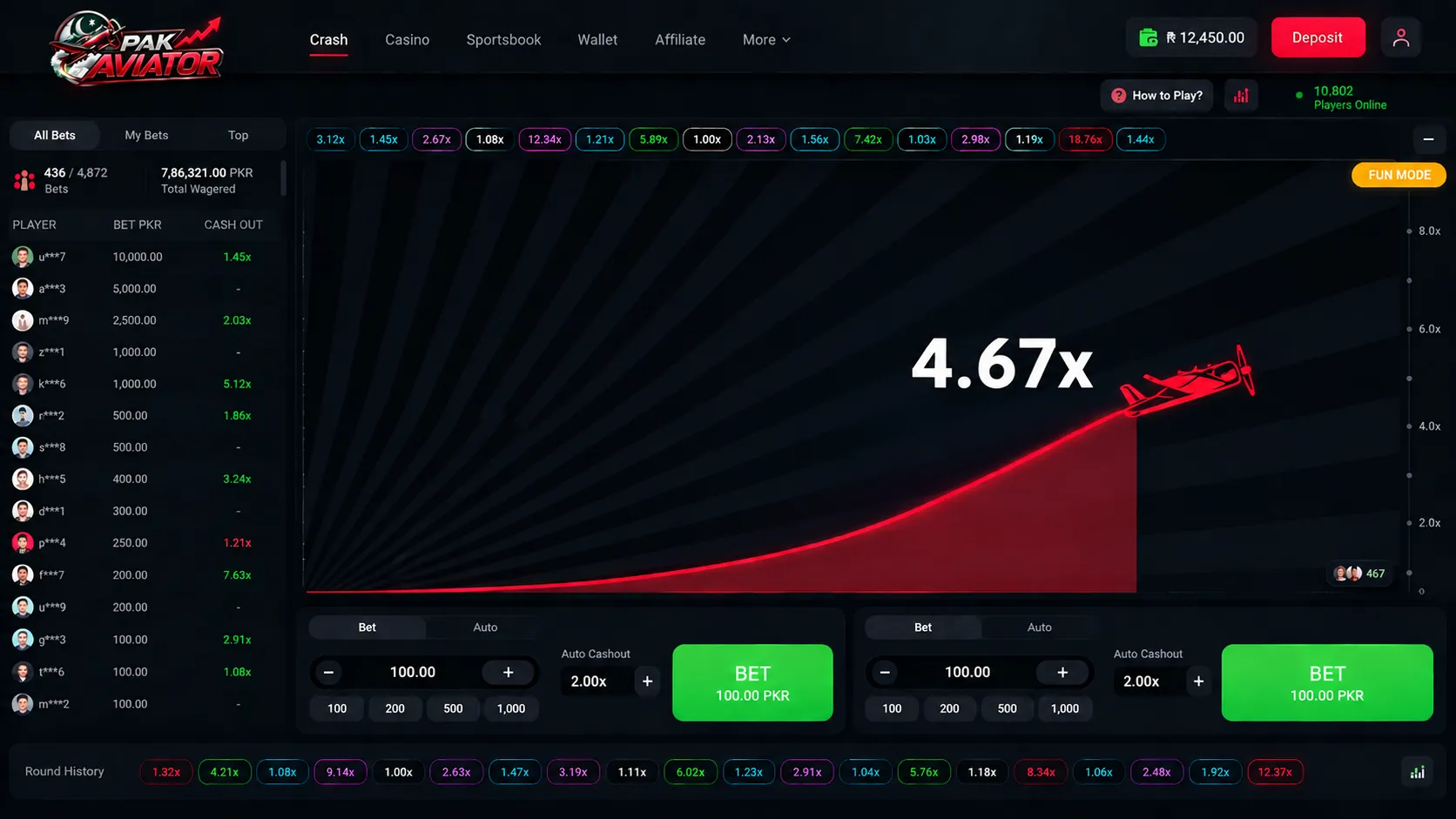
Owning the Game, Not Renting It: Custom Crash Game Development for a Lahore-Based iGaming Operator
READ CASE STUDYTechnologies & Frameworks Powering This Service

Model Context Protocol (MCP) Development | Enterprise AI Agent Infrastructure | Betadrix
ai



Node.js Development Services | High-Concurrency Event-Driven Architecture | Betadrix
backend

.NET Development Services | Enterprise C# & ASP.NET Core Engineering | Betadrix
backend
Hire Specialized Developers For Your Service Project

Flutter Developers
Pre-vetted senior Flutter Developers ready to deploy into your existing architecture in 3-7 days.

Python Developers
Pre-vetted senior Python Developers ready to deploy into your existing architecture in 3-7 days.
React Developers
Pre-vetted senior React Developers ready to deploy into your existing architecture in 3-7 days.

Nodejs Developers
Pre-vetted senior Nodejs Developers ready to deploy into your existing architecture in 3-7 days.
What Our Clients Say
“Mobile app development and cloud migration were handled smoothly. Strong technical skills, clear communication, and dependable post-launch support stood out throughout the engagement.”

Sarah Mitchell
Director of Operations, HealthFirst Clinics
Have a Project in Mind?
Let's Build It Together.
Connect directly with our senior software architects and technical leads. We evaluate your requirements and deliver an actionable technical proposal within 24 hours.
Strict NDA Protection
Your intellectual property and technical specs remain 100% confidential.
24-Hour Response Guarantee
Guaranteed evaluation and scoping reply from an engineering manager.
Zero Obligation Estimate
Get accurate cost breakdowns and tech stack recommendations free of charge.
Request Free Technical Consultation
Let's build something serious.
Diagnose your system architecture, budget ranges, and roadmap parameters with an expert.
Scoping Diagnostic
Analyze your workflows in 60 seconds. A senior AI architect reviews every parameter personally.
 4.9/5.0 Partner
 4.8/5.0 Leader
 4.9/5.0 Rated
 4.8/5.0 Excellent
Not sure where AI actually moves the needle for you?
Answer a few brief questions. We will deliver a highly concrete scoping plan within 24 hours including:
- Recommendations on automation use-cases and MVP components
- Calculations on expected ROI and engineering timelines
- A structural roadmap to make your legacy stack AI-native