
Casino Game Development Services — Certified, Scalable, Owned
Trusted by global enterprises
- 700+
- Projects Delivered
- 450+
- Clients Served
- 20+
- Countries
- 6+
- Years Experience
Real Benefits. Real Impact.
Why leading teams choose an owned Casino Game Development Services stack over generic alternatives.
Complete Code Ownership
When Betadrix delivers a casino game, you receive the complete source code — every module, every file, every migration script — with no strings attached. There is no annual licence fee, no revenue-share participation, and no contractual dependency on Betadrix to continue operating or distributing the game. You can maintain it internally, bring in a different engineering team, extend it with new features, or sell the game as an asset without requiring Betadrix's permission or involvement.
Why this matters commercially: most iGaming content suppliers recover their development cost and profit margin through ongoing revenue participation — typically 15–25% of GGR — rather than charging the full cost of development upfront. This makes initial acquisition cost look lower, but at meaningful player volumes the total payment over two to three years exceeds the cost of a custom build with outright ownership. A custom-built title with complete code ownership is a depreciating fixed asset; a licensed game is an operating expense that grows proportionally with every increase in your player base.
Practical consequence: when your player volume doubles, your content licensing costs double with it. Your ownership of a Betadrix-built game does not. This asymmetry is the primary reason operators who plan for long-term player growth prefer outright ownership over revenue-participation licensing, even when the upfront cost is higher. Scope your game build to get a cost comparison against your current or projected licensing expenses.
Certification-Ready by Design
Every game Betadrix builds is engineered to regulatory testing standards from the mathematics design stage — not audited for compliance after development is complete. This distinction eliminates the most expensive phase of most casino game development projects: discovering compliance gaps after the game is built and having to fix them under certification deadline pressure.
Why certification-first architecture matters: a game's RNG implementation, RTP accuracy, and responsible gambling control behaviour are not features that can be retrofitted without potentially invalidating other parts of the system. If a certification body's statistical test reveals that a game's actual RTP is outside the declared range, the cause is almost always in the symbol weighting table — a mathematics-layer problem that requires changes to the PAR sheet, the symbol weighting logic, and possibly the bonus contribution calculation, followed by a full QA cycle to verify the fix before re-submission. Building to certification requirements from the start means these issues are identified during mathematics sign-off, not during submission review.
What Betadrix includes as standard: PAR sheet production, statistical test documentation, source code escrow preparation, and technical responses to certification body queries are all included in the standard game delivery — not billed as a separate engagement after development. Operators targeting multiple jurisdictions receive a single game build with configurable compliance profiles, so extending to a new market is a configuration update rather than a certification from scratch. Review your certification requirements with our compliance engineers before development begins.
Proprietary Mathematics & Volatility Design
A casino game's mathematics — its RTP range, hit frequency, variance profile, and bonus contribution structure — determines how long players stay, how often they return, and how much they bet per session. These are the most commercially significant design decisions in any game build, and most content licensing arrangements take them away from you: when you license a game, you accept the supplier's mathematics as delivered, with no ability to adjust volatility or bonus frequency to match your player segment's preferences.
What custom mathematics enables: Betadrix starts every game engagement with a mathematics design session where your commercial and product teams define the player positioning — high-volatility for experienced bonus hunters, low-volatility for casual session players, mid-variance for general audience — and our mathematicians translate that positioning into a full specification: symbol weighting tables, payline configurations, bonus trigger probabilities, and maximum win potential. This specification is approved before development begins, so the finished game behaves as designed rather than being rebalanced after QA discovers it doesn't match expectations.
Business impact: a custom slot with a unique volatility profile and mechanics that are genuinely different from the licensed content in competitor lobbies retains players at higher rates, because players associate the game experience with your brand rather than recognising it as a title they have played elsewhere. In a market where most operators use the same aggregator catalogue, mathematics differentiation is the one competitive variable that cannot be copied. Define your game's mathematics with a design consultation.
Mobile-First Performance
Over 72% of active iGaming sessions now occur on mobile devices, a figure that continues to rise in every regulated market Betadrix serves. A game that renders at 60fps on a flagship smartphone but drops frames on a mid-range Android device — which represents the majority of the mobile market by volume — produces a player experience that feels broken rather than premium. Betadrix engineers mobile performance as a primary constraint, not an afterthought.
How we achieve it technically: PixiJS and WebGL deliver hardware-accelerated GPU rendering that offloads animation processing from the CPU to the graphics processor, preventing the main-thread congestion that causes frame drops during bonus sequences with high particle counts. The rendering target is consistent 60fps on a mid-range mobile device across the full game session, including cascading reel sequences, multi-level bonus triggers, and high-particle jackpot celebrations. HTML5 output means a single codebase covers iOS, Android, and desktop browsers without separate native builds or app-store submission cycles — which matters for time-to-market and ongoing maintenance cost.
Performance as a retention factor: casino game session length — and therefore GGR per player — is directly correlated with perceived game smoothness. A player who experiences frame drops or animation glitches on a bonus round is more likely to exit the session than one who experiences consistent performance. Mobile performance optimisation is not a technical nicety; it is a measurable driver of player lifetime value. Scope a mobile-first game build with our engineering team.
Aggregator & Platform Integration
A casino game's commercial success depends not only on its quality but on its distribution reach: a certified slot game that is only accessible on one operator's platform generates a fraction of the revenue of the same game distributed across dozens of operators through an aggregator network. Betadrix builds games with aggregator distribution in mind from day one, using a wallet API and launch token architecture that is compatible with major aggregator platforms including Relax Gaming, EveryMatrix, and Finnplay without requiring custom adapters for each.
What unified aggregator integration means in practice: the game server exposes a standardised wallet API — debit, credit, rollback, and balance check — and a game launch endpoint that generates authenticated session tokens. These are the two integration points that every aggregator requires; because Betadrix builds to a consistent API contract, connecting the game to an additional aggregator is a configuration and testing exercise rather than a re-engineering project. For operators adding aggregator content to an existing platform, the unified API layer normalises game launch and wallet calls across multiple providers, so adding a new content provider does not require a new integration — only connection credentials and a test suite run.
Business benefit: a game distributed through two aggregators reaches ten times more operators than one distributed through a single channel, at a marginal cost close to zero once the first integration is complete. For operators expanding their lobby, a unified aggregator integration reduces the cost of adding new content providers from engineering weeks to configuration hours. Scope your aggregator integration with our platform team.
Dedicated iGaming Team
Casino game development is a multi-discipline project: game mathematics, rendering engineering, backend server development, compliance architecture, QA, and certification documentation each require specialists who understand how their domain intersects with the others. A game built by a generalist team that treats the mathematics as a business requirement document and the compliance as a late-stage checklist will almost always produce certification delays, QA failures in edge cases, and post-launch support requests that require the original developers to explain undocumented decisions.
How Betadrix structures its teams: every casino game engagement includes a game mathematician who owns the PAR sheet through the entire project, backend engineers who understand the idempotency requirements of a real-money wallet API, frontend engineers who understand the frame-rate constraints of a PixiJS rendering pipeline on mobile hardware, a QA specialist who runs statistical verification against the mathematics specification rather than just functional regression testing, and a certification coordinator who maintains the submission documentation in parallel with development. This team stays assigned to your project through post-launch support — not rotated off after handoff.
Why continuity matters: casino games have long operational lifespans. A slot game may need a jurisdiction expansion 18 months after launch, a bonus mechanic adjustment 24 months after launch, or a mathematics rebalancing 36 months after launch. Each of these requires an engineering team that understands the original game's mathematics, compliance configuration, and architectural decisions. A team that built and maintained the game from day one handles these updates in days; a new team brought in for each change takes weeks to rebuild that context. Start your project with a dedicated Betadrix game engineering team.
A Proven Process. Built for Results.
A structured, transparent, and battle-tested process that takes your idea from concept to a production-grade, scalable solution.
Outcome-Driven Approach
Every phase is designed to reduce risk, increase clarity, and deliver measurable impact.
Mathematics & Concept Design
Every Betadrix engagement begins with a mathematics design session rather than a wireframe or a technical specification. This is the phase that distinguishes a certified iGaming product from a game-shaped application: the commercial outcomes you need — target player segment, session length, maximum win potential, return-to-player range — are translated into a mathematically precise specification before any development resource is committed.
What happens in this phase: your commercial and product teams join a structured design session with Betadrix's game mathematician. The output is a full mathematics document covering game type, RTP target and tolerance range, hit frequency distribution, variance profile, symbol weighting tables, payline or cluster pays configuration, bonus trigger probabilities, bonus contribution to total RTP, free spin round multiplier settings, and jackpot trigger probability if applicable. Every number in this document is derived from your commercial positioning — not from a default template.
Deliverable: a signed-off mathematics document and a concept brief covering game theme, visual direction, audio style, and regulatory target markets. This document is the source of truth for every subsequent phase — QA verifies against it, certification documentation references it, and no development sprint begins without it being approved.
Timeline: typically two to three weeks, depending on the complexity of the bonus structure and the number of revision cycles required to align the mathematics with your commercial brief.
Client involvement: high. Your product, commercial, and marketing leads should be involved in the design session. The mathematics document requires your sign-off before development begins.
Expected outcome: a game concept that is commercially positioned, mathematically sound, and ready for development without the risk of a post-QA rebalancing cycle. You know what the game will do before a single line of code is written.
Architecture & Asset Planning
While the mathematics document is in final review, Betadrix's architecture team produces a game architecture blueprint that defines every technical decision the development team will execute against — rendering engine, game server design, RNG service architecture, wallet API contract, aggregator integration approach, and compliance module configuration. These decisions are documented and shared with your technical team before development begins, so there are no architectural surprises mid-project.
What happens in this phase: rendering engine selection is confirmed (PixiJS/WebGL for HTML5 output); game server module architecture is defined in NestJS (round management, RNG service, wallet adapter, compliance event emitter, session manager, analytics reporter); database schema is designed for game round storage, audit log integrity, and wallet transaction idempotency; aggregator wallet API contract is documented against the target aggregator's specification; and responsible gambling module configuration is defined per target jurisdiction.
Deliverable: a game architecture document, an API specification for the wallet and game launch endpoints, a compliance configuration matrix mapping each jurisdiction's requirements to specific module settings, and an asset production schedule that runs in parallel with base engine development.
Technologies confirmed: PixiJS + WebGL for rendering; Node.js + NestJS for game server; PostgreSQL for transactional data; Redis for session state and live round data; Docker + Kubernetes for deployment; CI/CD pipeline configuration.
Client involvement: medium. Your technical lead should review the architecture document and API specification. The asset production schedule requires confirmation of your creative direction and any brand guidelines the game must follow.
Expected outcome: a development team that begins sprinting with every architectural decision already made and documented — no mid-sprint pivots caused by late-discovered technical constraints.
Game Engine Development
Development runs in two-week sprints against a shared staging environment that mirrors the production deployment target. Each sprint delivers a playable build that your product team can interact with — not a screenshot or a video, but a running game in a browser against a real game server with real mathematics behaviour. This makes it possible to identify mismatches between the approved mathematics specification and the actual game experience early in development, when they cost hours to fix rather than weeks.
Sprint sequence: the base game loop is built and deployed first — reel mechanics or multiplier engine, symbol rendering, RNG integration, and basic win detection. In subsequent sprints, bonus mechanics are added in complexity order: the most mathematically complex features (cascading reels with multiplier chains, multi-level free spin re-triggers) are built before simpler features (gamble rounds, UI animations) so that any edge-case mathematics issues are discovered and resolved with the most development time remaining. Wallet API integration, responsible gambling controls, and aggregator launch token support are integrated in the final development sprints, after the core game behaviour is stable.
Deliverable per sprint: a playable game build, sprint notes documenting what was completed and what changed from the prior sprint, and a test report covering any mathematics edge cases identified during development testing.
Client involvement: medium. Sprint review sessions with your product team are scheduled at the end of each two-week sprint. Your feedback on game feel, animation timing, and bonus mechanic behaviour is incorporated at the start of the following sprint.
Technologies in use: PixiJS for rendering, Node.js/NestJS for game server logic, PostgreSQL for round storage, Redis for session state, Docker for containerised staging deployment.
Expected outcome: a fully implemented game — base mechanics, all bonus features, wallet integration, and compliance controls — deployed in a staging environment and ready for mathematics verification and certification QA.
QA & Certification Preparation
Casino game QA runs across three dimensions simultaneously: functional testing, mathematics verification, and compliance testing. Each dimension has a distinct failure mode, and all three must pass before a certification submission is made. Running them sequentially would add weeks to the timeline; Betadrix runs them in parallel, with different specialists owning each track and a shared defect log that tracks issues across all three.
Functional testing covers game mechanics under normal and edge-case conditions: every payline combination, every bonus trigger scenario, every auto-cashout threshold, every responsible gambling control activation point. Functional defects at this stage are usually rendering or UX issues — animation timing, UI state management, cross-browser compatibility — rather than mathematics issues, because the mathematics was validated continuously through development sprints.
Mathematics verification is a statistical testing process that runs the game's RNG through a large sample of simulated rounds and verifies that the actual RTP and hit frequency distribution match the signed-off PAR sheet within the required tolerance. Any deviation is an immediate development task — the cause is identified in the symbol weighting tables or bonus contribution calculation, the PAR sheet is updated if needed, and the verification run is repeated after the fix.
Compliance testing validates that responsible gambling controls activate at the correct thresholds, KYC launch blocking works correctly per jurisdiction configuration, AML event flags are emitted at the correct bet amounts, and the audit trail records every required field in the required format. Compliance testing results are documented for inclusion in the certification submission package.
Deliverable: a fully tested game, a QA report covering all three testing dimensions, and a complete certification submission package including PAR sheets, statistical test results, source code documentation, and the technical specification — submitted to your chosen certification body with Betadrix handling all technical correspondence.
Expected outcome: first-submission certification approval, which is the goal of the mathematics-first methodology. Betadrix's track record on first-submission success is the direct result of treating QA and certification preparation as parallel tracks rather than sequential phases.
Launch & Post-Launch Support
Production deployment of a live casino game is a higher-stakes event than most software launches: real player money is involved from the first round, any RNG behaviour issue that slipped through certification will produce immediate player disputes, and a downtime event during a promotion can cost measurable GGR. Betadrix uses a blue/green deployment process for all game launches: the new version is deployed alongside the existing version, traffic is shifted incrementally, and the previous version remains immediately available for rollback if a post-deployment monitoring alert fires.
What happens at launch: the production infrastructure is validated against the staging environment configuration to confirm parity; load testing is run against the game server to confirm autoscaling behaviour under peak session volume; monitoring dashboards covering game server error rates, wallet API latency, and RNG service availability are activated; and the first production sessions are monitored in real time by the engineering team for the first 24 hours after go-live.
Post-launch support coverage: the same team that built the game remains engaged for post-launch support. Coverage includes: responding to certification body follow-up queries (common in the weeks after initial approval); adding compliance configuration for new jurisdictions (deploying the game in a new market by updating compliance settings rather than re-engineering the game); implementing feature additions and bonus mechanic changes requested by your product team; and performing mathematics adjustments if post-launch performance data reveals that the actual player session behaviour differs from the design assumptions in a way that warrants a PAR sheet revision and re-certification.
Deliverable: a live, certified game in production, monitoring dashboards, incident response procedures, and a documented post-launch support schedule.
Client involvement: medium post-launch. Your operations team manages the day-to-day game lobby configuration; Betadrix handles technical incidents, engineering changes, and certification correspondence. Regular check-ins are scheduled at monthly intervals to review game performance data and plan any feature or mathematics adjustments.
Expected outcome: a certified, revenue-generating game in production with a predictable support model and a clear path for jurisdiction expansion and feature evolution. Start your project with a scoping session today.
We don't just deliver software.
We build systems that scale, perform, and last.
Custom Casino Game Development
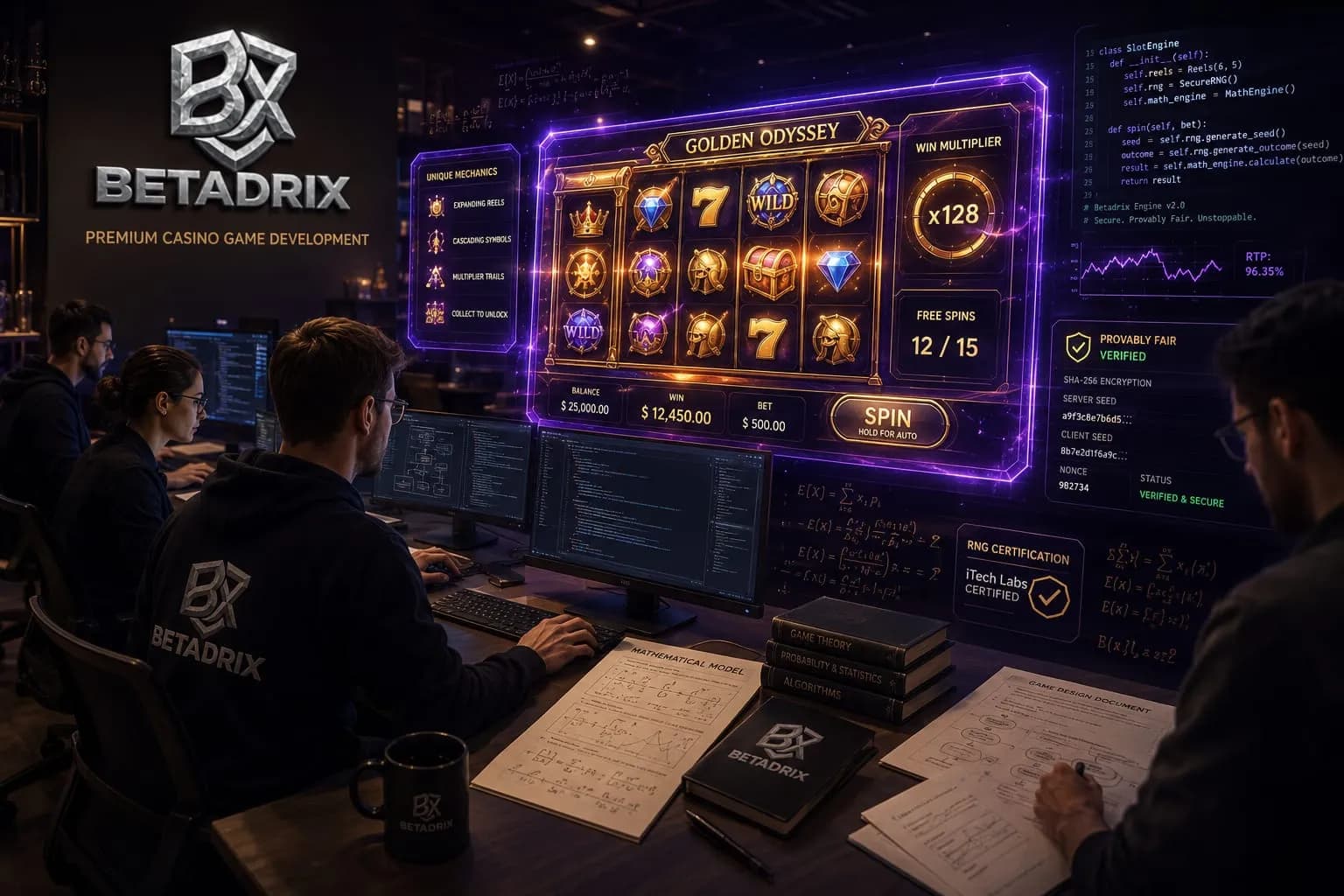
What Is Custom Casino Game Development?
Custom casino game development is the process of building a digital gambling product — slot game, crash game, table game, or live dealer variant — designed around your specific commercial objectives rather than a supplier's reusable template. Unlike licensing a third-party game or reskinning a shared engine, custom development gives you full control over game mathematics, bonus structure, visual identity, compliance configuration, and the complete source code. The result is a certified iGaming platform that behaves exactly as specified and is owned outright by your business, with no ongoing revenue-share obligation.
The global iGaming market is valued at over $150 billion and growing at roughly 11% annually. Online slots account for approximately 68% of casino revenue, and mobile gaming now represents over 72% of active sessions across regulated markets. Operators who differentiate on game mechanics retain players significantly longer than those competing on marketing spend alone — which is why custom game development is increasingly the infrastructure decision, not just the creative one.
Why Custom Development Outperforms Licensed Content
Licensed game content from aggregator platforms delivers speed: you can populate a lobby within weeks. But every title you license comes with a return-to-player range, bonus structure, and visual design that dozens of competitor casinos are also using. Players who recognise a game from another platform have no brand-specific reason to return to yours. Custom development solves this at the mathematics layer — your volatility profile, hit frequency, and bonus contribution percentages are yours, not a supplier default applied across hundreds of deployments.
The business case compounds over time. A licensed game charges a revenue share — typically 15–25% of GGR — on every bet, indefinitely. A custom-built title is a one-time engineering cost; the software becomes a fixed asset on your balance sheet, not a recurring operational expense. At meaningful player volumes, the crossover point where custom development has paid for itself arrives faster than most operators expect.
Custom vs White-Label Casino Game Engine
Factor | Custom Development | White-Label Engine |
|---|---|---|
Source Code Ownership | Full ownership | Licensed access only |
Mathematics Control | Custom RTP, volatility, paylines | Fixed supplier defaults |
Time to Market | Longer (months) | Faster (weeks) |
Ongoing Revenue Share | None | 15–25% of GGR typically |
Certification | Built-in support and documentation | Supplier-managed |
Long-Term Cost | Lower — fixed asset | Higher — ongoing licensing |
Brand Differentiation | High — unique mechanics and visuals | Low — shared with competitors |
Technology Stack
Betadrix engineers custom casino games on a production-tested stack chosen for certification compatibility and rendering performance. PixiJS and WebGL deliver hardware-accelerated rendering at consistent 60fps across mobile and desktop. Node.js and NestJS handle game server logic: real-time round management, wallet transaction processing, and session state on a horizontally scalable backend. PostgreSQL stores transactional game round data with full audit trail integrity; Redis provides sub-millisecond wallet balance reads under session load. Docker and Kubernetes enable autoscaling so player spikes during promotions are absorbed by infrastructure, not engineering intervention. See our custom platform development services and casino platform solutions for broader infrastructure context.
Core Components We Build
Custom RNG mathematics and payline structures: certified random number generators with independently verifiable RTP configurations, designed against the regulatory requirements of your target markets.
Slot and table game engines: classic three-reel, five-reel video slots, megaways-style mechanics, cluster pays, blackjack, roulette, and baccarat — each specified in a mathematics document before development begins.
Bonus round and free spin systems: configurable pick-and-win, wheel-of-fortune, and gamble features, adjustable per jurisdiction without re-engineering the base game.
Casino wallet integration: unified balance management across casino and sportsbook products, built to the same API contract as our white-label casino platforms.
Multi-language and multi-currency support: localised string management and regional compliance flags built into the game layer from day one.
Mobile-first HTML5 rendering: consistent 60fps on iOS, Android, and desktop without separate native builds or app-store submission cycles.
Common Challenges and How We Address Them
The most frequent failure in custom casino game development is a mismatch between specified mathematics and actual game behaviour in edge cases — cascading win chains, multi-level bonus triggers, and sticky wild interactions produce certification failures and player complaints at scale. Betadrix treats the mathematics document as the source of truth throughout development: every QA cycle verifies game behaviour against the original PAR sheet, not just the most recent code change. The second most common problem is certification timeline slippage caused by incomplete documentation at submission — we prepare PAR sheets, statistical test documentation, and technical specifications in parallel with development, not after QA sign-off.
Business Benefits
Custom casino game development delivers three durable commercial advantages: differentiation through unique mechanics no competitor can replicate; cost efficiency through ownership that converts an ongoing revenue-share expense into a depreciating fixed asset; and compliance control through configurable modules that adapt to new jurisdiction requirements without a rebuild. For operators building a long-term online gambling business, custom development is the infrastructure decision that compounds in your favour as player volume grows. Scope Your Custom Game Build with a mathematics and architecture review today.
Custom Slot Game Development
What Is Slot Game Development?
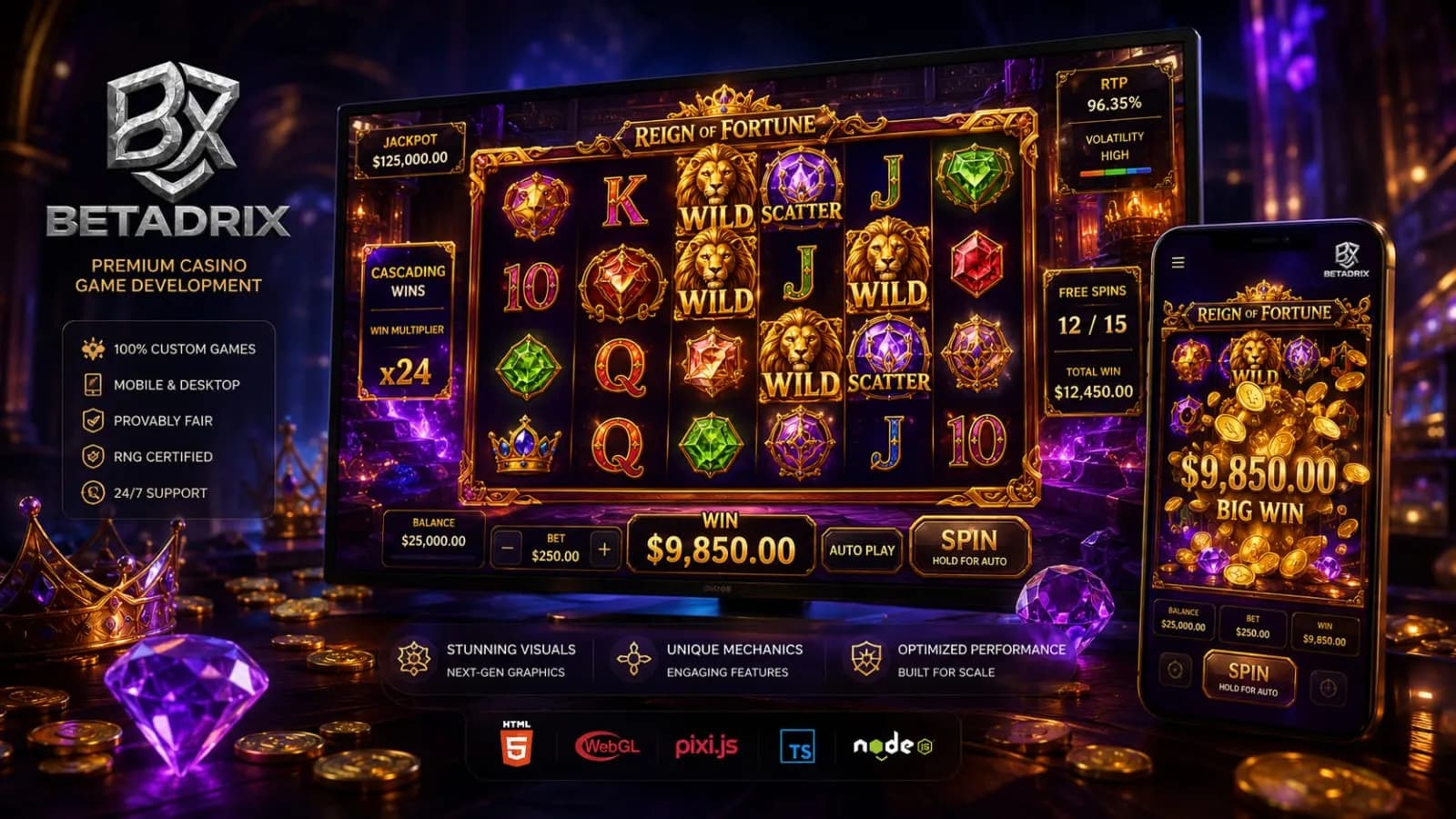
Slot game development is the end-to-end process of designing, mathematically modelling, engineering, and certifying a digital slot machine for deployment on an online casino platform. A production-ready slot title is a mathematically certified software system: every spin outcome is governed by a certified RNG, every symbol combination is weighted against a PAR sheet, and the aggregate Return to Player percentage is statistically verified against the operator's target range — typically between 94% and 98% in regulated markets. The visual experience — reels, symbols, animations, and audio — is the player-facing layer on top of a precisely specified mathematics framework.
Online slots account for approximately 68% of casino gross gaming revenue across regulated markets, making slot game development the highest-value engineering investment most casino operators make. Custom slot titles with unique mechanics and distinctive themes retain players at significantly higher rates than generic licensed content, because players associate the game experience with the brand rather than recognising it as a title available at a dozen competitor platforms.
What Is RTP and Why Does It Matter?
Return to Player (RTP) is the percentage of total wagers that a slot game returns to players over a statistically significant number of spins. A slot with 96% RTP returns £96 for every £100 wagered in aggregate — the 4% difference is the house edge. RTP is set during mathematics design, not during development: it is an output of the symbol weighting table, payline configuration, and bonus contribution percentages specified in the PAR sheet. Regulators in most jurisdictions require certified documentation that the game's actual RTP matches the declared range within a defined statistical tolerance.
Different player segments respond differently to RTP and volatility. High-volatility games with lower hit frequency but larger potential wins attract experienced players seeking large payouts; low-volatility games with frequent small wins suit casual players seeking longer session times. Betadrix designs the volatility profile — not just the RTP headline figure — around your target player segment and marketing positioning. This distinction matters commercially: a game positioned as a high-variance experience but designed with low-variance mathematics will produce player complaints and refund requests at scale.
Slot Game Mechanics Betadrix Engineers
Classic and video slot engines: three-reel classic reels, five-reel video slots, and multi-row grid formats, each with independently configurable payline structures and symbol weighting tables.
Megaways and cluster pays mechanics: dynamic reel configurations producing tens of thousands of ways-to-win per spin, engineered for certification compatibility with GLI and eCOGRA testing methodologies.
Cascading reels and avalanche mechanics: win-on-win sequences that eliminate winning symbols and drop replacements, with configurable multiplier chains that increase through cascade depth.
Expanding and sticky wilds: positional wild mechanics with configurable hold durations and expansion rules, each mathematically verified against the base-game RTP contribution.
Free spin triggers and re-trigger logic: scatter-triggered free spin rounds with configurable multipliers, additional wild placement, and re-trigger probability — each independently adjustable per jurisdiction without touching base-game mathematics.
Pick-and-click bonus games: interactive bonus rounds that add player agency to a spin-based game, statistically calibrated so the bonus contribution to total RTP matches the PAR sheet specification regardless of player choices.
Jackpot systems: local and networked progressive jackpots with configurable seed amounts, contribution rates, and trigger probabilities — engineered as a separate service that the slot game calls via API rather than embedding jackpot logic in the game itself.
Gamble features: double-or-nothing and card-suit gamble rounds, configurable as optional post-win features that regulators in some jurisdictions restrict or prohibit — implemented as a compliance flag rather than a code change.
The Slot Development Process
Betadrix follows a mathematics-first development process that eliminates the most expensive failure mode in slot game development: certification delays caused by mathematics specification errors discovered after development is complete. The process runs as follows. First, a mathematics document is produced covering RTP target, hit frequency, variance profile, symbol weighting tables, and bonus contribution — reviewed and signed off by your team before a single asset is commissioned. Second, the asset and audio pipeline runs in parallel with base game engine development, so symbol art, animations, and sound effects are ready for integration without a waiting period. Third, the game engine is built in iterative sprints against a staging environment, with the mathematics engine verified against the PAR sheet after each sprint rather than as a single end-of-development QA exercise. Fourth, a complete certification submission package is assembled including PAR sheets, statistical test results, source code documentation, and the technical specification — submitted to GLI, eCOGRA, or MGA on your behalf, with Betadrix handling certification body queries directly.
Challenges in Slot Game Development
The most common failure modes we see in slot games built by generalist development teams are: mathematics specification errors that produce an actual RTP outside the declared range; edge-case behaviour in cascading and bonus mechanics that passes functional QA but fails statistical testing; and incomplete certification documentation that delays submission by weeks while the development team assembles paperwork that should have been maintained throughout. Betadrix addresses all three through the mathematics-first process: the PAR sheet is the source of truth from day one, every QA cycle validates game behaviour against it, and certification documentation is produced in parallel with development rather than assembled afterward. Start Your Slot Game Build with a mathematics review and architecture consultation.
Crash & Provably Fair Game Development
What Is a Crash Game?
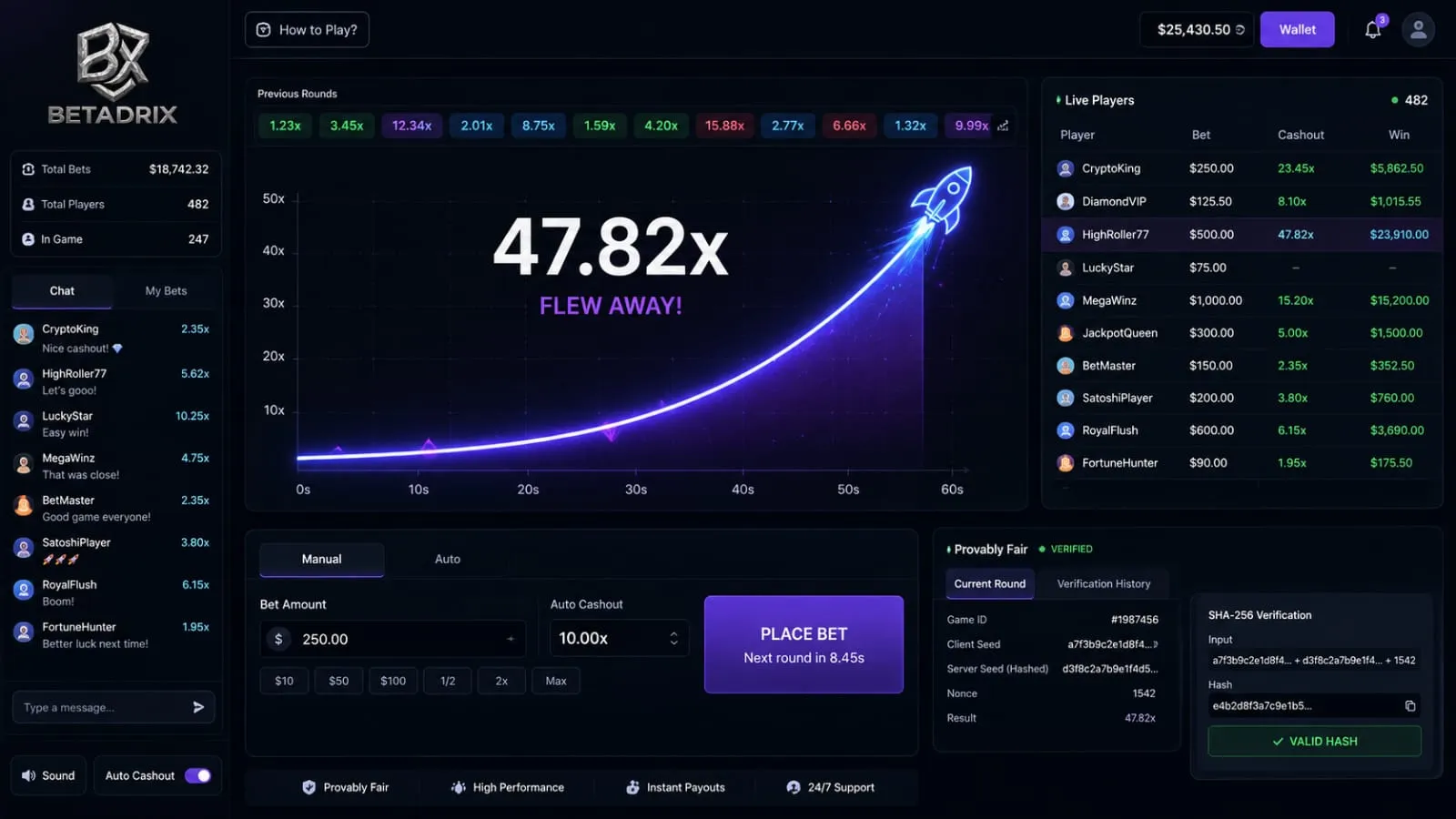
A crash game is a multiplayer online gambling product in which a multiplier increases from 1× at the start of each round and can crash at a randomly determined point — players must cash out before the crash occurs to lock in their winnings. The genre was popularised by titles like Aviator (Spribe) and Bustabit, and has grown at approximately 38% year-on-year since 2021, driven by its real-time social mechanics, short round duration, and compatibility with both fiat and cryptocurrency wagering. Crash games now appear in the lobbies of regulated operators across the UK, Malta, and emerging markets, alongside traditional slot and table game content.
What Is Provably Fair Gaming?
Provably fair is a cryptographic fairness verification system that allows players to independently confirm that each game outcome was genuinely random and was not manipulated by the operator after bets were placed. The mechanism works as follows: before each round, the server generates a random server seed and hashes it using SHA-256, publishing the hash publicly. Players optionally add their own client seed. After the round, the server reveals the original seed; players can verify that the hash of the revealed seed matches the hash published before the round — proving the outcome was fixed before any bets were placed and not altered afterward. This is fundamentally different from a traditional RNG certification model, where fairness is verified by a third-party testing laboratory; provably fair puts the verification tool in the hands of every player, every round.
Why Operators Are Adding Crash Games
Crash games solve a player acquisition and retention problem that traditional slot content cannot: they are inherently social, with all players in the same round watching the same multiplier in real time, creating a shared emotional experience that drives organic session extension and word-of-mouth. Average session length for crash games exceeds most slot formats. The short round duration — typically 10 to 60 seconds — produces high bet frequency and high GGR per active player hour. And the provably fair architecture is a meaningful trust signal for crypto-native audiences who are sceptical of opaque RNG systems, even when those systems carry certification from GLI or eCOGRA.
Technology Architecture for Crash Games
Betadrix builds crash game infrastructure on a real-time, event-driven architecture designed for concurrent player volume and cryptographic integrity. WebSocket connections deliver low-latency multiplier updates to all connected players simultaneously — critical for a game format where a 200ms delay between the displayed multiplier and the actual crash point creates a player-perceived fairness issue. Node.js and NestJS handle game round orchestration, bet ledger management, and cashout processing at high concurrency without blocking the event loop. Redis stores live round state and player positions for sub-millisecond reads during active rounds. The provably fair algorithm runs server-side in an isolated service, with the hashed commitment published to players via the game API before the round begins and the seed revealed via a public endpoint at round end. Full round history — server seed, client seed, hash commitment, and crash point — is stored in PostgreSQL with immutable audit logging for regulatory review. See our casino platform services for the wallet and payment infrastructure that surrounds the game engine.
Core Features Betadrix Delivers
Multiplayer real-time lobby: WebSocket-driven game rooms supporting thousands of concurrent players with low-latency state synchronisation, player bet lists, leaderboards, and live multiplier animations at 60fps.
Provably fair SHA-256 verification: full commitment-reveal scheme with a public player-facing verification tool that allows audit of any past round using only the server seed, client seed, and round ID.
Auto-cashout and multi-bet support: configurable automatic cashout thresholds, simultaneous multi-bet positions per player, and a session history dashboard for player transparency and dispute resolution.
Operator risk management dashboard: house edge configuration, maximum multiplier caps, maximum bet limits, and real-time exposure monitoring — so operators can manage liability during promotional periods without a code deployment.
Crypto and fiat wallet compatibility: the game wallet API is currency-agnostic, supporting both traditional fiat balances and cryptocurrency wallet integrations depending on your platform and licensing setup. See our white-label casino platform for the full payment and wallet infrastructure.
Regulatory Considerations for Crash Games
Crash games occupy a regulatory grey zone in some jurisdictions: they are not slot games under the traditional RNG certification framework, and not sports betting or financial trading under those respective regulatory definitions. In markets such as the UK (UKGC), Malta (MGA), and Gibraltar, crash games are generally treated as casino games and require standard casino licensing with appropriate responsible gambling controls — session limits, reality checks, self-exclusion compatibility, and bet history accessibility. In some emerging markets, the classification is still being established. Betadrix builds crash games with configurable responsible gambling modules so the same game client can be adapted to meet different regulatory frameworks without a rebuild — a configuration update rather than a development sprint when a new jurisdiction's requirements are confirmed. Build Your Crash Game with Betadrix — start with a technical and compliance scoping call.
Live Dealer Platform Development
What Is Live Dealer Platform Development?
Live dealer platform development is the engineering of a real-time casino infrastructure that streams professional dealers from a physical studio to online players, allowing bets to be placed on actual card hands, roulette wheels, and table game outcomes rather than computer-generated results. The live dealer segment is the fastest-growing vertical in online casino, now representing approximately 30% of online casino GGR across regulated European markets and growing at over 20% annually, driven by the authenticity and social engagement that no slot or RNG table game can replicate.
Operators who run proprietary live dealer operations — rather than reselling feeds from Evolution Gaming, Pragmatic Live, or similar studios — gain three advantages that are unavailable through third-party studio licensing: full margin control, since you set table limits, commission structures, and side bet offerings rather than accepting the studio provider's revenue-share terms; exclusive game variants, so your high-roller blackjack variant with custom side bets cannot be found at competitor casinos sharing the same studio feed; and branding consistency, since your studio design, dealer appearance, and game experience are fully on-brand rather than reflecting the studio provider's visual identity.
Technology Architecture for Live Dealer Platforms
Live dealer streaming demands a lower-latency, higher-reliability infrastructure than any other casino game format. A 1-second delay in a live roulette stream is noticeable and damages player trust; a 5-second delay in a live blackjack hand creates dispute-triggering ambiguity about whether a player's click-to-bet action was registered before the dealer's card was revealed. Betadrix builds live dealer platforms on the following technical foundation:
WebRTC and HLS streaming: WebRTC delivers sub-200ms ultra-low-latency video for game-critical streams where players see dealer actions in near real time; HLS provides a fallback for players on networks where WebRTC is blocked or degraded, maintaining playback continuity at the cost of a slightly higher latency buffer.
Node.js and NestJS game server: real-time bet placement, cashout, and result processing handled in an event-driven backend that decouples video stream delivery from game logic — so a brief video buffering event does not block bet settlement or produce a ledger inconsistency.
Dealer management system: shift scheduling, table assignment, session logging, tip management, performance reporting, and multi-studio configuration managed from a single operations dashboard. This is the operational infrastructure that makes running a live studio practical at scale.
Casino wallet and payment integration: live dealer bets and payouts flow through the same wallet infrastructure as all other casino products — see our casino platform services for the full payment and wallet architecture.
Optical character recognition (OCR) and result verification: automated card and roulette result reading from physical tables, fed into the game server for result validation without manual data entry.
Game Variants Betadrix Supports
Betadrix builds live dealer infrastructure for the full range of table games: blackjack with configurable deck count, side bet options (Perfect Pairs, 21+3, Bust It), and multi-seat table configurations; roulette in European, American, and Lightning Roulette format variants with configurable bet limits, neighbour bets, and special number multipliers; baccarat with Squeeze, Dragon Bonus, and Banker-commission-free variants; poker variants including Three Card Poker, Casino Hold'em, and Ultimate Texas Hold'em; and game-show formats such as Wheel of Fortune-style spinning wheel games and dice-based multiplier games. Each variant is configurable for side bets, table limits, and jurisdictional betting restrictions without requiring a separate code deployment per market.
Regulatory and Compliance Considerations
Live dealer games are regulated as casino games in most licensed jurisdictions, requiring the same responsible gambling controls as RNG casino products: deposit limits, session time reminders, self-exclusion compatibility, and bet history transparency. Physical studio operations additionally require data centre certifications, secure camera hardware, and access control documentation that regulators review as part of the studio licensing process. Betadrix builds compliance into both the software layer and the studio specification, so operators receive a turnkey compliance package alongside the streaming and game infrastructure. Discuss Live Dealer Infrastructure with our platform architects to scope your studio setup and software requirements.
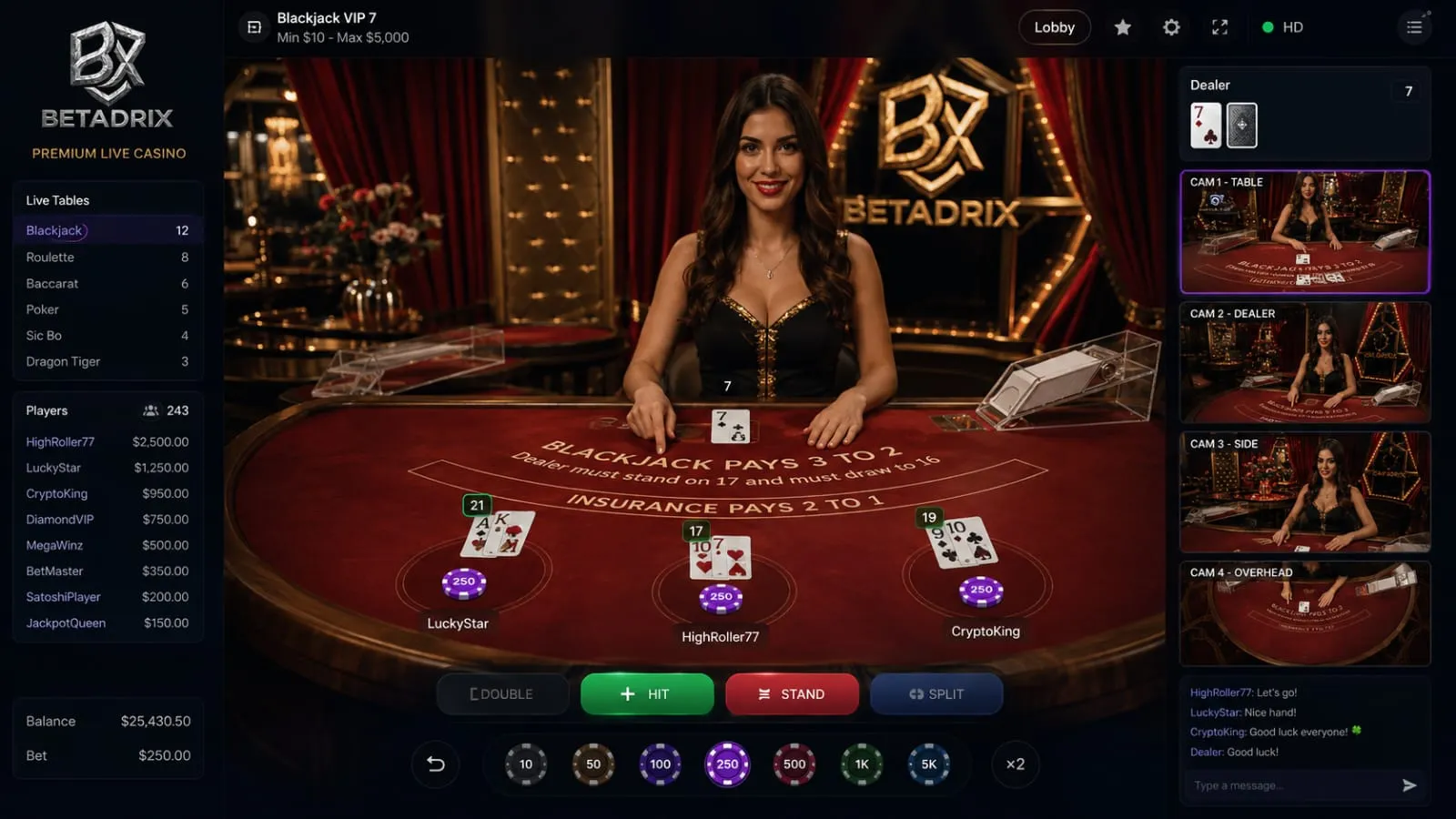
iGaming Aggregator Integrations
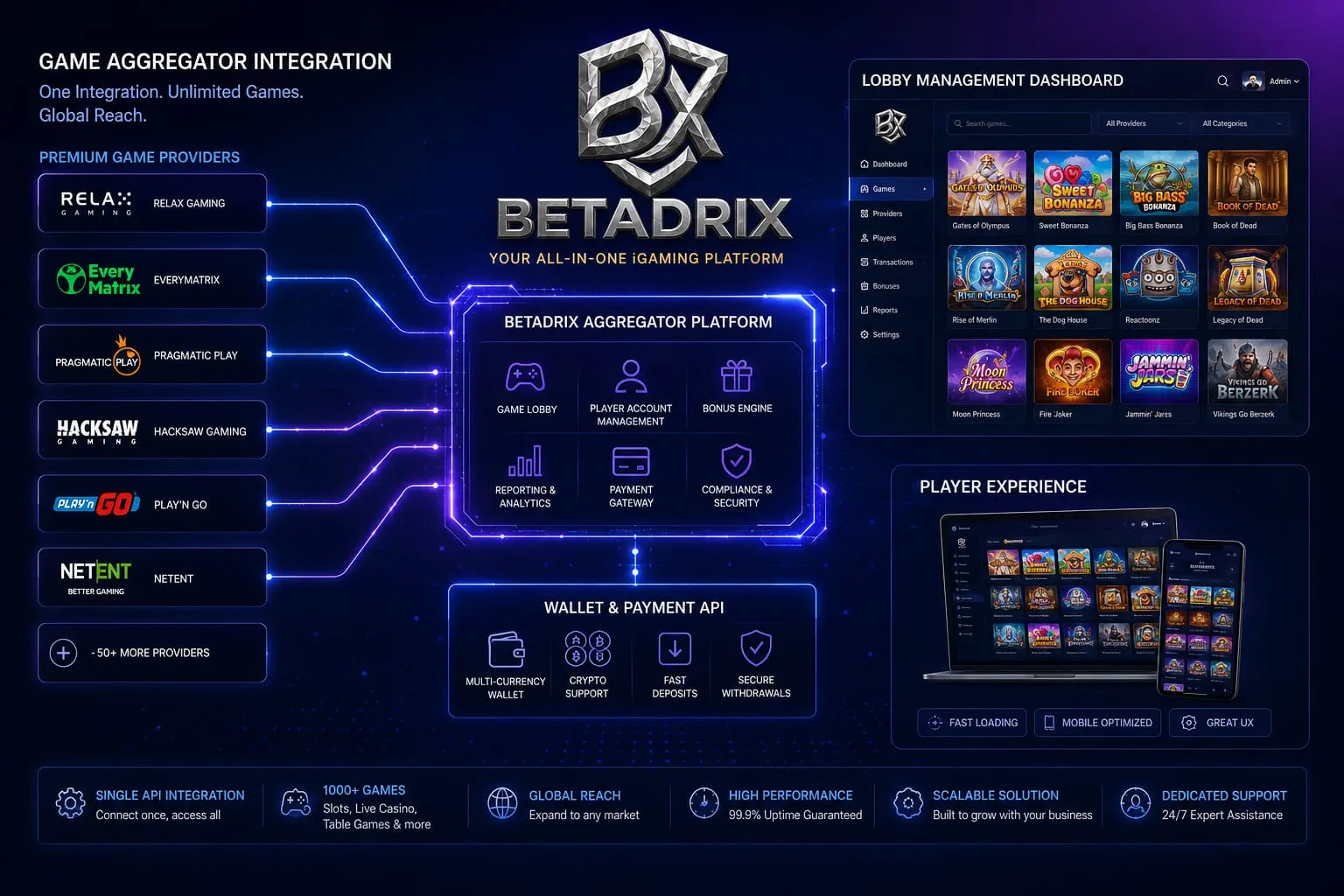
What Is a Casino Game Aggregator?
A casino game aggregator is a platform that sits between game studios and casino operators, providing a unified API through which operators can access content from hundreds of studios through a single integration point rather than negotiating and engineering a separate connection with each studio individually. Major aggregators include Relax Gaming, EveryMatrix (CasinoEngine), Finnplay, SoftSwiss, and GameHub. For operators, aggregator integration reduces the time and engineering cost of lobby expansion; for game studios, aggregators provide distribution reach across hundreds of operator clients without requiring direct commercial relationships with each.
Betadrix builds and integrates aggregator connections for both sides: operators who need to connect their casino platform to one or more aggregator APIs, and studios who have built a game with Betadrix and need to submit it for aggregator distribution. In both cases, the integration architecture is designed for reliability, performance, and operational simplicity — the goal is a lobby that can add or remove content providers through back-office configuration, not engineering sprints.
How Casino Aggregator API Integration Works
A standard aggregator integration requires the following components on the operator side: a game launch API that generates authenticated session tokens for each player-game combination; a wallet API that the aggregator calls to debit bets and credit wins in real time, with idempotency protection to prevent double-crediting on network retries; a webhook endpoint that receives signed callbacks for game results, free spin completions, and jackpot triggers; and a lobby management interface that controls which games are available to which player segments in which jurisdictions. Betadrix engineers all four components as part of the aggregator integration, then validates the implementation against the aggregator's test suite before going live.
The most common failure mode in aggregator integrations is wallet API idempotency handling: if a game result callback is delivered twice due to a network timeout, the operator's wallet must recognise the duplicate and decline to credit the win a second time. Betadrix implements idempotency at the database level using round IDs and request fingerprinting, so duplicate callbacks are handled correctly without adding latency to the primary transaction path.
Aggregator Connections Betadrix Builds
Relax Gaming Silver Bullet integration: content distribution through Relax Gaming's Silver Bullet programme, which places your game in the lobbies of Relax Gaming's operator network alongside their proprietary titles.
EveryMatrix CasinoEngine: full-catalogue integration giving operators access to 10,000+ games from 200+ studios through a single API connection, with lobby management and game filtering handled through the CasinoEngine back office.
Finnplay: Nordic-market-focused aggregator integration with localised payment method and game compliance configuration for Swedish, Finnish, and Baltic regulated markets.
Custom direct studio integrations: for operators who want direct connections to specific studios outside aggregator networks, Betadrix engineers studio-specific API integrations using the studio's proprietary launch token and wallet API format.
Lobby management and game sequencing: back-office tools for enabling, disabling, and ordering games by jurisdiction, device type, player segment, and promotional priority — without a code deployment.
Cross-aggregator analytics: unified reporting dashboard consolidating session data, GGR contribution, and performance metrics across all integrated providers, so operators see total game performance rather than fragmented provider-specific reports.
Business Impact of Aggregator Integration
A well-architected aggregator integration reduces the marginal cost of adding each additional game provider to near zero: once the unified wallet and launch API are in place, each new aggregator connection is a configuration exercise rather than an engineering project. This gives operators the ability to respond to player demand for new content — or remove underperforming titles — at the speed of business rather than the speed of software development. For studios distributing games through Betadrix, aggregator integration means reaching operator clients across multiple networks from a single certified build. Scope Your Aggregator Integration with our platform team to discuss your provider connections and lobby management requirements.
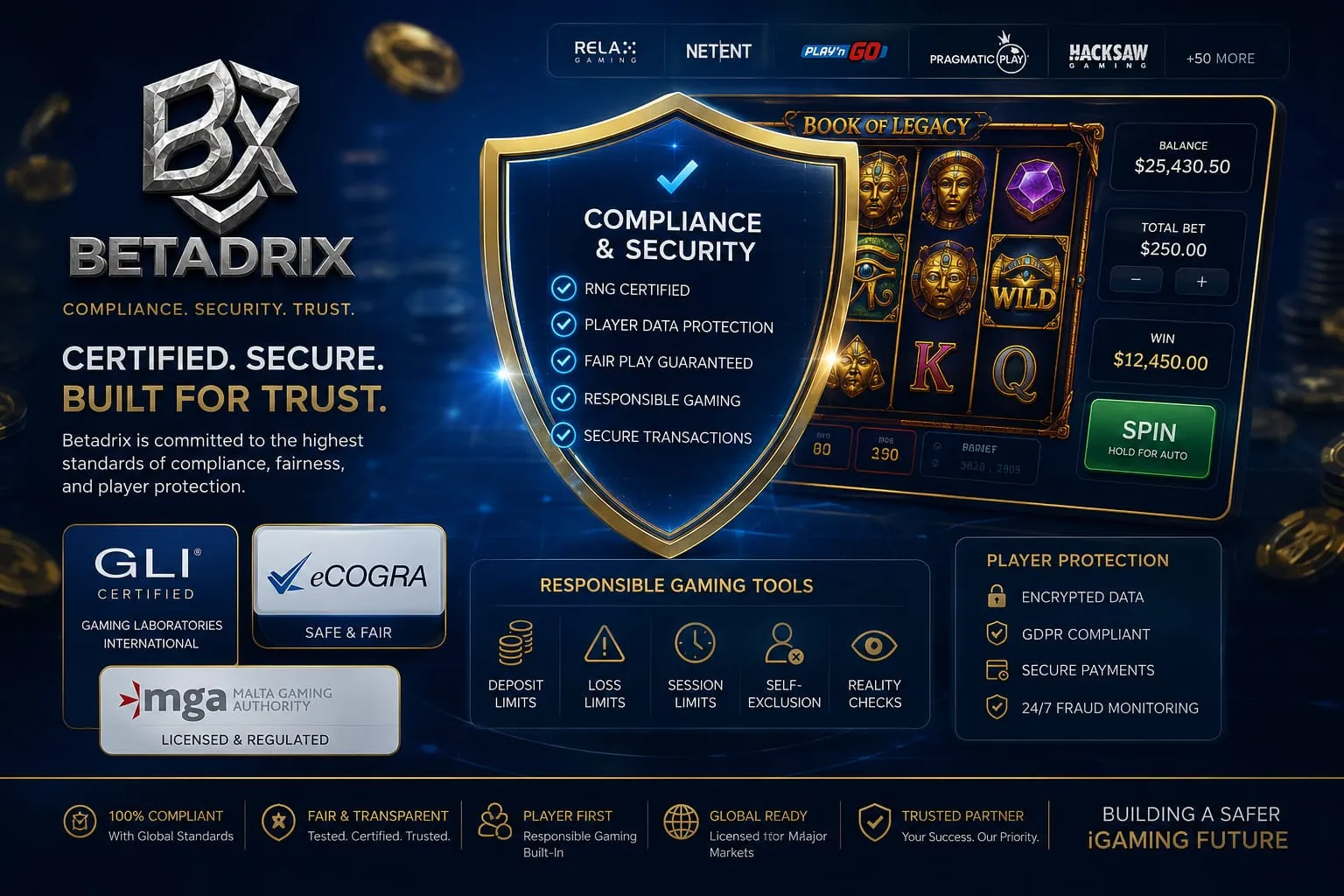
Compliance, Certification & Responsible Gambling
Why Compliance Is a First-Class Engineering Concern
In regulated iGaming markets, compliance is not a checklist completed before launch — it is an architectural constraint that shapes how the game's RNG is implemented, how game round data is stored, how responsible gambling limits are enforced, and how player identity is verified. A game that is engineered first and then audited for compliance afterward costs significantly more to fix than one designed to certification requirements from the start. Betadrix treats compliance as a core engineering concern from the mathematics document stage, not a post-development audit.
What Is GLI Certification?
Gaming Laboratories International (GLI) is one of the world's largest independent testing laboratories for gaming products. GLI certification involves a formal audit of a casino game's RNG implementation, return-to-player accuracy, game logic behaviour, and software security against GLI's published technical standards. Over 40 regulated jurisdictions globally require or recognise GLI certification as part of the game approval process, including markets in North America, Europe, Latin America, and Asia-Pacific. GLI certification is not a one-time event — material changes to a certified game's mathematics or core logic require re-certification of the affected components.
What Is eCOGRA Certification?
eCOGRA (eCommerce Online Gaming Regulation and Assurance) is a UK-based testing agency and standards body that certifies online casino games and platforms against responsible gambling, fair gaming, and player protection standards. eCOGRA's certification scope includes RNG testing, payout verification, software security, and operational compliance, and the eCOGRA seal is recognised by the UK Gambling Commission, Malta Gaming Authority, and other European regulators as evidence of third-party compliance verification.
What Is MGA Compliance?
The Malta Gaming Authority (MGA) is one of the most widely respected gambling regulators in the world, licensing operators and certifying games across the B2C and B2B iGaming ecosystem. Games distributed to MGA-licensed operators must meet MGA's technical standards including RNG certification, RTP disclosure, responsible gambling controls, and audit trail requirements. Betadrix designs games to MGA technical standards as a default for any title targeting European regulated markets, ensuring the certification submission process is as straightforward as possible.
What Compliance Features Betadrix Builds
RNG certification support: we produce the statistical testing documentation, source code escrow preparation, and technical responses to GLI, eCOGRA, or MGA certification body queries as part of the standard game delivery — not as a separate billable engagement.
Responsible gambling controls: configurable session time limits, reality checks, bet-history transparency dashboards, and self-exclusion hooks built into the game layer. These controls are implemented as configurable modules rather than hard-coded rules, so they can be adjusted to meet the specific requirements of each jurisdiction without a code change.
Age verification and KYC launch blocking: game access is blocked for players who have not completed identity verification, configurable per jurisdiction and per game type — crash games and high-stakes table games often require verification at a lower threshold than casual slot titles.
AML transaction monitoring hooks: high-value bet events and unusual session patterns are flagged for AML review through configurable thresholds that feed into the operator's compliance dashboard. See our casino platform services for the full AML and KYC infrastructure.
Audit trail and game log retention: complete round history with cryptographic integrity verification — every game round is stored with server seed, timestamp, player ID, bet amount, and result in immutable format, structured for regulatory submission on request.
GDPR-compliant data handling: player game data is stored and processed to GDPR standards, with data retention policies, right-to-erasure workflows, and data portability exports built into the platform rather than added after a regulatory inquiry.
One Codebase, Multiple Compliance Profiles
Operators expanding across multiple regulated markets face a choice: build a separate game version for each jurisdiction's compliance requirements, or build a single configurable game with market-specific compliance profiles. Betadrix always builds the second way. Compliance modules — responsible gambling limits, age verification thresholds, bonus feature restrictions, and RTP range declarations — are configured per jurisdiction through a back-office compliance management interface, not re-engineered per market. This means a game certified for the UK market can be extended to Malta, Germany, and Sweden by updating compliance configuration rather than rebuilding the game. Review Your Certification Requirements with our compliance engineers before development begins.
Technology Stack & Game Architecture
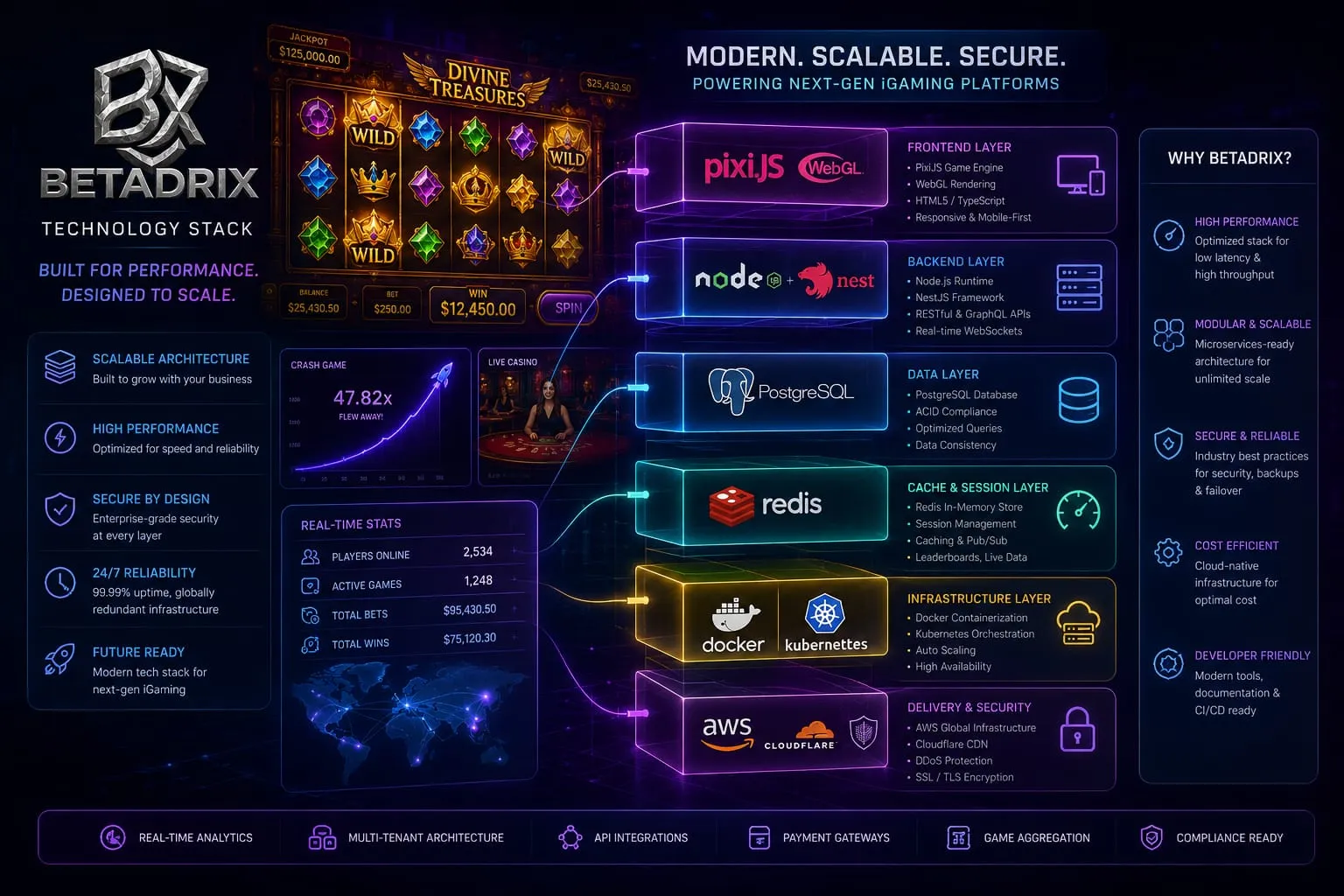
Technology Stack Overview
Every technology choice in a casino game build carries a consequence for certification compatibility, rendering performance, and long-term maintainability. Betadrix selects its stack against three criteria: does it produce deterministic, auditable game behaviour that passes statistical certification testing; does it render reliably at 60fps on the player devices that represent the majority of active sessions in your target market; and can it be maintained, extended, and ported by a new engineering team without requiring the original developers to hold institutional knowledge of undocumented workarounds. The stack Betadrix uses on every casino game build is chosen to pass all three tests.
Rendering: PixiJS and WebGL
PixiJS is a high-performance 2D rendering library built on WebGL, with an HTML5 Canvas fallback for environments where WebGL is unavailable. It is the industry standard for HTML5 casino game rendering because it provides the GPU-accelerated sprite batching and particle system performance needed for 60fps slot animations on mid-range mobile hardware, without the bundle size overhead of 3D game engines like Unity or Unreal. WebGL provides the underlying hardware-accelerated graphics pipeline that PixiJS uses to push rendering from the CPU to the GPU, reducing main-thread load and preventing animation frame drops during bonus sequences with high particle counts. For games requiring 3D elements — spinning wheels, dice, or animated characters — Betadrix uses Three.js on top of WebGL, embedded within the PixiJS scene graph where 2D elements coexist with 3D objects.
Game Server: Node.js and NestJS
Node.js handles the game server's event-driven I/O: WebSocket connections for real-time game state delivery, REST API endpoints for game launch and session management, and asynchronous wallet transaction processing — all on a single-threaded event loop that handles thousands of concurrent connections without the thread-per-connection overhead of synchronous server frameworks. NestJS provides a structured, dependency-injected module system on top of Node.js that makes the game server codebase maintainable by a team rather than dependent on a single developer's architectural decisions. Game round logic, wallet integration, RNG service calls, and compliance event emission are implemented as separate NestJS modules with defined interfaces — so a compliance module update does not require changes to game round logic, and vice versa.
Data: PostgreSQL and Redis
PostgreSQL stores all transactional game data: round history, bet records, player session logs, and audit trail events — with ACID transaction guarantees that ensure a wallet debit and a round record are either both committed or both rolled back, preventing the ledger inconsistencies that produce player disputes and regulator inquiries. Redis stores live session state — player balance snapshots, active round data, and WebSocket session tokens — for sub-millisecond read performance during active game rounds, where a database round-trip would add perceptible latency to every spin result.
Infrastructure: Docker, Kubernetes, and CI/CD
Docker containerises each game service — game server, RNG service, wallet API adapter, compliance event emitter — so that each component can be deployed, scaled, and updated independently. Kubernetes orchestrates container deployment and autoscaling across cloud infrastructure, so a traffic spike during a jackpot promotion or a marketing campaign is absorbed by horizontal pod scaling rather than requiring manual infrastructure intervention. CI/CD pipelines with blue/green deployments mean that a mathematics adjustment, a compliance configuration update, or a new bonus feature ships to production in minutes with zero downtime and full rollback capability if a post-deployment issue is detected. See our custom casino platform development page for the full infrastructure architecture context.
APIs: WebSocket, REST, and GraphQL
Game state is delivered to the player interface over WebSocket connections for minimum-latency real-time updates: spin results, crash multiplier values, and live dealer bet confirmations are pushed to the client as soon as the server processes them, rather than requiring a polling request. REST APIs handle game launch token generation, session management, and aggregator wallet callbacks — structured to the wallet API contract used by Relax Gaming, EveryMatrix, and Finnplay, so the same game server integrates with multiple aggregators without custom adapters. GraphQL is used for operator-facing analytics and back-office dashboards, where flexible query patterns across game round data, player session logs, and revenue metrics make a schema-defined query language more practical than a fixed REST endpoint for every possible dashboard filter combination. Speak With Our Game Architects about the technical requirements for your specific game type and target platform.
Top Casino Game Development Companies
Betadrix Tech
Enterprise iGaming software company delivering custom casino games, slot engines, crash games, live dealer platforms, and sportsbook integrations for regulated markets. Full source code ownership, no revenue share.
Relax Gaming
B2B iGaming supplier known for casino content aggregation, the Silver Bullet content programme, and proprietary game titles.
EveryMatrix
iGaming platform and aggregator providing casino content, sportsbook, and white-label managed services across regulated markets.
Pragmatic Play
Multi-product iGaming content provider with a large portfolio of certified slots, live casino, and virtual sports products.
Play'n GO
Swedish iGaming supplier known for mobile-first slot titles and certified game content for regulated markets globally.
Evolution Gaming
Market leader in live dealer casino software, providing live blackjack, roulette, baccarat, and game-show products to operators worldwide.
Microgaming
Pioneer iGaming software provider and one of the largest casino game content libraries in the industry, including progressive jackpot networks.
NetEnt
Premium online casino game developer known for high-quality slot titles and live casino products, now part of the Evolution group.
Hacksaw Gaming
Mobile-first slot and instant win game developer with a growing certified content catalogue for regulated markets.
Push Gaming
Independent game studio known for high-volatility slot titles and proprietary mechanics such as Cluster Pays.
Nolimit City
Boutique iGaming studio known for innovative slot mechanics including xBet, xSplit, and high-volatility game design.
Spribe
Developer behind Aviator, one of the most-played crash games globally, and a leader in provably fair instant game development.
Frequently Asked Questions
Recognized & Verified By Top Global Platforms
Scope Your Project
Connect with our technical architects to get a complete scope of work and execution plan.
- Strict NDA Protected
- Free Technical Estimate
- Direct Architect Call
Related Services
Ready to build high-performance infrastructure?
Our senior technical architects analyze your requirements, design real-time data flows, and build a production-ready execution roadmap.
- Tailored System Architecture
- Performance & Security Audit
- Clear Production Roadmap
Transforming the everyday, for multiple industries, and scaling digital impact
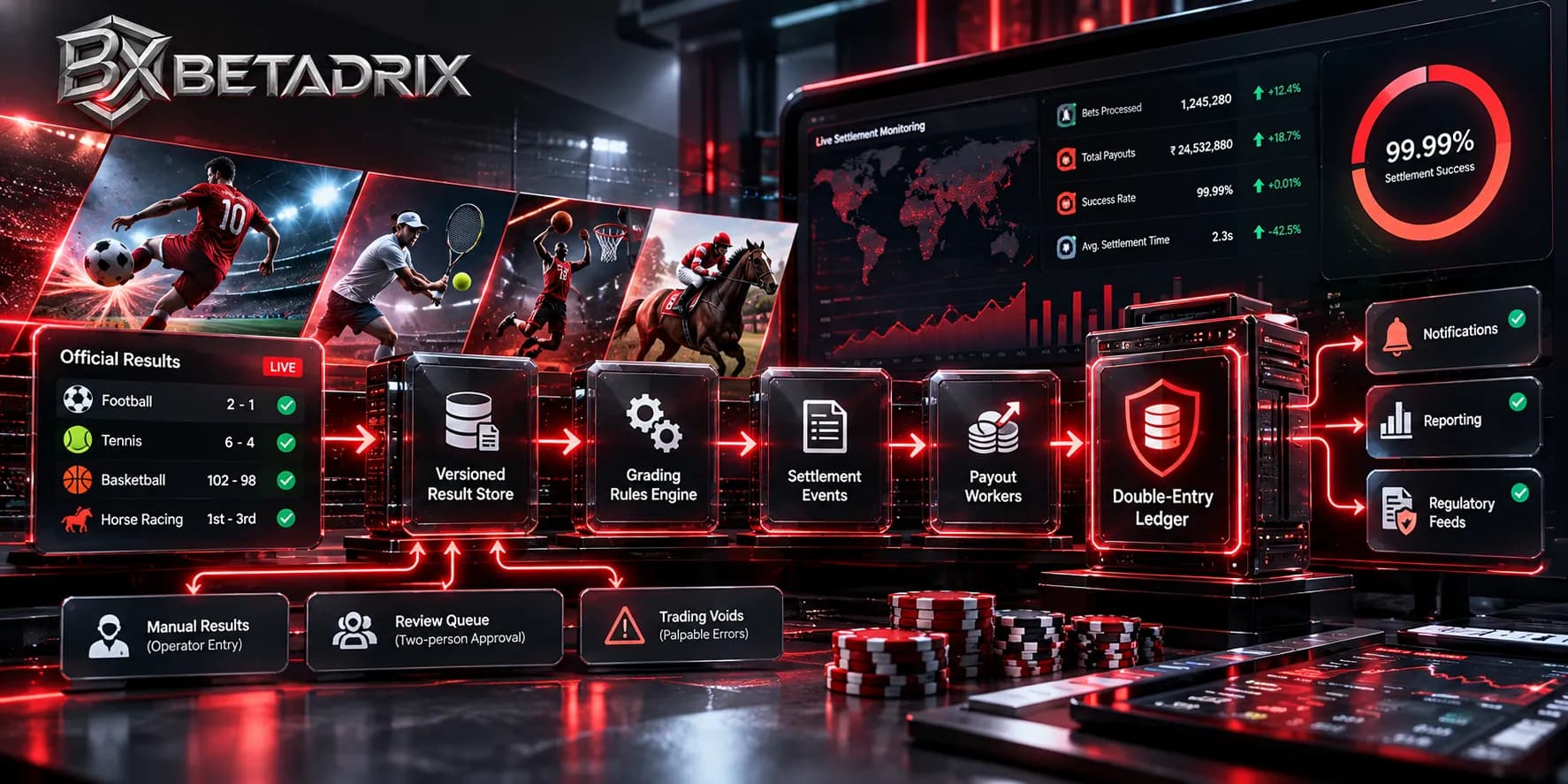
Bet Settlement Engine Design: Grading, Payouts and a Ledger That Never Pays Twice

White Label Casino Platform: Launch in 30 Days (2026 Guide)

Crash Game API Integration Guide: Provably Fair Math, Wallets & Delivery Models
Watch.
Learn.
Grow.
Discover how our engineered solutions transform industries and propel client operations forward.
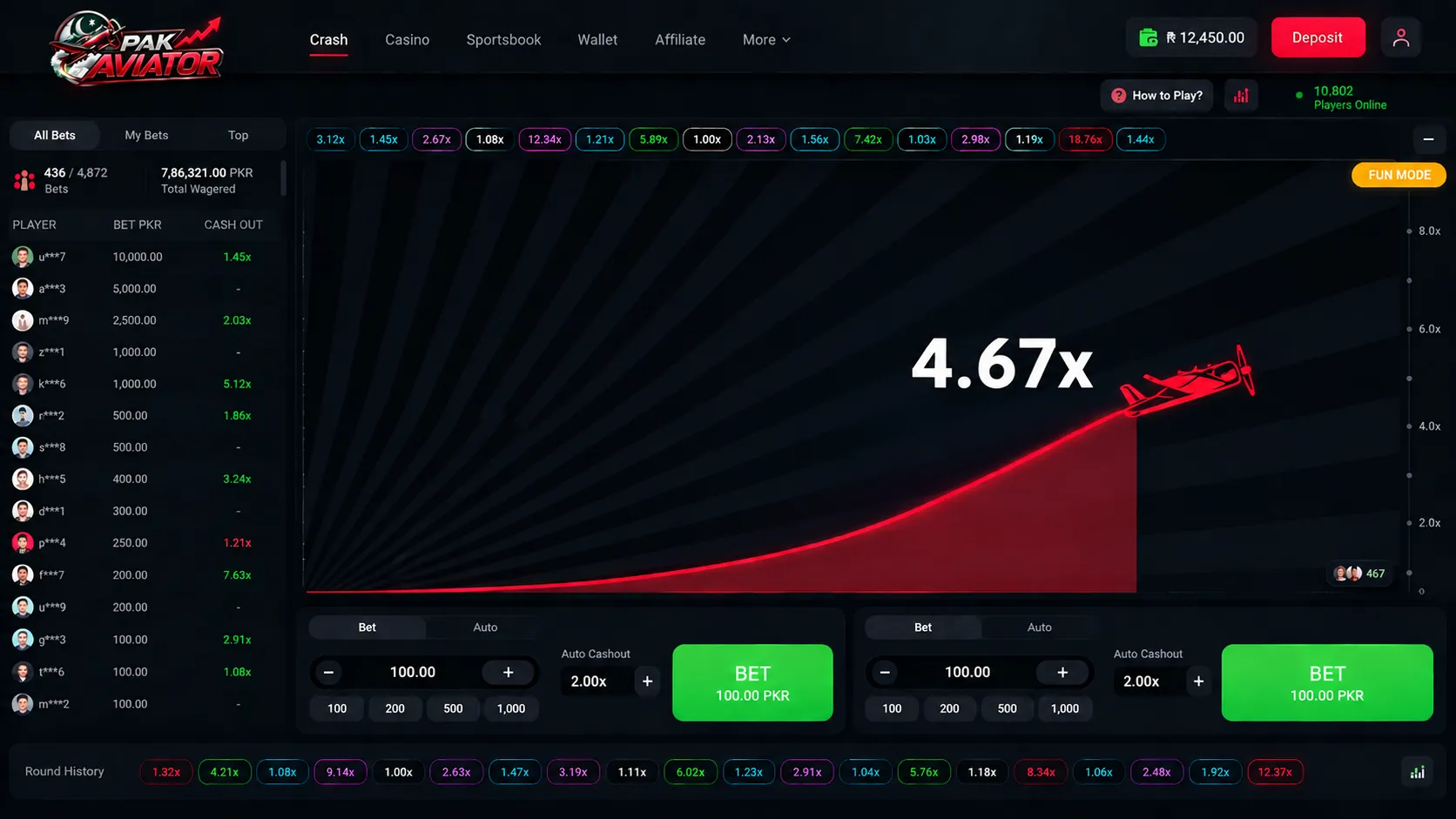
Owning the Game, Not Renting It: Custom Crash Game Development for a Lahore-Based iGaming Operator
READ CASE STUDY

Technologies & Frameworks Powering This Service





Hire Specialized Developers For Your Service Project

Nodejs Developers
Pre-vetted senior Nodejs Developers ready to deploy into your existing architecture in 3-7 days.
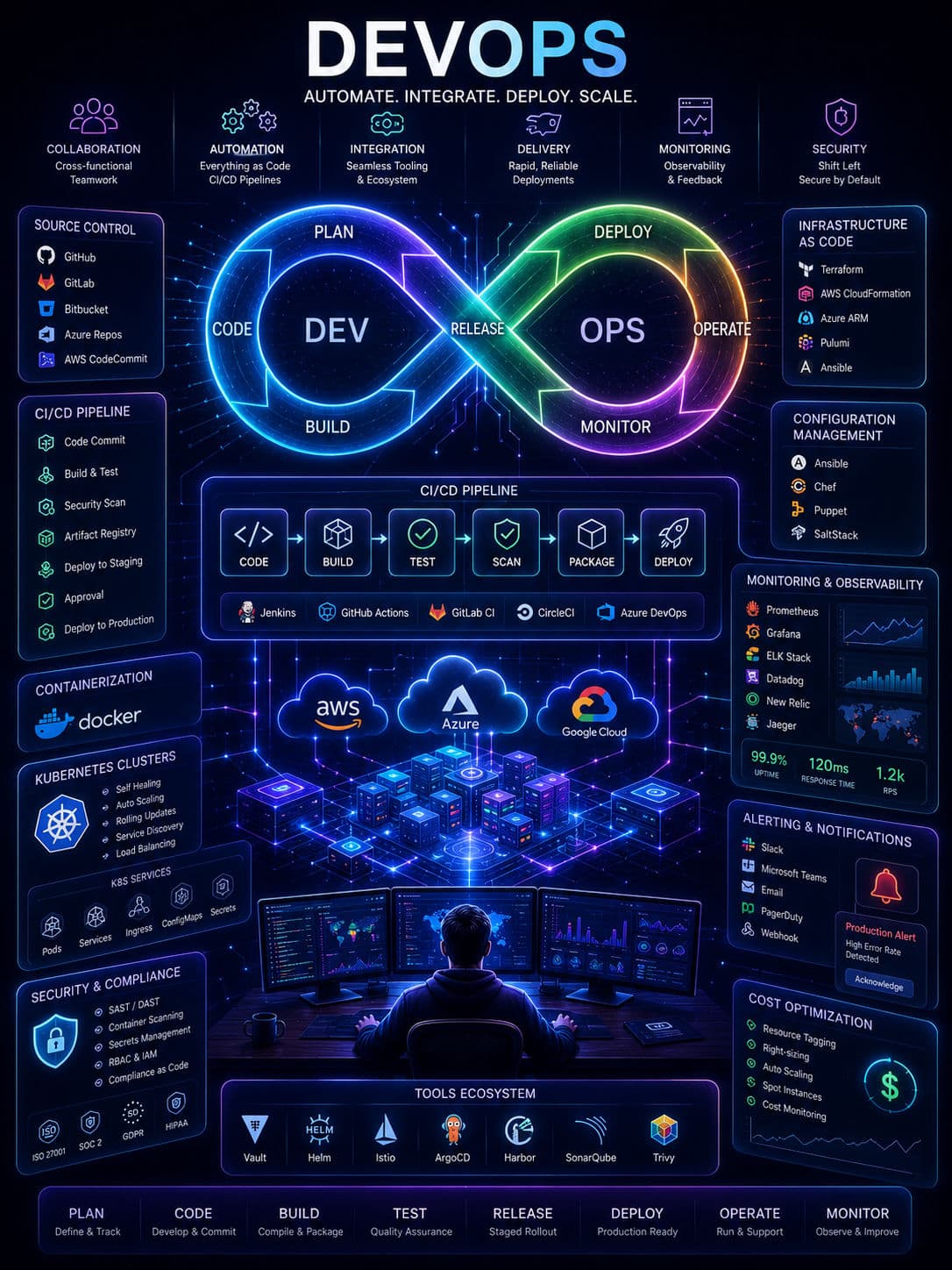
Devops Engineers
Pre-vetted senior Devops Engineers ready to deploy into your existing architecture in 3-7 days.
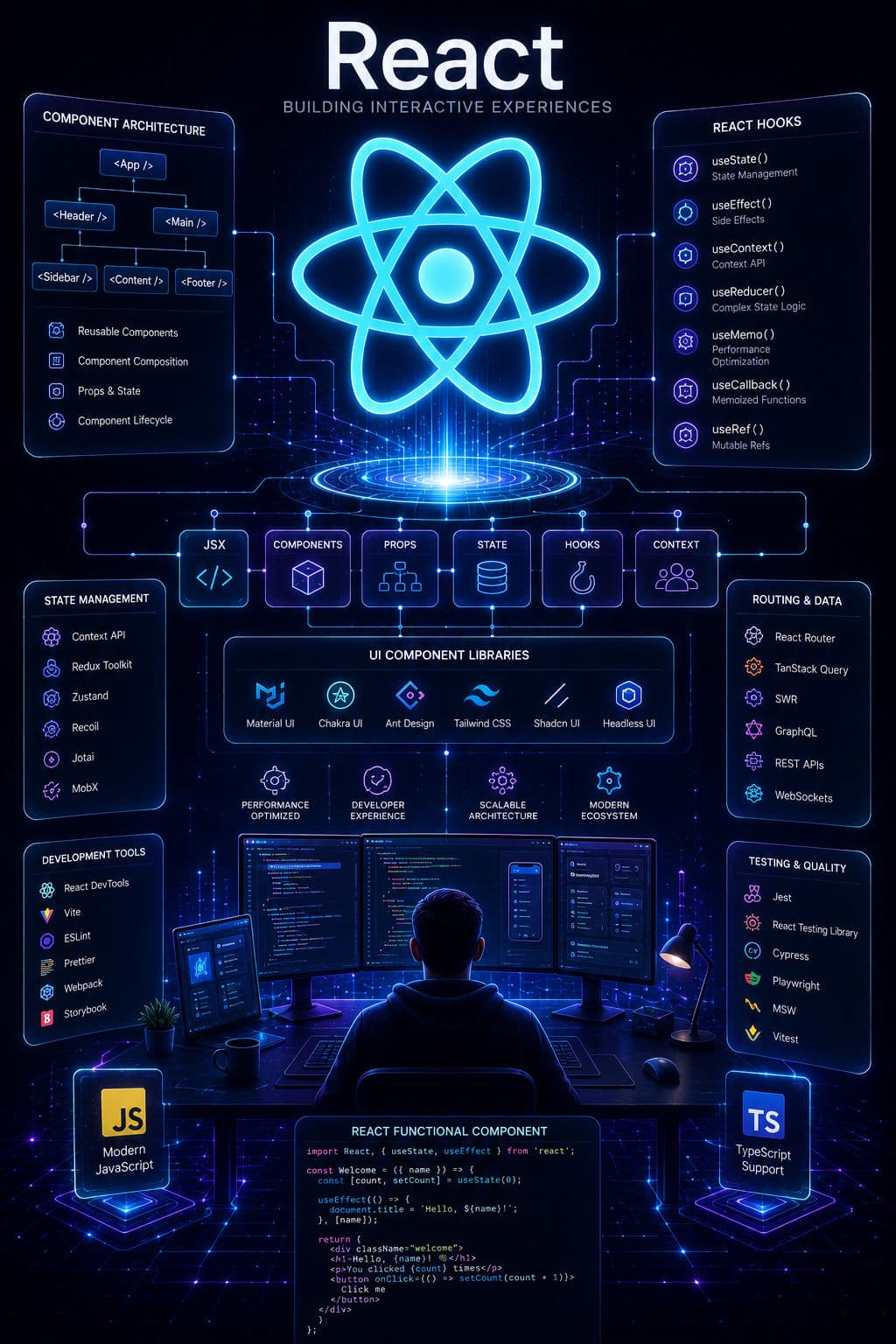
React Developers
Pre-vetted senior React Developers ready to deploy into your existing architecture in 3-7 days.

AI Developers
Pre-vetted senior AI Developers ready to deploy into your existing architecture in 3-7 days.
What Our Clients Say
“Mobile app development and cloud migration were handled smoothly. Strong technical skills, clear communication, and dependable post-launch support stood out throughout the engagement.”

Sarah Mitchell
Director of Operations, HealthFirst Clinics
Let's build something serious.
Diagnose your system architecture, budget ranges, and roadmap parameters with an expert.
Scoping Diagnostic
Analyze your workflows in 60 seconds. A senior AI architect reviews every parameter personally.
 4.9/5.0 Partner
 4.8/5.0 Leader
 4.9/5.0 Rated
 4.8/5.0 Excellent
Not sure where AI actually moves the needle for you?
Answer a few brief questions. We will deliver a highly concrete scoping plan within 24 hours including:
- Recommendations on automation use-cases and MVP components
- Calculations on expected ROI and engineering timelines
- A structural roadmap to make your legacy stack AI-native