Casino Platform Licensing Requirements

Editorial & Engineering Team
 8 min read
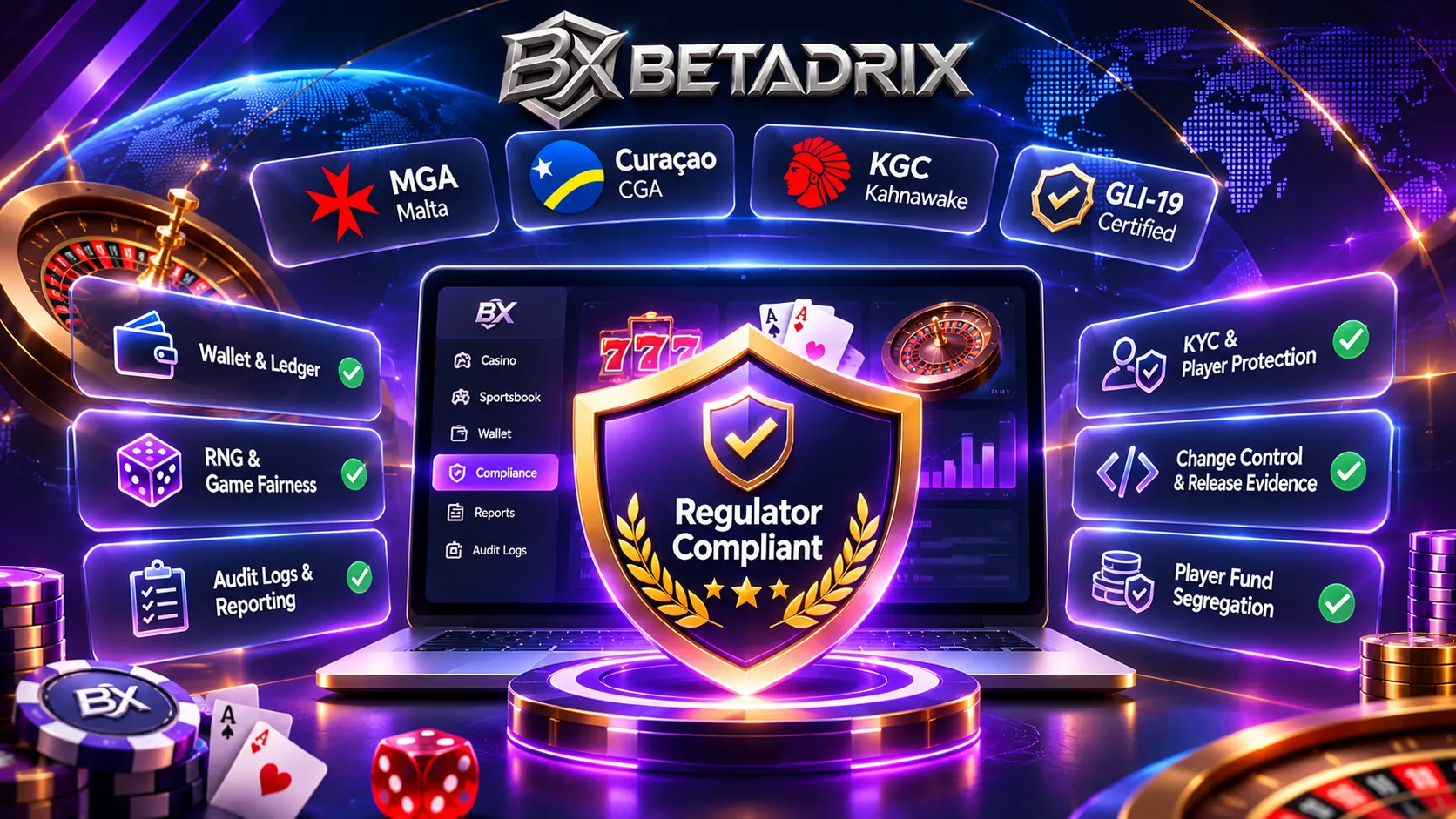
What regulators check in a casino platform: wallet, RNG, audit logs, KYC and change control, compared for MGA, Curaçao and Kahnawake. Get the checklist.
Planning Your Casino Platform Licensing?
Explore our turnkey gambling licensing advisory and enterprise casino platform architecture.
Casino platform licensing requirements are usually described as paperwork: an entity, directors, a business plan, fees. The part that stalls applications is the software. A regulator cannot read your player funds policy and assume the wallet follows it, so the file includes your platform, and often an independent audit of it.
This post covers that technical side: what a regulator or test lab checks in a casino or sportsbook platform, how the evidence differs between Malta, Curaçao and Kahnawake, and what to have built before you file. For fees, timelines and corporate setup, read our guide to gambling license types, costs and process, or go straight to the Malta (MGA), Curaçao (CGA), Kahnawake (KGC) and Zambia (BCLB) pages.
What Regulators Test in a Casino Platform
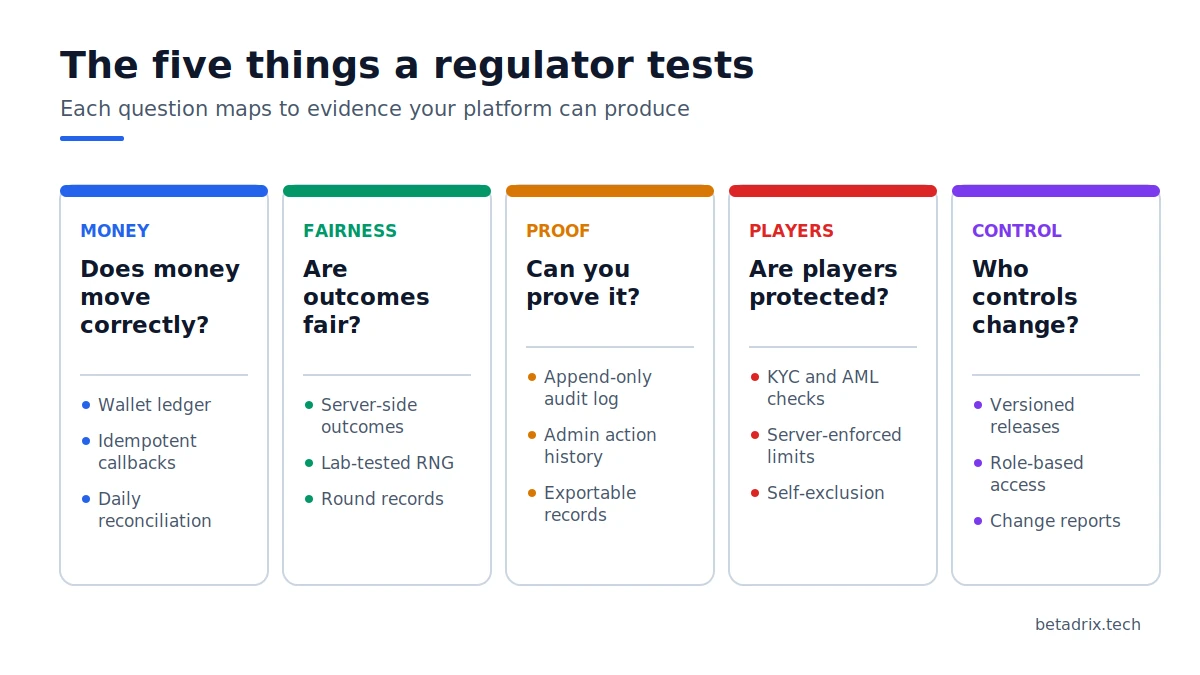
Every regulator words it differently, but the questions are the same five: does money move correctly, are outcomes fair, can you prove what happened, are players protected, and can you control what changes. Each one maps to something you can build and show.
1. Money: wallet and ledger
Start with the ledger, because every other control depends on it. Each deposit, bet, win, bonus and withdrawal is an entry. A balance is the sum of entries, and nobody edits a balance by hand.
The usual failure is the game provider callback. Providers retry when they do not get an answer in time, and a wallet that treats each retry as a new bet charges the player twice. The fix is cheap on day one and painful later: store the provider’s transaction ID and let the database refuse the duplicate.
CREATE TABLE ledger_entries (
  id             BIGSERIAL PRIMARY KEY,
  player_id      BIGINT      NOT NULL,
  currency       CHAR(3)     NOT NULL,
  amount_minor   BIGINT      NOT NULL,  -- signed, in minor units
  entry_type     TEXT        NOT NULL,  -- bet, win, rollback, deposit...
  provider       TEXT        NOT NULL,
  provider_tx_id TEXT        NOT NULL,
  round_id       TEXT,
  created_at     TIMESTAMPTZ NOT NULL DEFAULT now(),
  UNIQUE (provider, provider_tx_id, entry_type)
);

REVOKE UPDATE, DELETE ON ledger_entries FROM wallet_app;
On a retry the insert conflicts, the wallet looks up the original entry and returns the same response as before. Revoking update and delete on the table from the application role makes the ledger append-only in practice, not just by convention.
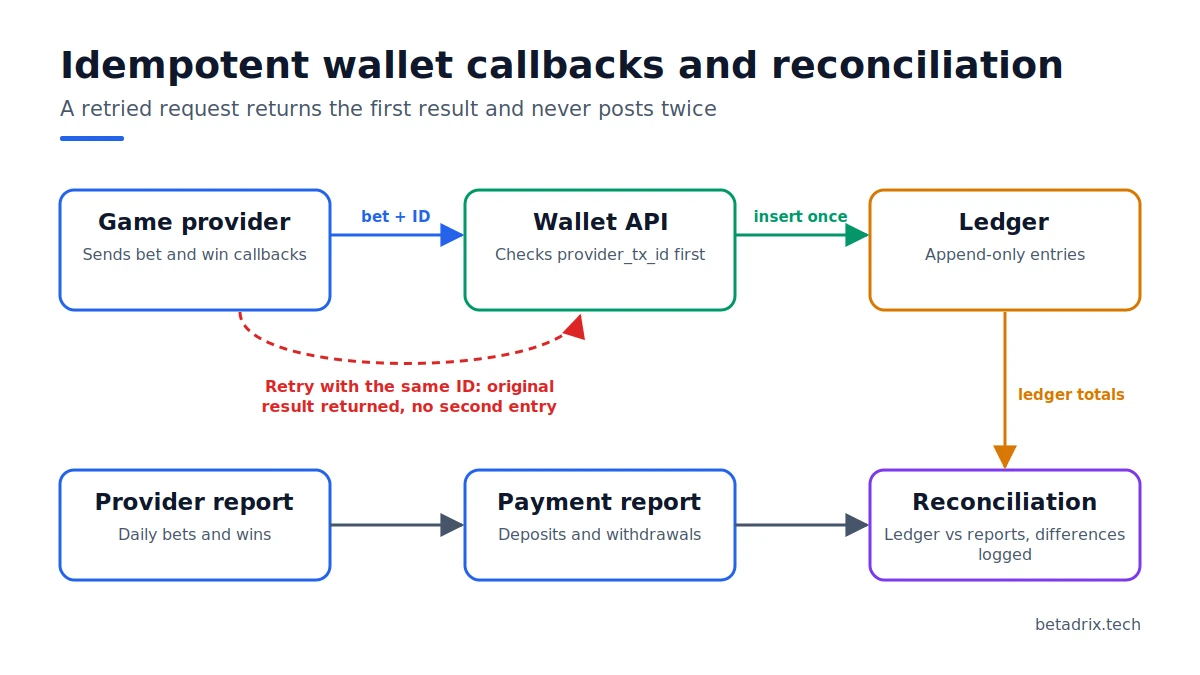
- Reconcile the ledger against the payment provider and game provider reports on a schedule, and keep the output. A reconciliation that finds and logs a difference is better evidence than one that always shows zero.
- Keep player money separable from operator revenue in your reporting. Segregation of player funds is a standing expectation in regimes such as Malta.
2. Fairness: game outcomes and RNG
The outcome is decided on the server and recorded before the animation plays. The client only displays a result that already exists. If a player disputes a round, you should be able to show the stake, the result, the game build and the time without asking the studio.
- Record each round. Round ID, game ID, game build, stake, outcome and timestamp. Logging the build that produced a result is the detail teams forget, and it is what lets you answer which version was live on a given day.
- Use accredited labs. Random number generators and game math are tested by an accredited laboratory. Third-party studios arrive with their own certificates. Games you build yourself need theirs, and a developer cannot certify its own RNG.
- Treat provably fair as a feature, not a substitute. It lets players check a round. It does not automatically satisfy a regulator’s RNG testing rule, so confirm with your regulator before you rely on it.
3. Proof: audit logging
When an inspector asks who changed a limit, a bonus or a game setting last Tuesday, the answer has to come from a log, not from memory. Admin actions matter as much as player activity. A useful entry looks like this:
{
  "ts": "2026-10-29T09:14:02Z",
  "actor": "admin:4821",
  "action": "player.limit.update",
  "target": "player:918374",
  "old": { "daily_deposit_limit": 100 },
  "new": { "daily_deposit_limit": 500 },
  "ip": "203.0.113.24",
  "request_id": "7f3c9a12-5e0b-4c1d-9f77-2b6a1d4e8c05"
}- Append-only storage, with no edit or delete path for ordinary admin users
- Old and new values on every change, so the log shows what actually moved
- Synchronised clocks, so events from different services sort correctly
- Retention that matches your regulator’s requirement, and an export that someone other than the original developer can run
4. Players: KYC, AML and responsible gambling
Verification tiers, sanctions and PEP screening, and monitoring over the wallet ledger belong inside the platform, not in a separate spreadsheet. We cover the design in our post on KYC and AML architecture.
Responsible gambling tools follow one rule: the server enforces them. A limit that exists only in the app fails the first time someone calls the API directly, which is exactly what an auditor will try.
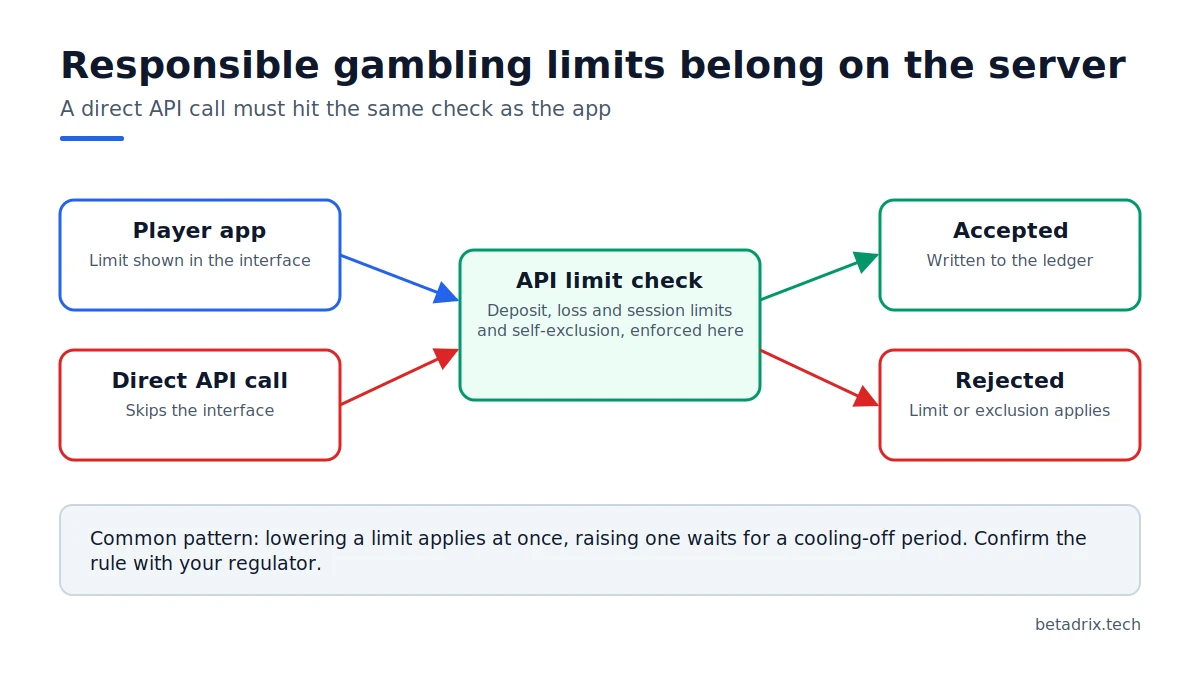
- Deposit, loss and session limits that the API refuses to bypass
- Self-exclusion that applies across every product and domain under the license
- Reality checks and cool-off periods
- A common pattern is that lowering a limit takes effect immediately while raising one waits. Check what your regulator requires.
5. Control: change management and access
Regulators want to know that a production change is a decision, not an accident. That means every release has an owner, test evidence and a record of what changed.
- Versioned releases, with test evidence kept for each production change
- Role-based access to admin tools, with strong authentication for staff
- Penetration testing, encryption in transit and at rest, and a tested backup and recovery plan. ISO/IEC 27001 is a frequently requested benchmark, though not required everywhere.
- A way to report material changes. New games, new providers and new domains all count with most regulators.
How Casino Platform Licensing Requirements Differ by Regulator
The five areas above apply everywhere. What changes is how much the regulator looks at, and what your architecture has to accommodate.
| Regulator | What your platform has to show | What it means for the build |
|---|---|---|
| Malta (MGA) | An independent system audit covering games, RNG, security and operations, plus segregated player funds and GDPR-grade data handling | Documentation and audit-ready logs from the first sprint. Reporting that splits revenue by game type and player country, because Malta moved from a flat 5% gaming tax to 15% on Type 1 and 10% on Types 2 to 4 from 1 October 2026 |
| Curaçao (CGA) | Phased review of the company and the operation, with technical checks on RNG, game integrity, security and logging, and approved domains for each player-facing site | Domain and brand management in the admin panel, and evidence ready on request. Read the latest CGA technical guidance before you freeze the architecture, because it is still being phased in |
| Kahnawake (KGC) | A control system submission, testing before go-live, and material change reports afterwards | Games run through hosting infrastructure in the territory, so decide deployment and vendors early |
| Zambia (BCLB) | The route for an online casino is unclear under the older laws, so confirm what applies to your product in writing first | Build wallet, KYC and mobile-money flows, but do not size the platform against a license you have not confirmed exists |
Rules change. For the Malta tax split, see PwC Malta’s summary of the October 2026 gaming tax changes. For Curaçao costs, see CGA’s published license fee schedule. Treat any table, including this one, as a starting point and check the regulator’s current text.
If You Launch on a White Label Platform
A white label provider carries part of the evidence, but not all of it. The license is yours, so inspections and questions come to you. Before you sign, ask the provider for:
- Lab certificates for the platform and for any in-house games, and who holds each one
- A sample audit log export and a description of how long logs are kept
- How material changes, such as new games or providers, are notified and approved on your license
- Which compliance tasks sit with the provider and which stay with you. KYC decisions, responsible gambling interventions and AML reporting normally stay with the licensee.
If you are comparing models, see our page on white label casino software, or casino and sportsbook development if you want to own the code.
Casino Platform Licensing Requirements Checklist Before You File
Treat the platform as its own workstream. The company and legal track gets the attention, but the platform track is the one that has to be running when the regulator asks to see it.
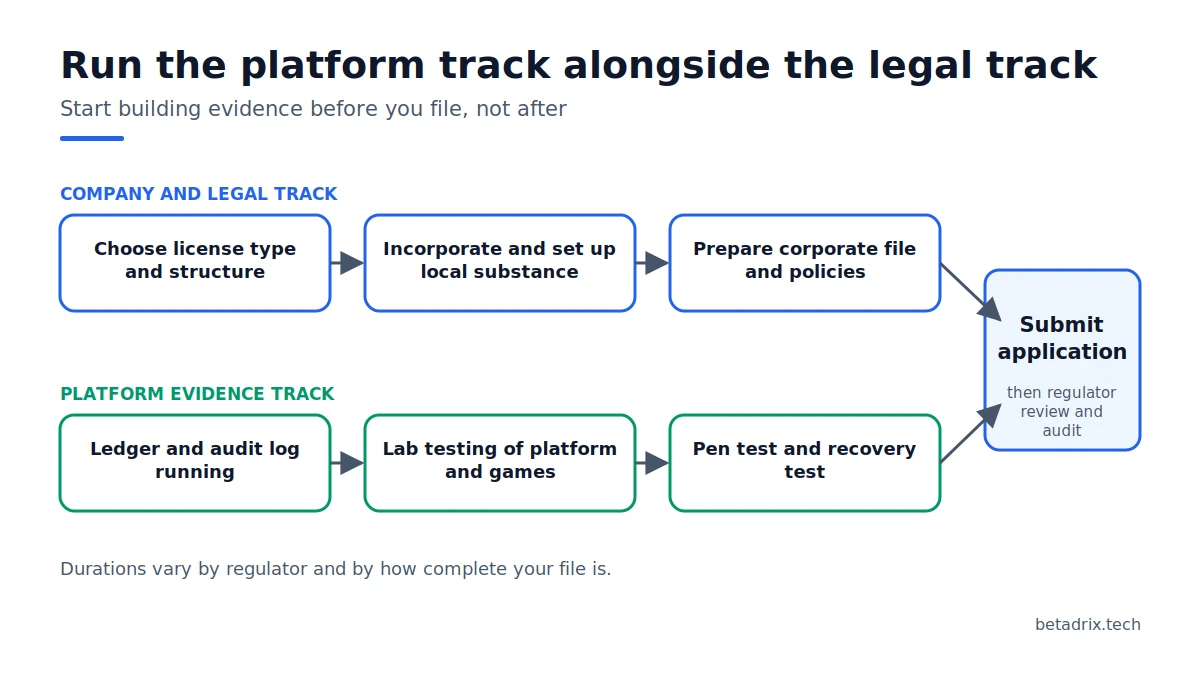
- Wallet ledger with idempotent transactions and a recent reconciliation report
- Written description of how each game decides its outcome, and lab status for each game
- Audit log with admin action history, plus a tested export
- KYC tiers, sanctions screening and transaction monitoring running in a test environment
- Responsible gambling limits and self-exclusion enforced by the API
- Geo-blocking and a per-country game and provider switch
- Domain list, matched to what you will submit to the regulator
- Release process with test evidence for each change
- Penetration test report and a recovery test result
- Revenue reporting by game type and by player country
Mark each item red, amber or green before you commit to a filing date. Anything red is a schedule risk, not a documentation task. For sportsbooks, add the odds feed and bet settlement trail (odds feed integration architecture) and your exposure controls (sportsbook risk management module). Event wagering systems are commonly tested against the GLI-33 standard.
Where Applications Slow Down
- The ledger and the provider reports disagree. This is usually a retry or rollback bug, and it shows up in the first reconciliation.
- Logs can be edited. If an engineer can alter a record, an auditor will assume someone has.
- Responsible gambling lives in the front end. A direct API call that skips the limit fails the test.
- Game versions are not tracked. You cannot show which build was live on a given day.
- The platform was designed for one jurisdiction. A second license then needs a rebuild instead of a configuration change.
Where Betadrix Fits
We build casino, sportsbook and crash-game platforms with these controls inside the product, and we prepare the technical documentation your licensing counsel needs. Certification itself comes from an accredited laboratory, and the license comes from the regulator. If you are building for crypto players, see crypto casino software development. If you want a second pair of eyes on your platform against a specific jurisdiction, request a jurisdiction audit.
General information only, not legal advice. Confirm current rules and fees with licensing counsel or the regulator before you apply.
Related Services from Betadrix
At Betadrix, we specialize in delivering enterprise-grade solutions. Explore our related services to see how we can assist with your technology goals: Casino Sportsbook Development Services | Betadrix, White Label Casino Software.
Need Turnkey White Label Casino Software?
Launch in 2–4 weeks with pre-certified PAM, certified RNG, and built-in regulator reporting.
Request a Technical Architecture Pre-Audit
Review your wallet ledger, RNG integration, and audit logs with Betadrix before regulatory submission.
Series Guide
iGaming & Casino Gaming
Explore Categories
Browse More Technical Topics & Industry Guides
?Frequently Asked Questions
What does a gambling regulator test in a casino platform?
Who certifies the RNG, the regulator or the developer?
Does provably fair replace RNG certification?
What is GLI-19?
How long should casino audit logs be kept?
Can one casino platform support more than one gambling license?
Does a white label provider handle all of the technical compliance?
Does Betadrix grant or guarantee a gambling license?
Team Betadrix
Editorial & Engineering TeamThe Betadrix Engineering and Regulatory Advisory Team specializes in architecting high-concurrency iGaming platforms, compliant gaming systems, RNG certification, and turnkey gambling licensing infrastructure.
Build Your Custom Project
Connect with technical architects for scope and estimation.
More Articles in iGaming & Casino Gaming



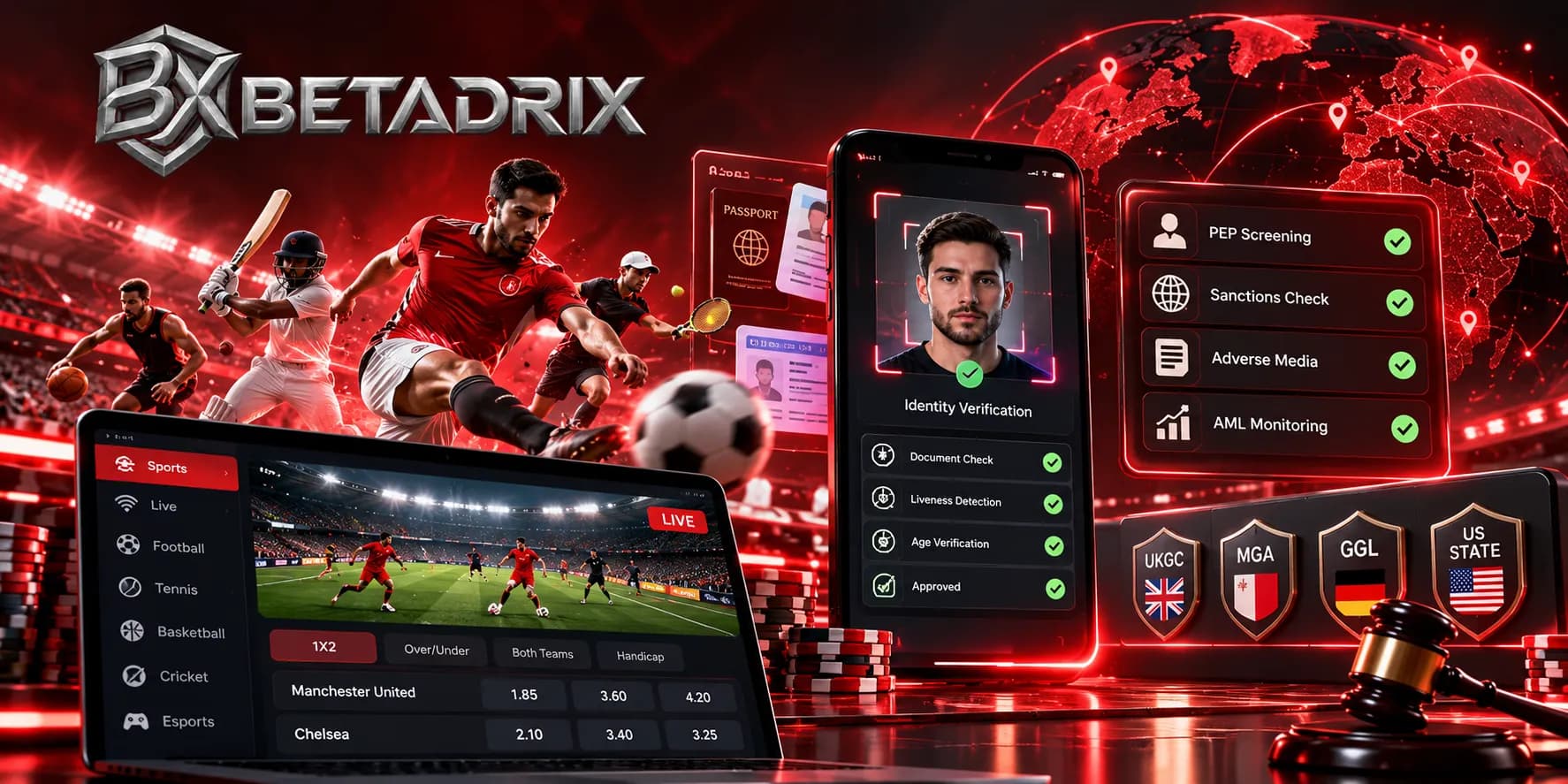
Related services built to solve your specific challenges



Watch.
Learn.
Grow.
Discover how our engineered solutions transform industries and propel client operations forward.


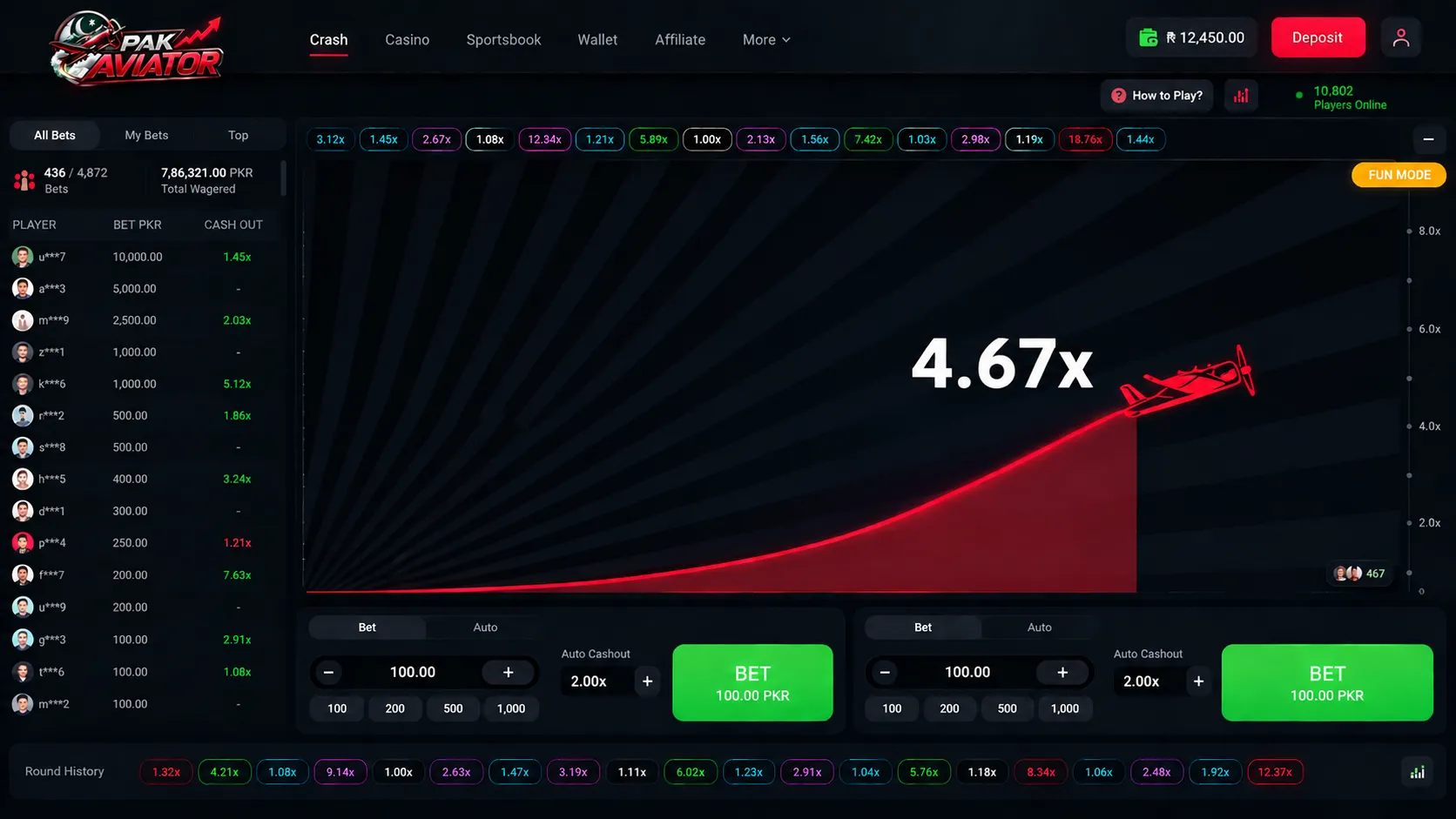
Owning the Game, Not Renting It: Custom Crash Game Development for a Lahore-Based iGaming Operator
READ CASE STUDYTechnologies & Frameworks Powering This Service


Hire Specialized Developers For Your Service Project

Flutter Developers
Pre-vetted senior Flutter Developers ready to deploy into your existing architecture in 3-7 days.

Nodejs Developers
Pre-vetted senior Nodejs Developers ready to deploy into your existing architecture in 3-7 days.

Python Developers
Pre-vetted senior Python Developers ready to deploy into your existing architecture in 3-7 days.
React Developers
Pre-vetted senior React Developers ready to deploy into your existing architecture in 3-7 days.
What Our Clients Say
“Mobile app development and cloud migration were handled smoothly. Strong technical skills, clear communication, and dependable post-launch support stood out throughout the engagement.”

Sarah Mitchell
Director of Operations, HealthFirst Clinics
Have a Project in Mind?
Let's Build It Together.
Connect directly with our senior software architects and technical leads. We evaluate your requirements and deliver an actionable technical proposal within 24 hours.
Strict NDA Protection
Your intellectual property and technical specs remain 100% confidential.
24-Hour Response Guarantee
Guaranteed evaluation and scoping reply from an engineering manager.
Zero Obligation Estimate
Get accurate cost breakdowns and tech stack recommendations free of charge.
Request Free Technical Consultation
Let's build something serious.
Diagnose your system architecture, budget ranges, and roadmap parameters with an expert.
Scoping Diagnostic
Analyze your workflows in 60 seconds. A senior AI architect reviews every parameter personally.
 4.9/5.0 Partner
 4.8/5.0 Leader
 4.9/5.0 Rated
 4.8/5.0 Excellent
Not sure where AI actually moves the needle for you?
Answer a few brief questions. We will deliver a highly concrete scoping plan within 24 hours including:
- Recommendations on automation use-cases and MVP components
- Calculations on expected ROI and engineering timelines
- A structural roadmap to make your legacy stack AI-native