
Single-Wallet iGaming Platform Architecture: A Practical Guide

Founder & CEO
 9 min read
How single-wallet iGaming platform architecture works: wallet API, double-entry ledger, idempotency, scaling and compliance. A build guide for operators.
Building an iGaming platform?
Get a wallet and ledger design reviewed by the Betadrix Tech engineering team.
Short answer: A single-wallet (seamless wallet) architecture keeps one player balance on the operator's platform. Casino, live, sportsbook and crash games don't hold funds. They call a wallet API in real time to check the balance, place a bet, credit a win or roll back a failed transaction.
Five design rules make that work in production:
- One ledger is the source of truth. Every movement of money is an entry in it.
- Every wallet call is idempotent. A retried bet must never debit twice.
- Balances change only through the ledger. The balance is a projection, never edited directly.
- Each player's transactions are processed in order. Concurrent bets can't overspend.
- The wallet is built for high availability. Every game depends on it.
This guide covers the components, the API contract, ledger design, failure handling and scaling. It is written for teams building or replatforming a crypto casino or casino and sportsbook platform.
What is a single-wallet iGaming platform?
In a single-wallet model, the operator's platform owns the player's funds. Games and sportsbooks are clients of the wallet, not holders of money. In a transfer-wallet model, each product keeps its own balance and the player moves funds between them.
| Attribute | Single (seamless) wallet | Transfer wallet |
|---|---|---|
| Where funds live | One operator-owned balance | A separate balance per product |
| Player experience | One balance across casino, sportsbook and crash | Manual transfers between products |
| Integration | Real-time wallet API calls | Periodic transfers and reconciliation |
| Provider integration | Seamless-wallet callbacks | Per-product, siloed |
| Reporting | One ledger, one revenue stream | Reconcile several ledgers |
| Main risk | Wallet is a single point of dependency | Friction, abandoned balances |
Single wallet is the better fit when you run more than one vertical. It is also the model most game aggregators and providers expect. If you are still choosing a platform route, read how to build an online casino platform in 2026 first, and see how white label launches handle the wallet question.
Core components of a single-wallet architecture
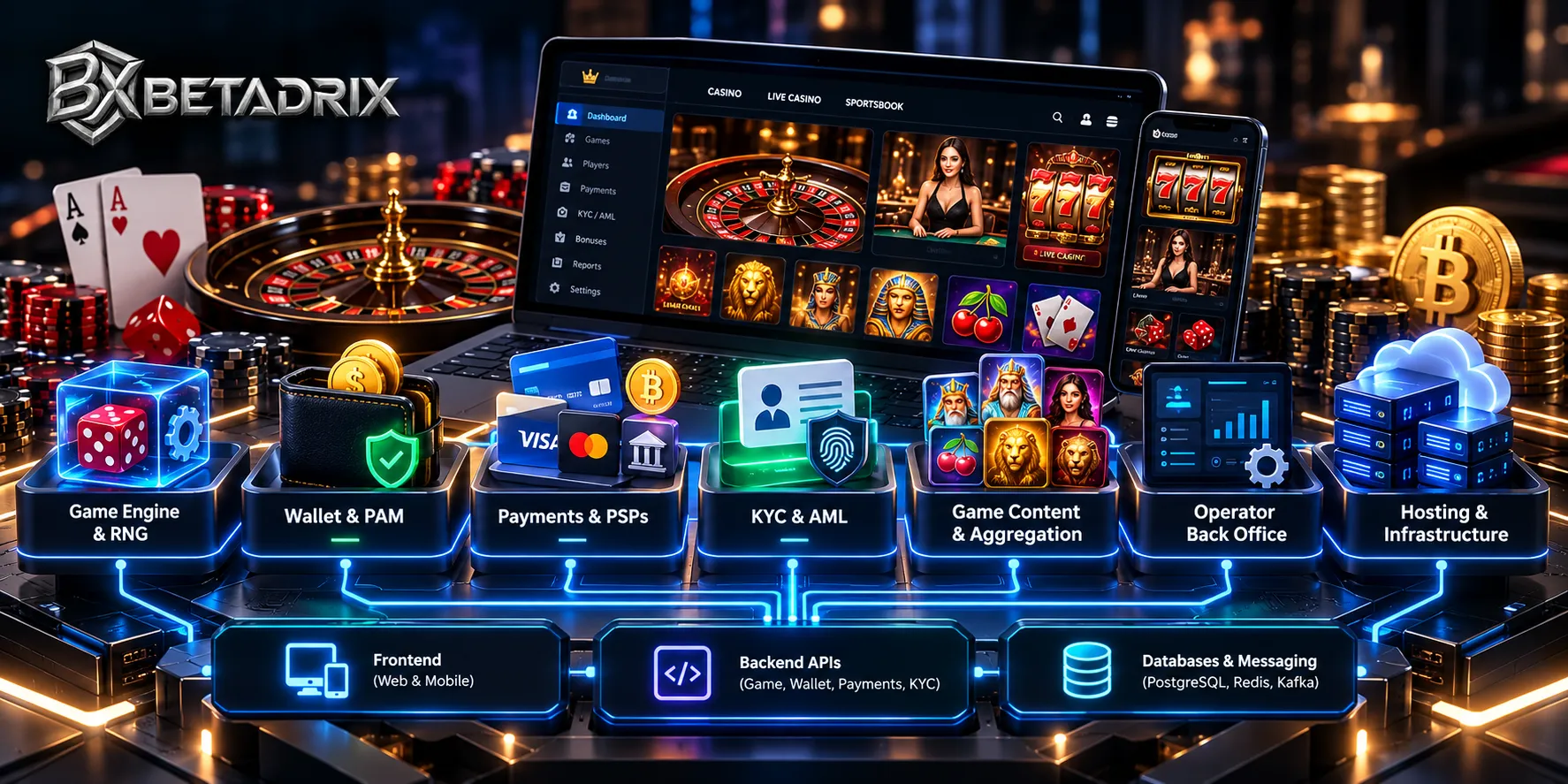
| Component | Job |
|---|---|
| Wallet service | Handles balance, bet, win and rollback calls with idempotency and validation |
| Ledger | Append-only, double-entry record of every money movement |
| Provider/API gateway | Authenticates providers, signs requests, routes callbacks to the wallet |
| Bonus engine | Splits cash and bonus funds, applies wagering rules |
| Payments and crypto | Deposits, withdrawals, confirmations, currency handling |
| Compliance layer | KYC status, deposit and loss limits, self-exclusion checks |
| Risk and fraud | Velocity checks, abuse detection, exposure limits |
| Event bus | Publishes every transaction for reporting, bonuses and risk |
| Reconciliation | Matches your ledger against provider and payment reports |
The wallet and ledger are the core. The rest subscribe to its events. Teams often build the services on Node.js with PostgreSQL and Redis, and use Kafka as the event bus.
The wallet API: five calls that matter
| Call | Purpose | Key rule |
|---|---|---|
| Balance | Return the player's current spendable balance | Fast read, safe to cache briefly |
| Bet (debit) | Reserve and deduct the stake | Idempotent on transaction ID; reject if funds or limits fail |
| Win (credit) | Credit the payout for a round | Idempotent; tied to the round ID |
| Rollback (cancel) | Reverse a bet that did not complete | Must succeed even if the original bet never arrived |
| Refund / adjust | Operator corrections and voids | Always written as new ledger entries, never edits |
The life of a bet
- The game or provider calls bet with player ID, round ID, transaction ID, amount and currency.
- The wallet checks the transaction ID. If it has seen it, it returns the stored response and does nothing else.
- It checks KYC status, limits, self-exclusion and bonus rules.
- It serializes on that player, verifies the balance, writes the ledger entries and updates the balance in one database transaction.
- It returns the new balance and publishes a bet placed event for risk, reporting and bonuses.
- When the round ends, the provider calls win, which follows the same idempotent path.
- If a call times out, the provider retries or calls rollback, and the wallet reverses the entry or records that the transaction was cancelled.
The same real-time pattern applies to crash games. See our crash game API integration guide for the game-side view, and bet settlement engine design for how sportsbook settlement feeds credits back to the wallet.
Ledger design: double-entry, append-only
- Double-entry. Every transaction posts equal debits and credits across accounts such as player cash, player bonus, provider settlement, payments clearing and operator revenue. The entries always sum to zero.
- Append-only. Corrections are new entries that reverse earlier ones. Nothing is updated or deleted, which gives you a full audit trail.
- Balance as a projection. Keep a current balance per wallet for fast reads, but derive it from the ledger and verify it regularly.
- Exact money types. Store amounts as integers in minor units or fixed-scale decimals. Never use floating-point numbers for money, and give each currency its own precision.
- Separate wallets within the player account. Cash, bonus and locked funds are different sub-accounts with different rules.
Consistency, concurrency and failure handling
This is where single-wallet systems fail in production. Plan for these cases from day one:
- Duplicate calls. Providers retry on timeouts. Store each transaction ID with its response and return it unchanged on a repeat.
- Concurrent bets. Two bets from one player must not both pass a balance check. Use row-level locks, optimistic versioning, or route each player to a single ordered worker.
- Rollback before bet. A rollback can arrive for a bet you never received. Record it so a late bet with the same ID is refused.
- Slow responses. Providers expect a reply within a short timeout. Keep the wallet path lean and move reporting and bonus logic to asynchronous events.
- Partial failures. If the ledger write succeeds but the event publish fails, use an outbox so the event is sent after recovery.
- Drift. Reconcile against provider and payment reports on a schedule and alert on any difference.
Scaling and availability
Because every game calls the wallet, it is both the busiest and the most critical service. Partition by player ID so each player's traffic stays ordered while the system scales horizontally. Use PostgreSQL as the source of truth, Redis for fast balance reads, and replicas or standby nodes for failover. Autoscale the stateless API layer and test failover regularly.
Most teams run this on Kubernetes with health checks, circuit breakers and per-provider rate limits. Load test with realistic bursts, such as many players cashing out in the same second on a crash game, before launch.
Compliance and responsible gambling at the wallet layer
The wallet is the natural enforcement point, because it sees every stake and payout. Build these checks into the bet path rather than bolting them on later:
- KYC and verification status gating deposits, bets or withdrawals
- Deposit, loss and session limits that block a bet when reached
- Self-exclusion and cool-off flags checked on every call
- A complete audit trail from the ledger for regulators
- Transaction monitoring hooks for AML review
For the monitoring side, see our sportsbook KYC/AML architecture guide and the risk management module write-up.
Crypto and multi-currency wallets
A crypto casino adds blockchain confirmations, deposit address management, hot and cold storage, and conversion between assets. Keep the on-chain layer separate from the gameplay wallet. Credit the player only after the required confirmations, and decide whether play happens in the deposited asset or a converted balance. Each choice changes your exposure to price swings. Our crypto casino software development team designs this split as part of the platform.
Migrating from a transfer wallet to a single wallet
Moving an existing platform is a significant project, so stage it:
- Build the ledger and wallet service beside the current system and import opening balances.
- Run in shadow mode. Mirror live transactions into the new ledger and compare results.
- Migrate one product first. Pick a lower-risk vertical, and fix issues before the rest.
- Cut over by player cohort. Keep a rollback path for each cohort.
- Retire the old balances once reconciliation holds for a full cycle.
Common mistakes to avoid
- Editing balances directly instead of posting ledger entries
- Skipping idempotency because "providers rarely retry"
- Running bonus, risk and reporting logic inside the synchronous bet call
- Using floating-point numbers for money
- No reconciliation, so drift goes unnoticed until a payout dispute
- No failover plan for the one service every game depends on
If you need to extend your team for this work, you can hire dedicated developers with real-time and fintech experience. A related build is our slot aggregator platform case study. If you are planning a crash title on top of the wallet, see crash game development cost and timeline and our custom crash game development service.
FAQ
What is a single wallet in iGaming?
A single wallet is one player balance owned by the operator's platform and shared across casino, live, sportsbook and crash games. Games call a wallet API to debit and credit it in real time, so players never transfer funds between products.
What is the difference between a single wallet and a transfer wallet?
In a single wallet, one balance is updated in real time by every product. In a transfer wallet, each product holds its own balance and the player moves money between them, which adds friction and reconciliation work.
What is a seamless wallet API?
It is the set of calls a game provider makes to the operator's wallet: balance, bet (debit), win (credit) and rollback. The operator's wallet stays the source of truth for the player's funds.
Why must wallet calls be idempotent?
Providers retry requests after timeouts. Without idempotency, a retried bet could debit the player twice. Storing each transaction ID and returning the original response prevents duplicate balance changes.
What database is best for an iGaming wallet?
A relational database with strong transactional guarantees, such as PostgreSQL, is the usual choice for the ledger. Teams add Redis for fast balance reads and an event bus such as Kafka for downstream services.
Plan your wallet architecture
The wallet is the hardest part of an iGaming platform to change later. Share your products, markets and expected load, and the Betadrix Tech team will review your design or scope the build. Start with our casino and sportsbook development service.
Related Services from Betadrix
At Betadrix, we specialize in delivering enterprise-grade solutions. Explore our related services to see how we can assist with your technology goals: Crypto Casino Software Development Company | Betadrix, B2B Casino, Sportsbook & Blockchain iGaming Platform Development in Brazil, Best Blockchain Development Company | Betadrix, Casino & Sportsbook Development Services in Austria | Betadrix, Custom Crash Game Development | Aviator-Style Platforms | Betadrix.
Need a wallet that scales?
We design real-time wallet, ledger and provider integrations for casino and sportsbook operators.
Core single-wallet API calls
Balance
Return the player's current spendable balance.
Bet (debit)
Reserve and deduct the stake, idempotent on transaction ID.
Win (credit)
Credit the payout for a round, idempotent and tied to the round ID.
Rollback (cancel)
Reverse a bet that did not complete, even if the bet never arrived.
Refund / adjust
Post operator corrections as new ledger entries.
Ready to build your platform?
Talk to our iGaming engineers about architecture, timeline and budget.
Related Services
Series Guide
iGaming & Casino Gaming
Explore Categories
Browse More Technical Topics & Industry Guides
?Frequently Asked Questions
What is a single wallet in iGaming?
What is the difference between a single wallet and a transfer wallet?
What is a seamless wallet API?
Why must wallet calls be idempotent?
What database is best for an iGaming wallet?
Shivam Swami
Founder & CEOShivam Swami is the Founder & CEO of Betadrix, driving technical vision, distributed systems engineering, high-throughput iGaming platforms, and enterprise AI architecture.
Build Your Custom Project
Connect with technical architects for scope and estimation.
More Articles in iGaming & Casino Gaming


Related services built to solve your specific challenges




Watch.
Learn.
Grow.
Discover how our engineered solutions transform industries and propel client operations forward.
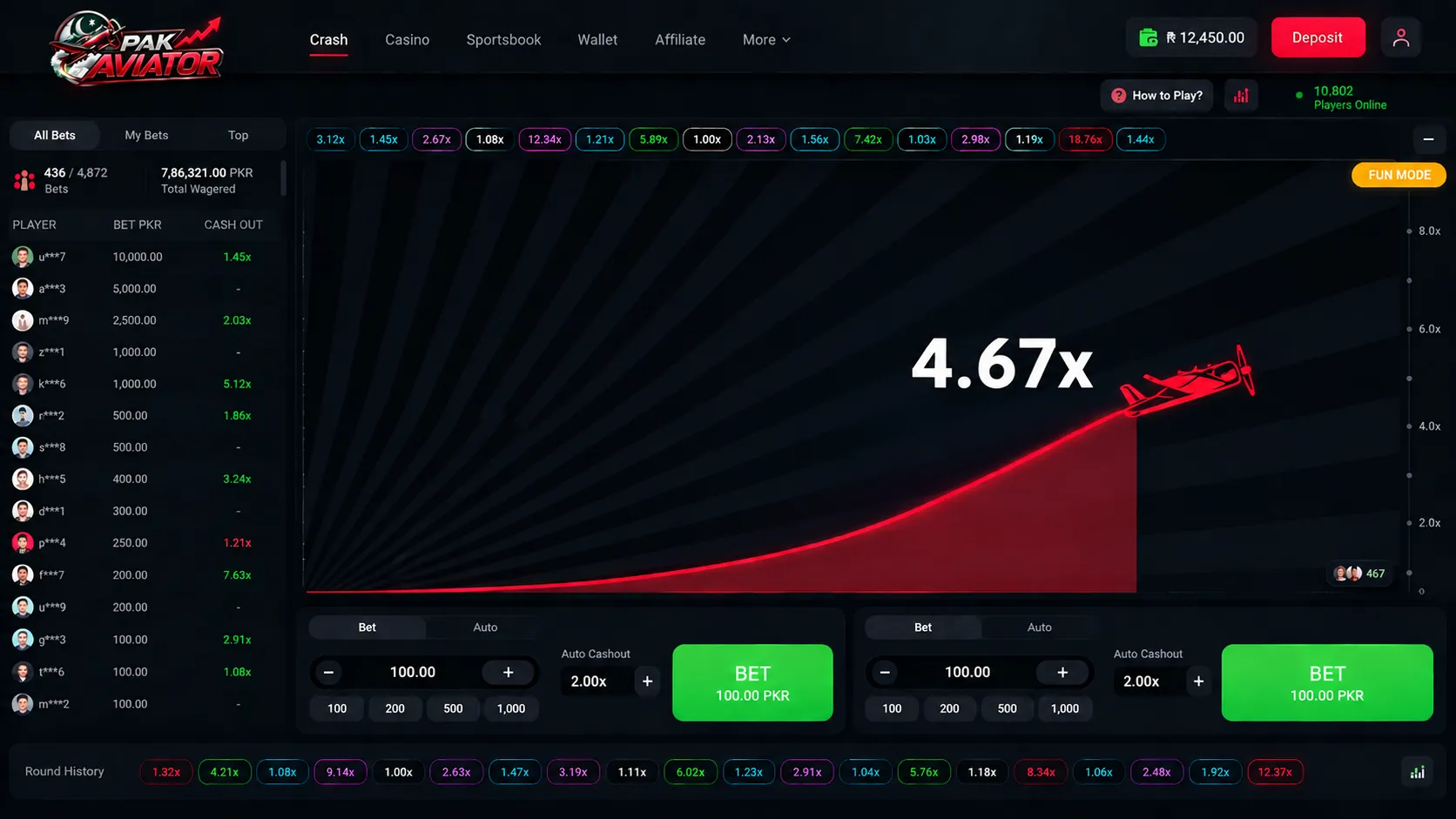
Owning the Game, Not Renting It: Custom Crash Game Development for a Lahore-Based iGaming Operator
READ CASE STUDY

Technologies & Frameworks Powering This Service





Hire Specialized Developers For Your Service Project

Flutter Developers
Pre-vetted senior Flutter Developers ready to deploy into your existing architecture in 3-7 days.

React Developers
Pre-vetted senior React Developers ready to deploy into your existing architecture in 3-7 days.

Nodejs Developers
Pre-vetted senior Nodejs Developers ready to deploy into your existing architecture in 3-7 days.

Python Developers
Pre-vetted senior Python Developers ready to deploy into your existing architecture in 3-7 days.
What Our Clients Say
“Mobile app development and cloud migration were handled smoothly. Strong technical skills, clear communication, and dependable post-launch support stood out throughout the engagement.”

Sarah Mitchell
Director of Operations, HealthFirst Clinics
Have a Project in Mind?
Let's Build It Together.
Connect directly with our senior software architects and technical leads. We evaluate your requirements and deliver an actionable technical proposal within 24 hours.
Strict NDA Protection
Your intellectual property and technical specs remain 100% confidential.
24-Hour Response Guarantee
Guaranteed evaluation and scoping reply from an engineering manager.
Zero Obligation Estimate
Get accurate cost breakdowns and tech stack recommendations free of charge.
Request Free Technical Consultation
Let's build something serious.
Diagnose your system architecture, budget ranges, and roadmap parameters with an expert.
Scoping Diagnostic
Analyze your workflows in 60 seconds. A senior AI architect reviews every parameter personally.
 4.9/5.0 Partner
 4.8/5.0 Leader
 4.9/5.0 Rated
 4.8/5.0 Excellent
Not sure where AI actually moves the needle for you?
Answer a few brief questions. We will deliver a highly concrete scoping plan within 24 hours including:
- Recommendations on automation use-cases and MVP components
- Calculations on expected ROI and engineering timelines
- A structural roadmap to make your legacy stack AI-native