
Crash Game API Integration Guide: Wallets, RTP & Delivery Models
 11 min read
How crash game API integration works: provably fair multiplier math, seamless wallet callbacks, direct API vs aggregator, and the edge cases that break integrations.
Building Your Own Engine?
Original, provably fair crash and instant-win titles — from math model to certification. Custom crash game development.
Crash games are the fastest-growing format in online gambling. Rounds last seconds, multipliers play out in real time, and session engagement routinely beats slots and table games. But adding crash to a casino is a systems-integration project, not a plugin install — it touches your wallet, your back office, your reporting and your licence.
This guide covers the mechanics end to end: the round lifecycle, the provably fair algorithm behind the multiplier, wallet and ERP integration, delivery models, and the failure modes — socket drops, duplicate settlements, partial cash-outs — that decide whether the integration survives production. If you are looking to develop a specific game instead, see the game-by-game build notes in the build-vs-buy section below.
Key takeaways
- A crash game API is a real-time WebSocket service plus a wallet-callback contract — not a set of REST endpoints.
- Outcomes are provably fair: the crash point is hash-committed before bets open and verifiable afterwards.
- The hardest engineering is the seamless wallet bridge: signed, idempotent settlement callbacks inside strict latency budgets.
- Three delivery models exist: in-house originals via iframe, partner titles via aggregator, or your own engine — with different margins, timelines and control.
- With an experienced team, direct integration to a staged go-live typically takes four to eight weeks, depending on platform readiness.
What is a crash game API?
A crash game API is the real-time interface between a crash game engine — the server that runs rounds, generates the multiplier and settles bets — and your casino platform, which owns the players, wallets and front end. A complete integration covers five jobs:
- Round-state streaming (WebSocket): multiplier value, round phase, live player list.
- Bet placement and cancellation during the betting window.
- Cash-out handling, including server-enforced auto-cash-out presets.
- Settlement events per bet, reconciled atomically with your wallet.
- Configuration and reporting: RTP, limits, and GGR feeds into your back office.
Two integration shapes exist. A native API gives the deepest control over UX and data. Iframe delivery embeds a certified game with lightweight wallet callbacks and is how most operators start. For teams building their own engine rather than integrating one, see our custom crash game development service.
How a crash game actually works: the round lifecycle
- Betting window (typically 5–7 seconds): players stake their bets, manually or via autobet. Your platform submits the bet to the API and locks the funds.
- Flight phase: the multiplier climbs from 1.00x, accelerating over time. The server streams state at high frequency (typically via WebSocket); the client renders an animated curve — a rocket, a jet, a plane.
- Cash-out: each player exits at the current multiplier. Winnings = stake × multiplier at the moment of cash-out. Auto-cash-out at a preset multiplier is enforced server-side, never client-side.
- Crash and settlement: the round ends at a pre-generated crash multiplier. Uncashed bets are lost. The API emits a settlement event per bet, which your wallet credits or debits atomically.
The provably fair crash algorithm
How the crash point is generated
crashMultiplier = max(1.00, (1 - houseEdge) / (1 - U))U is a uniform random number in [0, 1) derived from the round's seed pair. A 1% house edge therefore produces a 99% RTP curve — and because the formula is public, anyone can verify the distribution.
Seed pairs and hash chains
- Commit: before any betting, the engine generates a secret server seed and publishes its SHA-256 hash — a public commitment.
- Combine: each round mixes the server seed with a client seed and a nonce (round counter).
- Derive:
HMAC-SHA256(serverSeed, clientSeed:nonce)produces bytes normalised toU, which feeds the formula above. - Fix: the crash point is locked before the betting window opens — neither operator nor player can change it.
- Reveal: after the round, the server seed is revealed. Anyone — a player, a regulator, an aggregator — can recompute the hash chain, confirm the seed matches the commitment, and reproduce the exact crash point.
Why this matters operationally: player disputes die instantly, certification reviews go faster, and fairness becomes something you can demonstrate rather than claim.
RTP, multiplier curves and game configuration
- House edge / RTP per currency, brand or player segment (within the limits your certification allows)
- Minimum and maximum stake, per-round bet limits and max simultaneous bets
- Auto-cash-out bounds and autobet pacing, with responsible-gambling caps
- Maximum multiplier cap and crash-at-instant probability
- Round cadence — the pause between rounds, which directly affects rounds-per-hour and therefore GGR
Wallet integration: the hard part
- Seamless (single) wallet: the game never holds a balance. Every bet, cash-out and settlement calls back to your wallet API in real time. Cleaner accounting, one source of truth — but your wallet must answer within strict latency budgets, because a slow bet call blocks the round for that player.
- Transfer wallet: funds move to a provider-held game balance when the session starts and reconcile when it ends. Easier to integrate, worse player experience, and reconciliation bugs are common.
For crypto-first operators the seamless model is effectively mandatory — players expect instant movement between balance and game. A credit-based seamless wallet over BTC, ETH and USDT needs a double-entry ledger and idempotency keys, because a dropped WebSocket must never orphan a stake. A typical settlement callback looks like this:
POST /wallet/settle
{
  "eventId": "evt_7d1f4a",      // idempotency key — replays are safe
  "roundId": "r_88213",
  "betId": "b_51002",
  "playerId": "p_2041",
  "currency": "USDT",
  "type": "cashout",
  "stake": "10.00",
  "payout": "14.72",
  "multiplier": "1.472",
  "signature": "t=1730000123,v1=5f8a21..."
}
The signature (HMAC over the body plus a timestamp) prevents spoofed settlements; the eventId makes retries harmless. The round state your client renders arrives as WebSocket events:
{"type":"round.phase","roundId":"r_88213","phase":"betting","endsAt":1730000000}
{"type":"round.tick","roundId":"r_88213","multiplier":1.472,"players":184}
{"type":"round.crash","roundId":"r_88213","crashPoint":2.31,"seedHash":"9f2c..."}
Reliability and edge cases
- Socket drops: the client reconnects and re-subscribes; the server replays the last authoritative round state. Bets are never accepted or cashed out client-side — the server is the only source of truth.
- Duplicate settlements: every callback carries an idempotency key. Your wallet must deduplicate on it, not on betId alone, because a retried cash-out is a legitimate retry, not a double payout.
- Partial cash-out: games in the Spaceman mold split the stake — part locks at the current multiplier, part rides on. Server-side math must handle a stake resolved across two settlement events.
- Multi-currency precision: amounts move as integer minor units, never floats, with per-currency bet limits and rounding rules configured separately.
- Crypto settlement: game credit happens on the internal ledger event, while on-chain withdrawals batch separately through a hot/cold wallet flow — confirmations must never block a cash-out in-game.
- Autobet under load: pacing caps and per-player rate limits protect the round engine from bot-driven bet storms.
Back-office and ERP integration
Crash generates high-frequency micro-events, so the back office must ingest them properly:
- Event stream to warehouse: every bet, cash-out, settlement and round-end, replayable for dispute resolution.
- Daily reconciliation: provider settlement reports vs. your wallet ledger, with a defined cut-off and dispute window.
- GGR and tax reporting by game, brand, currency and jurisdiction.
- Responsible-gambling sync: deposit limits, loss limits and self-exclusion flags pushed to the engine in real time.
- Affiliate attribution and bonus rules, including whether crash wagers contribute to wagering requirements.
- ERP wiring: journal exports, payout approvals and KYC hooks.
For a full platform this layer comes standard in our casino and sportsbook platform development, and if you are starting from zero, our guide on how to build an online casino platform in 2026 covers the whole stack.
Direct API vs game aggregator
| Direct API | Aggregator | |
|---|---|---|
| Time to market | 4–8 weeks | 1–3 weeks if your platform already supports it |
| Catalogue | 1–20 titles | Hundreds of studios through one integration |
| Revenue share | Negotiated per provider | Typically 8–15% |
| Customisation | Deep — branding, math config, UX | Limited |
| Certification | Per provider, per market | Often pre-certified per market |
Direct makes sense when crash is strategic and you want control of the margin; an aggregator makes sense when you want breadth fast. The winning setup for most operators is a hybrid — house originals for margin, partner catalogue for depth. That is how we built our slot aggregator platform: one unified API for partner studios alongside our own originals.
Delivery models and the game catalogue
Three routes put crash games in front of your players, each with different ownership, margin and timeline:
- In-house originals via signed iframe — our own crash and instant-win titles, branded to you, licensed on a 30% GGR revenue share with no upfront fee.
- Partner titles via unified aggregator API — Aviator-style multiplayer crash and arcade titles from established third-party studios, at a 13% revenue share. Which specific branded titles are available depends on current studio agreements and your licence market — we confirm the exact catalogue during scoping.
- Your own engine — a custom build you own outright, from math model to certification.
In-house originals
| # | Game | Format |
|---|---|---|
| 1 | Crash | Multiplier curve, cash out before the crash |
| 2 | Limbo | Set a target multiplier and beat the roll |
| 3 | Slide | Short-cycle multiplier rounds |
| 4 | Trenball | Trend-based side bets on the crash chart |
| 5 | Classic Dice | Roll-over / roll-under dice |
| 6 | Towers | Climb the grid, cash out before the bust |
| 7 | Wheel | Segmented multiplier wheel |
Each original ships as a complete product: provably fair math, a multiplayer round engine, autobet, auto-cash-out, and a signed iframe into your white-label front end. Both the originals stack and the partner stack deploy fully white-labelled — your brand, your domain, your back office — as documented in our white-label iGaming platform case study.
Instant-win and partner formats
Beyond the originals, the catalogue covers the two formats players search for most: Mines-style grid games and Plinko-style physics ball-drop games — available as in-house builds or via partner studios depending on the title — plus Aviator-style multiplayer crash games sourced through aggregator partners. Availability of any specific studio title is confirmed against their distribution terms before it appears in your lobby; we do not list a branded title as deliverable until that agreement is in place.
Commercial model
- In-house originals: 30% GGR revenue share — provably fair math, branded to you, no upfront licence fee.
- Partner aggregator titles: 13% revenue share — one API, one settlement report.
Exact terms are confirmed per title and market during scoping.
Build vs buy: license, integrate, or own the engine
- License originals or partner titles when speed matters and crash is one vertical among many. You trade margin share for time to market and zero certification burden.
- Build your own when crash is strategic. A custom engine gives you IP ownership, your own math model, full branding and the full margin — at the cost of a longer timeline and a team experienced in real-time gambling systems. Our casino game development services and custom crash game case study show what that path looks like.
- Middle path (most operators): start with originals on revenue share to generate revenue and player data, then graduate to a custom engine once the vertical is proven.
What building each format takes
- A game like JetX: a multiplayer crash engine with a climbing jet multiplier, auto and partial cash-out, autobet, leaderboards and HMAC-SHA256 provably fair math — typically 12–20 weeks including certification.
- A game like Spaceman: the same crash core with a partial cash-out mechanic — lock in half the stake, ride the rest — and a theme built to your art direction.
- A game like Mines: a configurable grid where the mine count sets the risk curve, per-click provably fair RNG and instant wallet settlement — the fastest custom build we ship.
- A game like Plinko: a physics ball-drop with 8–16 risk rows and provably fair row mapping — light on infrastructure, heavy on session time.
- Limbo, Dice, Towers or Wheel variants: instant-resolve originals on the same hash-committed math core, ideal as a white-label originals suite.
In every case these are original, certified-at-build titles — never copies of another studio's code or assets. Naming an existing game describes the format and mechanics, not the product we deliver.
Choosing a crash game provider: evaluation checklist
- Certification: RNG and game math certified by a recognised lab (GLI, BMM Labs, iTech Labs or equivalent) for each jurisdiction you operate in.
- Provably fair: published verification method, per-round seed reveal, and a public verification endpoint.
- Real-time transport: WebSocket or better for round state; documented latency budget; horizontal-scaling evidence for concurrent players.
- Wallet modes: seamless wallet support with signed, idempotent callbacks — not just transfer wallet.
- Documentation and sandbox: a real sandbox with test accounts, OpenAPI specs, and a staging environment that behaves like production.
- Monitoring: round-level replay for dispute resolution, RTP variance dashboards, and status pages you can hook into alerting.
- Distribution rights: if a provider or aggregator lists branded third-party titles, ask for evidence of the underlying studio agreements before you contract.
Our regional breakdown of the top casino game development companies in Finland applies the same checklist market by market.
Integration roadmap: from sandbox to live
- Week 1 — contract and sandbox access; review API spec, event schema and wallet callback contract.
- Weeks 2–3 — wallet bridge (seamless endpoints, idempotency, signature verification) and real-time client integration (round subscription, bet and cash-out flows).
- Week 4 — back-office wiring: reporting, RG tooling, ERP events, affiliate attribution.
- Weeks 5–6 — certification and compliance review for your jurisdictions, plus load and chaos testing (callback retries, socket drops, wallet timeouts).
- Final weeks — UAT with real round replays, a dispute/verification drill, staged go-live.
Compliance and responsible gambling
Crash games are certified like any casino RNG product, but market rules differ sharply. Figures below reflect the position at publication — verify current requirements with the regulator and your legal counsel before launch.
| Market | Regulator | What it means for crash games |
|---|---|---|
| Germany | GGL | Licensed private operators only; €1,000 monthly cross-provider deposit limit; a per-bet stake tax applies; certified RNG required — see our German casino software case study |
| Finland | Under reform | Veikkaus monopoly ending; multi-licence market opening 2026–2027 — early-mover window |
| Austria | BMF | Limited online-casino licences; strict advertising rules |
| Spain | DGOJ | Licensing plus a strict advertising and responsible-gambling code |
| Canada | AGCO / iGO | Ontario's open-market model; other provinces remain monopoly-based |
| Brazil | SPA / MF | Fixed-odds betting regulated; online casino legislation still moving — monitor closely |
Across every market, engine-level responsible-gambling features are now expected: deposit and loss limits, session reality checks, self-exclusion sync, autobet pacing caps and auto-cash-out bounds.
FAQ: crash and instant-win game development
Can you build a crash game like JetX or Spaceman?
Yes — as original, certified titles with the same mechanics players expect (climbing multiplier, auto and partial cash-out, autobet) under your own branding, art and math configuration. We never copy another studio's code or assets, and we do not imply access to the originals; where licensing the actual branded title is possible in your market, that is a separate aggregator track.
What is the difference between Crash, Limbo and Dice?
All three share the same provably fair core — a hash-committed roll mapped to a multiplier. Crash visualises the multiplier climbing in real time across multiplayer rounds; Limbo resolves instantly against a target multiplier; Dice lets the player set the win chance with a roll-over/roll-under slider.
How much does it cost to build an instant-win game like Mines or Plinko?
Instant-win originals are the most economical builds because the math is simple and rounds are single-player. Multiplayer crash engines cost more — real-time infrastructure, load testing and certification. Both are scoped per project; revenue-share deployment with no upfront fee is available on our in-house catalogue.
How long does crash game API integration take?
Four to eight weeks is typical for a direct integration with an experienced team, driven mainly by how ready your wallet and back office are. Aggregator integrations are faster if already supported by your platform; iframe-delivered originals can go live in days.
What is the RTP of a crash game?
RTP is the inverse of the house edge: a 1% edge yields 99% RTP, a 3% edge yields 97%. Most popular crash games sit between 96% and 99%, and the edge is fixed per certified configuration — it cannot vary per player.
Should we use a seamless or transfer wallet?
Seamless, if your infrastructure can support it: the game never holds funds, every settlement hits your wallet in real time, and accounting has one source of truth. Transfer wallets are easier to integrate but create reconciliation debt and a worse player experience. The deciding factor is whether your wallet can answer bet callbacks within the engine's latency budget.
How does provably fair verification work after a round?
After the round the engine reveals the server seed. Anyone can hash it to confirm it matches the pre-published commitment, then recompute HMAC-SHA256 with the client seed and nonce to reproduce the exact crash point. If either check fails, the round was tampered with — which is why the mechanism doubles as a dispute-resolution tool.
How are settlement callbacks handled when our wallet is down?
The engine retries with exponential backoff against the same idempotency key until your wallet acknowledges, and keeps a replayable event log. Your side should acknowledge receipt before processing (accept, then settle) so a slow wallet never forces a duplicate. This contract belongs in week-one API review, not after the first incident.
Which games should a new casino launch with?
A proven launch mix pairs instant-resolve originals (Crash, Limbo, Dice, Towers, Wheel) with one or two multiplayer crash titles and a couple of instant-win staples (Mines-style, Plinko-style). That covers high-frequency players, brand-driven players and casual players without overloading your integration budget on day one.
Should we integrate a crash game API or build our own engine?
Integrate when speed matters and crash is one vertical among many. Build when crash is strategic and you want IP ownership, your own math model and the full margin — accepting a longer timeline and the cost of a real-time gambling team. The middle path — license first, build later — is what most operators actually choose.
Conclusion
Crash integration is a wallet problem, a latency problem and a compliance problem wrapped in a simple game. Get the seamless wallet bridge and idempotent settlement right, demand provable fairness with a public verification path, and pick the delivery model — iframe originals, aggregator catalogue, or your own engine — that matches your margin strategy.
Betadrix builds crash engines, instant-win originals and full casino platforms as part of our iGaming software development practice. Talk to our team about catalogue availability in your market, or a custom engine scoped to it.
Related reading: more from our iGaming & casino gaming insights hub — the ViewJoo case study, the Scorex case study, the VIP casino case study and the Vippo case study.
Starting From Zero?
Licensing, platform, wallet, games and compliance — the full 2026 build sequence in one guide. How to build an online casino platform.
Betadrix in-house crash and instant-win originals
Crash
Real-time multiplier curve crash game where players cash out before the curve crashes.
Limbo
Instant-resolve multiplier game where players set a target payout and beat the roll.
Slide
Short-cycle multiplier game designed for high-frequency continuous action.
Trenball
Trend-based side betting engine on top of standard live crash multipliers.
Classic Dice
Customizable roll-over and roll-under provably fair dice betting mechanics.
Towers
Grid-climbing vertical tower survival game with progressive cash-out multipliers.
Wheel
Segmented instant multiplier wheel game featuring configurable risk levels.
Proof, Not Promises
See delivered platforms and integrations in the white-label iGaming case study and the slot aggregator case study.
?Frequently Asked Questions
Can you build a crash game like JetX or Spaceman?
What is the difference between Crash, Limbo and Dice?
How much does it cost to build an instant-win game like Mines or Plinko?
How long does crash game API integration take?
What is the RTP of a crash game?
Should we use a seamless or transfer wallet?
How does provably fair verification work after a round?
How are settlement callbacks handled when our wallet is down?
Which games should a new casino launch with?
Should we integrate a crash game API or build our own engine?

Shivam Swami
Founder & CEOShivam Swami is the Founder & CEO of Betadrix, driving technical vision and AI innovation. He specializes in distributed systems, enterprise generative AI, and full-cycle product engineering for fintech, healthcare, and iGaming platforms.
Recognized & Verified Excellence
Trusted by Technical Leaders Worldwide
Verified ratings across global enterprise review platforms for custom software, AI development, and cloud engineering.
More Articles in iGaming & Casino Gaming
Related services built to solve your specific challenges



Watch.
Learn.
Grow.
Discover how our engineered solutions transform industries and propel client operations forward.
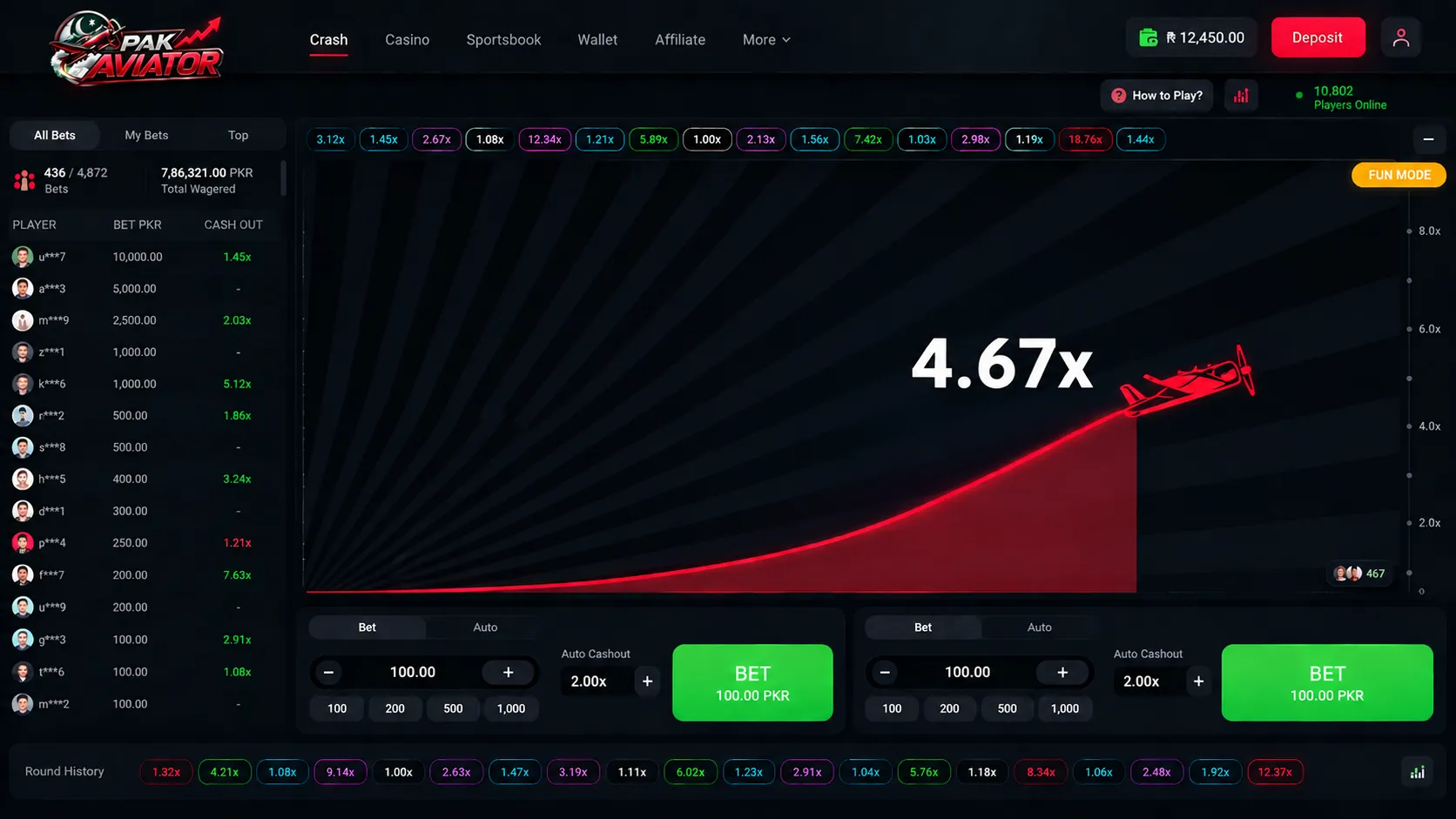
Owning the Game, Not Renting It: Custom Crash Game Development for a Lahore-Based iGaming Operator
READ CASE STUDY

Technologies & Frameworks Powering This Service




Hire Specialized Developers For Your Service Project
React Developers
Pre-vetted senior React Developers ready to deploy into your existing architecture in 3-7 days.
Flutter Developers
Pre-vetted senior Flutter Developers ready to deploy into your existing architecture in 3-7 days.

Python Developers
Pre-vetted senior Python Developers ready to deploy into your existing architecture in 3-7 days.

Nodejs Developers
Pre-vetted senior Nodejs Developers ready to deploy into your existing architecture in 3-7 days.
What Our Clients Say
“Mobile app development and cloud migration were handled smoothly. Strong technical skills, clear communication, and dependable post-launch support stood out throughout the engagement.”

Sarah Mitchell
Director of Operations, HealthFirst Clinics
Have a Project in Mind?
Let's Build It Together.
Connect directly with our senior software architects and technical leads. We evaluate your requirements and deliver an actionable technical proposal within 24 hours.
Strict NDA Protection
Your intellectual property and technical specs remain 100% confidential.
24-Hour Response Guarantee
Guaranteed evaluation and scoping reply from an engineering manager.
Zero Obligation Estimate
Get accurate cost breakdowns and tech stack recommendations free of charge.
Request Free Technical Consultation
Let's build something serious.
Diagnose your system architecture, budget ranges, and roadmap parameters with an expert.
Scoping Diagnostic
Analyze your workflows in 60 seconds. A senior AI architect reviews every parameter personally.
 4.9/5.0 Partner
 4.8/5.0 Leader
 4.9/5.0 Rated
 4.8/5.0 Excellent
Not sure where AI actually moves the needle for you?
Answer a few brief questions. We will deliver a highly concrete scoping plan within 24 hours including:
- Recommendations on automation use-cases and MVP components
- Calculations on expected ROI and engineering timelines
- A structural roadmap to make your legacy stack AI-native