
Crash Game Development Cost and Timeline: What to Budget in 2026

Founder & CEO
 8 min read
How much does crash game development cost and how long does it take? 2026 budget ranges, timelines, cost drivers and ways to cut spend. Get a quote.
Planning a crash game?
Get a scoped cost and timeline for your project from the Betadrix Tech team.
Short answer: A custom crash game typically costs $25,000 to $150,000+ and takes 8 weeks to 8 months, depending on scope.
| Scope | Typical cost | Typical timeline |
|---|---|---|
| MVP (one game, one platform, basic back office) | $25,000 – $45,000 | 8 – 12 weeks |
| Production-ready (provably fair, wallet integration, admin, analytics) | $50,000 – $90,000 | 3 – 5 months |
| Multi-title or crypto platform (multiple crash variants, multi-currency, operator APIs) | $90,000 – $150,000+ | 5 – 8 months |
These are indicative ranges for a custom build by a specialist team. Your quote depends on the factors below.
Crash games look simple: a multiplier climbs, and you cash out before it crashes. The cost isn't in the visuals. It's in the real-time engine, the fairness layer and the integrations behind them. This guide breaks down what you pay for, how long each phase takes, and where operators overspend.
If you want a number for your project instead of a range, our team builds custom crash games for operators and can scope yours quickly.
What goes into a crash game?
A crash game has five parts. Cost scales with how much of each you need.
| Component | What it does | Effort |
|---|---|---|
| Game math and RNG | Crash-point distribution, house edge, RTP | Low–Medium |
| Provably fair layer | Seed commitment so players can verify each round | Medium |
| Real-time backend | Round lifecycle, bets, cash-outs and live multiplier over WebSockets | High |
| Frontend and UI | Multiplier animation, bet panel, history, chat | Medium |
| Operator integrations | Wallet, payments, KYC, reporting, back office | High |
The real-time backend and the integrations are where budgets grow. A round must start, tick and settle for thousands of concurrent players with no dropped bets. Most teams build this on Node.js with WebSockets, Redis and PostgreSQL, which is why strong Node.js development experience matters more than animation skill.
Crash game development cost by scope
MVP: $25,000 – $45,000
One crash variant, one currency, web only, a basic admin panel and a standard fairness implementation. This works for testing a market or adding a single title to an existing lobby.
Production-ready: $50,000 – $90,000
Adds a proper provably fair system, mobile-optimized play, wallet integration, responsible-gambling controls such as limits and cool-offs, reporting and load testing. This is the realistic target for most operators going live in a licensed or semi-regulated market.
Multi-title or crypto platform: $90,000 – $150,000+
Several crash variants (classic, turbo, multiplayer), multi-currency and crypto wallets, operator APIs for third parties, and scalable infrastructure. If your crash game sits inside a broader crypto casino software build, budget it as part of the platform.
Crash game development timeline, phase by phase
| Phase | Duration | Output |
|---|---|---|
| Discovery and game design | 1 – 2 weeks | Math model, feature list, architecture |
| Backend and fairness layer | 3 – 6 weeks | Round engine, RNG, provably fair, wallet hooks |
| Frontend and UX | 2 – 4 weeks (parallel) | Game client, responsive and mobile UI |
| Integrations | 2 – 4 weeks | Payments, KYC, back office, reporting |
| QA, load testing, certification prep | 2 – 4 weeks | Test reports, fixes, audit-ready build |
| Launch and monitoring | 1 – 2 weeks | Deployment, observability, hypercare |
Phases overlap. A focused team can ship an MVP in 8 to 12 weeks. Adding more developers doesn't shorten this proportionally, because the backend and fairness work is sequential.
What drives crash game development cost up
- Provably fair and certification. A transparent seed-commit scheme is standard, but third-party RNG testing and certification fees vary by lab and jurisdiction. Budget for them separately.
- Licensing and compliance. Regulated markets add KYC/AML, responsible-gambling tooling and reporting. Our sportsbook KYC/AML architecture guide shows how deep that goes.
- Concurrency targets. Supporting 500 players and 50,000 players are different projects. Autoscaling and observability, often on Kubernetes, cost more upfront and save you at launch.
- Number of games and variants. The first game carries most of the cost, and each variant after it is much cheaper.
- Platforms. Native apps on top of web add React Native or native work.
- Third-party integrations. Every payment provider, game aggregator or operator API adds integration and test time. If you plan to plug into other platforms, read our crash game API integration guide first.
Hidden costs operators forget
- Maintenance and hosting. Plan for ongoing infrastructure plus roughly 10 – 20% of the build cost per year for fixes, upgrades and monitoring.
- RNG and security audits. Required for most licensed markets, and often repeated after major changes.
- Liquidity and risk tools. Exposure limits and max-win caps protect your bankroll.
- Player acquisition. A crash game doesn't attract players by itself.
- Compliance upkeep. Rules change by market, and your build has to follow them.
Build, white-label or integrate?
| Option | Upfront cost | Time to launch | Control |
|---|---|---|---|
| Custom build | Highest | 3 – 8 months | Full |
| White label | Lower | Weeks | Limited |
| Aggregator integration | Lowest | Days to weeks | Minimal (you rent the game) |
A custom build pays off when you want your own math, brand and margin. A white label or aggregator suits fast testing. See how fast a launch can move in our 30-day white label casino launch guide, and get the full platform view in how to build an online casino platform in 2026.
How to reduce crash game development cost without cutting corners
- Launch one game first. Add variants after you see player data.
- Keep the MVP math simple. Tune the edge and features once live.
- Reuse proven infrastructure. Wallet, auth and reporting shouldn't be rebuilt from scratch.
- Fix scope before development starts. Mid-build changes are the most common cause of overruns.
- Choose a team with iGaming delivery history. Re-work from missed compliance requirements costs more than any rate difference. See how we approached a similar real-time build in our slot aggregator platform case study.
If you need to extend your team instead of outsourcing the whole project, you can hire dedicated developers for the real-time backend.
FAQ
How much does it cost to develop a crash game?
A custom crash game usually costs $25,000 to $150,000+. An MVP sits near the low end, and a multi-title crypto platform with multi-currency support reaches the high end. Scope, integrations and compliance decide where you land.
How long does crash game development take?
Expect 8 to 12 weeks for an MVP, 3 to 5 months for a production-ready game, and 5 to 8 months for a multi-title platform. Integrations and certification add the most variance.
Is it cheaper to buy a ready-made crash game script?
Usually yes upfront, but scripts tend to carry weak fairness implementations, limited customization and hidden rework costs. They suit quick tests, not a long-term product.
What tech stack is used for crash games?
Commonly Node.js with WebSockets for the real-time engine, Redis for state, PostgreSQL for ledgers, and React or a canvas/WebGL library on the frontend, deployed on Kubernetes for scale.
What is provably fair in a crash game?
It's a cryptographic scheme where the server commits to the crash point before the round and reveals the seed afterward, so players can verify the result wasn't changed. It's a standard trust feature in crypto crash games.
Get a crash game estimate
Budgets only get precise once scope is fixed. Share your target markets, currencies and platforms, and the Betadrix Tech team will send a scoped estimate and timeline for your custom crash game.
Related Services from Betadrix
At Betadrix, we specialize in delivering enterprise-grade solutions. Explore our related services to see how we can assist with your technology goals: Crypto Casino Software Development Company | Betadrix, Casino & Sportsbook Software Development Company in Canada, B2B Casino, Sportsbook & Blockchain iGaming Platform Development in Brazil, Custom Crash Game Development | Aviator-Style Platforms | Betadrix.
Need a faster, cheaper start?
We build custom crash games from MVP to multi-title crypto platforms.
Crash game development timeline: phases
Discovery and game design
1 – 2 weeks: math model, feature list, architecture
Backend and fairness layer
3 – 6 weeks: round engine, RNG, provably fair, wallet hooks
Frontend and UX
2 – 4 weeks (parallel): game client, responsive and mobile UI
Integrations
2 – 4 weeks: payments, KYC, back office, reporting
QA, load testing, certification prep
2 – 4 weeks: test reports, fixes, audit-ready build
Launch and monitoring
1 – 2 weeks: deployment, observability, hypercare
Ready to build your crash game?
Talk to our iGaming engineers about scope, budget and launch date.
Related Services
Series Guide
iGaming & Casino Gaming
Explore Categories
Browse More Technical Topics & Industry Guides
?Frequently Asked Questions
How much does it cost to develop a crash game?
How long does crash game development take?
Is it cheaper to buy a ready-made crash game script?
What tech stack is used for crash games?
What is provably fair in a crash game?
Shivam Swami
Founder & CEOShivam Swami is the Founder & CEO of Betadrix, driving technical vision, distributed systems engineering, high-throughput iGaming platforms, and enterprise AI architecture.
Build Your Custom Project
Connect with technical architects for scope and estimation.
More Articles in iGaming & Casino Gaming



Related services built to solve your specific challenges



Watch.
Learn.
Grow.
Discover how our engineered solutions transform industries and propel client operations forward.


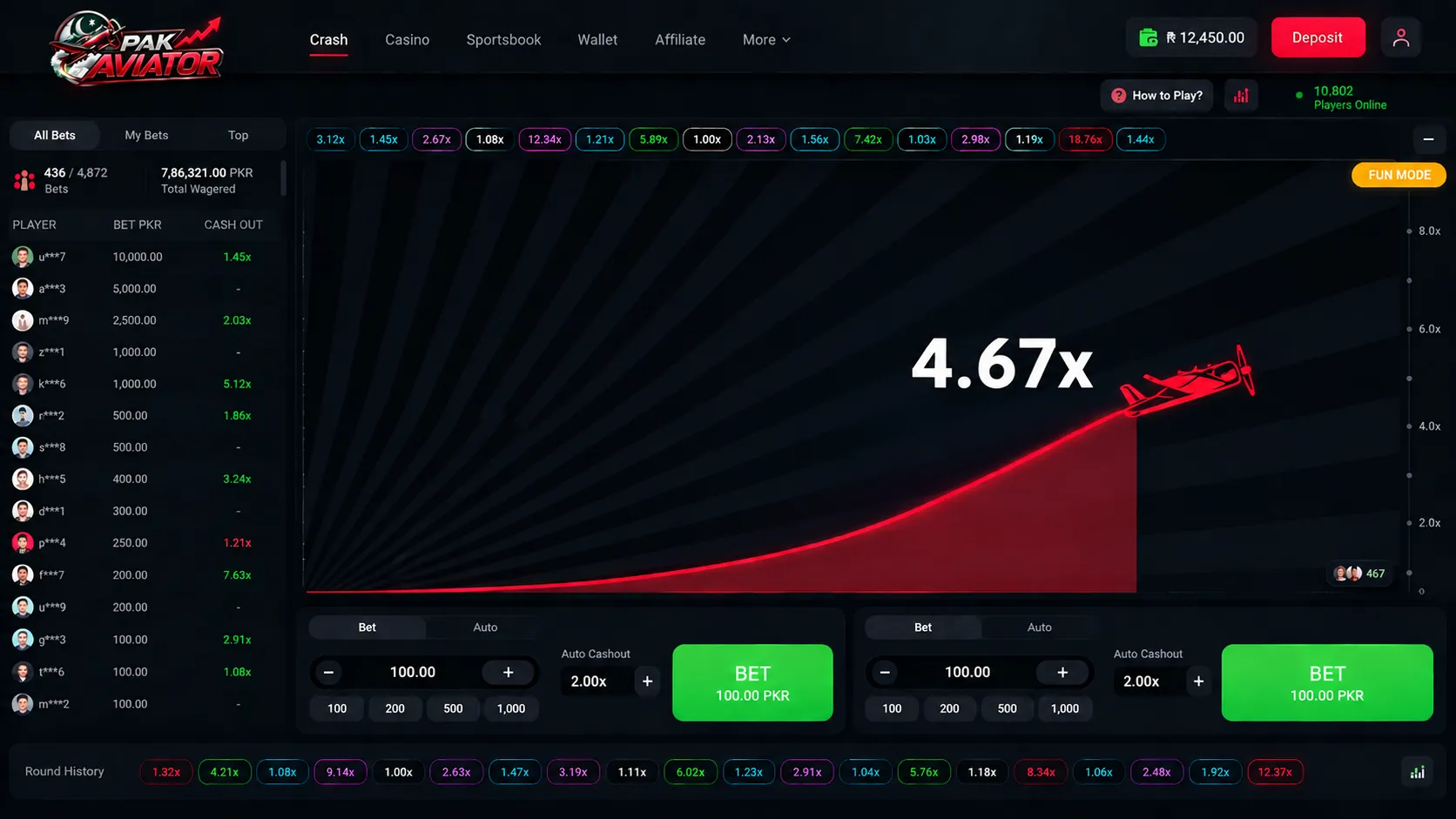
Owning the Game, Not Renting It: Custom Crash Game Development for a Lahore-Based iGaming Operator
READ CASE STUDYTechnologies & Frameworks Powering This Service



Hire Specialized Developers For Your Service Project

Nodejs Developers
Pre-vetted senior Nodejs Developers ready to deploy into your existing architecture in 3-7 days.

React Developers
Pre-vetted senior React Developers ready to deploy into your existing architecture in 3-7 days.

Flutter Developers
Pre-vetted senior Flutter Developers ready to deploy into your existing architecture in 3-7 days.

Python Developers
Pre-vetted senior Python Developers ready to deploy into your existing architecture in 3-7 days.
What Our Clients Say
“Mobile app development and cloud migration were handled smoothly. Strong technical skills, clear communication, and dependable post-launch support stood out throughout the engagement.”

Sarah Mitchell
Director of Operations, HealthFirst Clinics
Have a Project in Mind?
Let's Build It Together.
Connect directly with our senior software architects and technical leads. We evaluate your requirements and deliver an actionable technical proposal within 24 hours.
Strict NDA Protection
Your intellectual property and technical specs remain 100% confidential.
24-Hour Response Guarantee
Guaranteed evaluation and scoping reply from an engineering manager.
Zero Obligation Estimate
Get accurate cost breakdowns and tech stack recommendations free of charge.
Request Free Technical Consultation
Let's build something serious.
Diagnose your system architecture, budget ranges, and roadmap parameters with an expert.
Scoping Diagnostic
Analyze your workflows in 60 seconds. A senior AI architect reviews every parameter personally.
 4.9/5.0 Partner
 4.8/5.0 Leader
 4.9/5.0 Rated
 4.8/5.0 Excellent
Not sure where AI actually moves the needle for you?
Answer a few brief questions. We will deliver a highly concrete scoping plan within 24 hours including:
- Recommendations on automation use-cases and MVP components
- Calculations on expected ROI and engineering timelines
- A structural roadmap to make your legacy stack AI-native