
How to Build an Online Casino Platform in 2026: Tech Stack, Compliance & Costs

Senior iGaming Architect
 22 min read
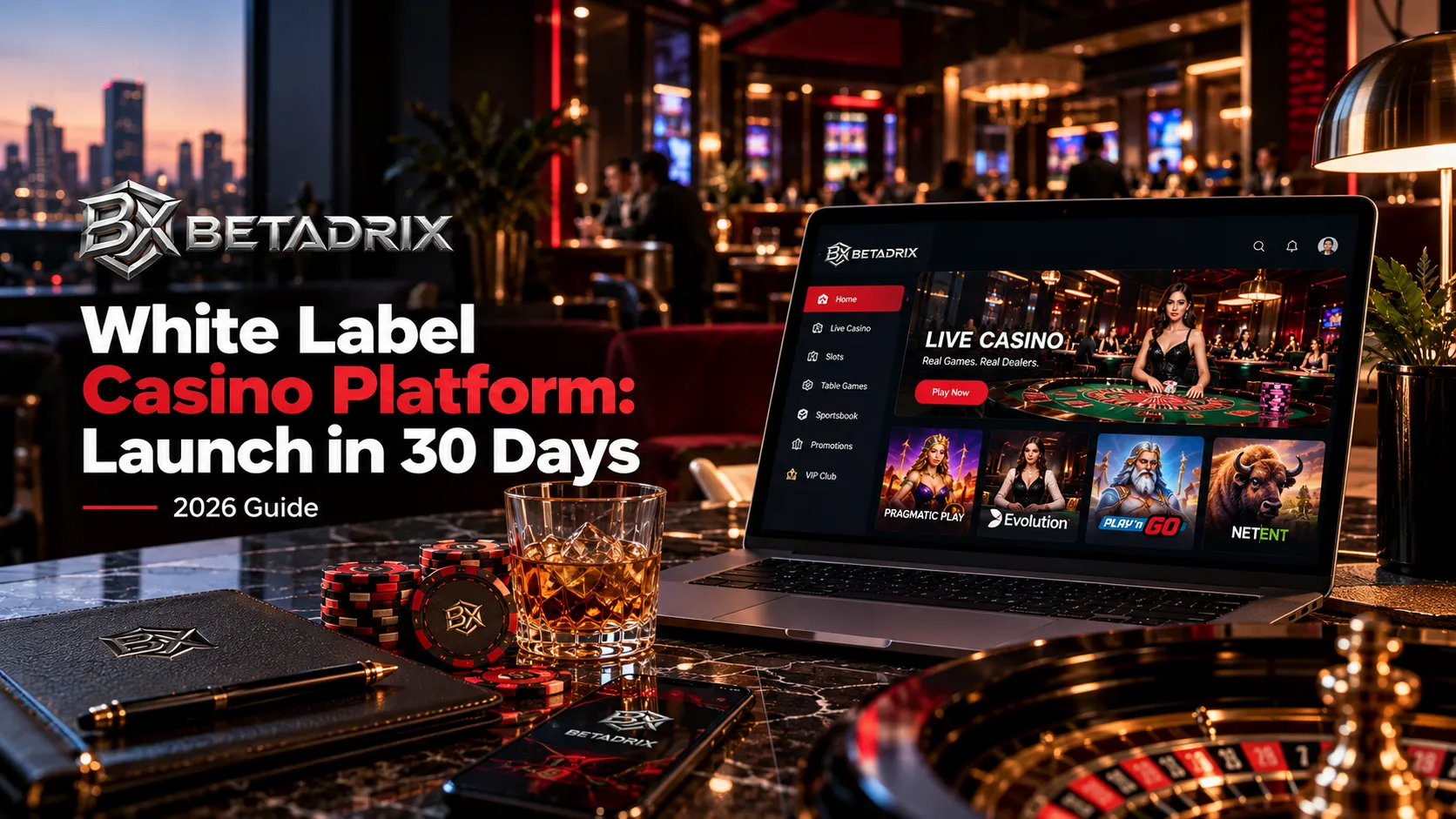
White-label vs custom casino platforms in 2026. Real costs ($30K–$2.5M), licensing timelines (MGA, Curacao, UKGC), and the tech stack that scales to 50K concurrent players. Built from 3 shipped platforms.
Skip the Research — Get the Architecture Blueprint
Download our Casino Platform Architecture Blueprint (PDF) with system diagrams, compliance checklists, and sample PAR-sheet structures. No email gate.
In 2024, a founder walked into our Jaipur office with $400K and a brief: "Build us a casino that doesn't crash during the Champions League final." Eighteen months later, their platform processes roughly 12 million slot spins daily — we know because we built the analytics pipeline that counts them. But the first six months had almost nothing to do with code.
Building an online casino in 2026 is not a software project. It's a regulatory, financial, and infrastructure marathon that happens to involve software. The teams that win understand this sequencing. The ones that fail treat it like a Shopify store with slot machines.
This guide is what I wish existed when I started. No vendor pitches. Just the actual build models, licensing path, and cost breakdown we use when scoping casino platforms at Betadrix — drawn from three shipped platforms and two that didn't make it past compliance.
Key Takeaways (TL;DR)
Three ways to launch: White-label ($30K–$150K, 4–12 weeks), Hybrid ($250K–$600K, 4–8 months), or Full Custom ($800K–$2.5M+, 10–18 months). Most serious startups should aim for Hybrid.
Licensing is your longest pole: Curacao = 2–4 months. MGA = 6–9 months. UKGC = 12+ months. Start compliance before you write game logic.
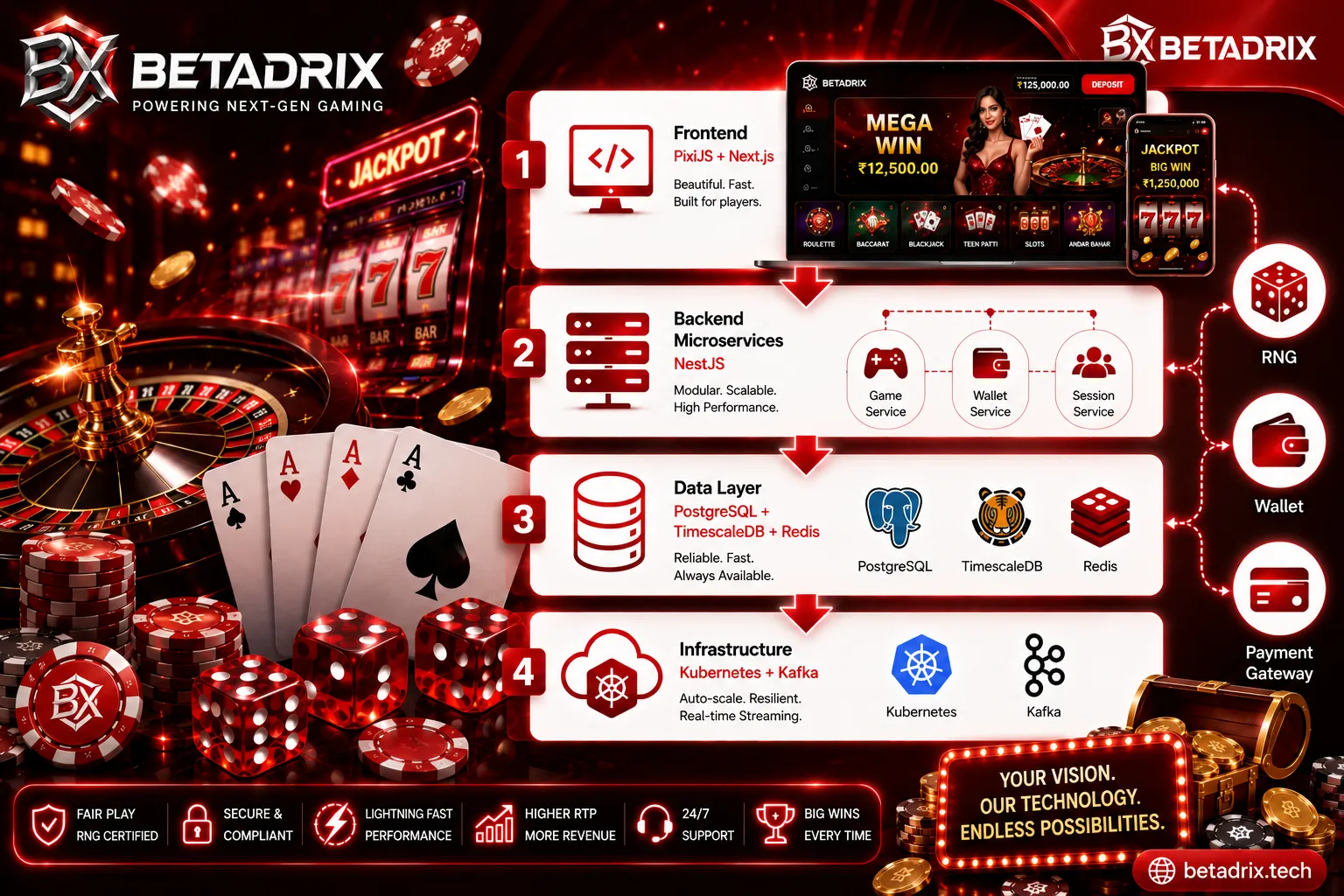
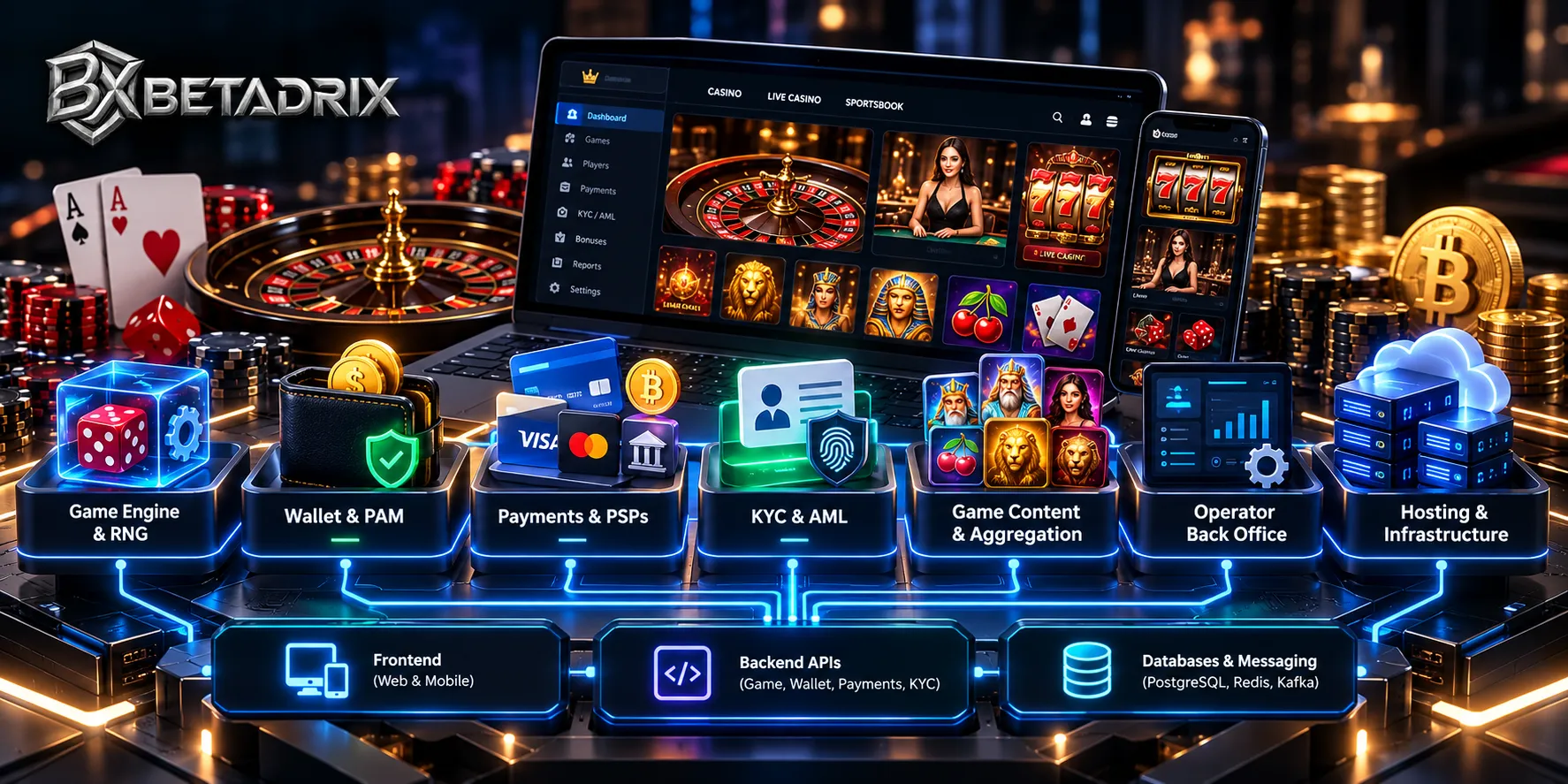
Tech stack that survives load: Next.js lobby + PixiJS game canvas, Node.js/NestJS microservices, PostgreSQL + TimescaleDB, Redis, Kafka, Kubernetes.
Crypto is now table stakes: 34% of deposits on new platforms come via USDT/ETH/BTC. You need provably fair algorithms and sub-3-second deposit confirmation.
Realistic MVP budget: $152K–$254K gets you to first revenue in 90–120 days if you scope correctly.
Download the 2026 Casino Architecture Blueprint (PDF) — system diagrams, compliance checklist, and sample PAR-sheet structure. No email gate.
Three Ways to Launch a Casino Platform in 2026
Before we talk tech, you need to pick your build model. This decision changes everything — timeline, cost, ownership, and whether you actually ship.
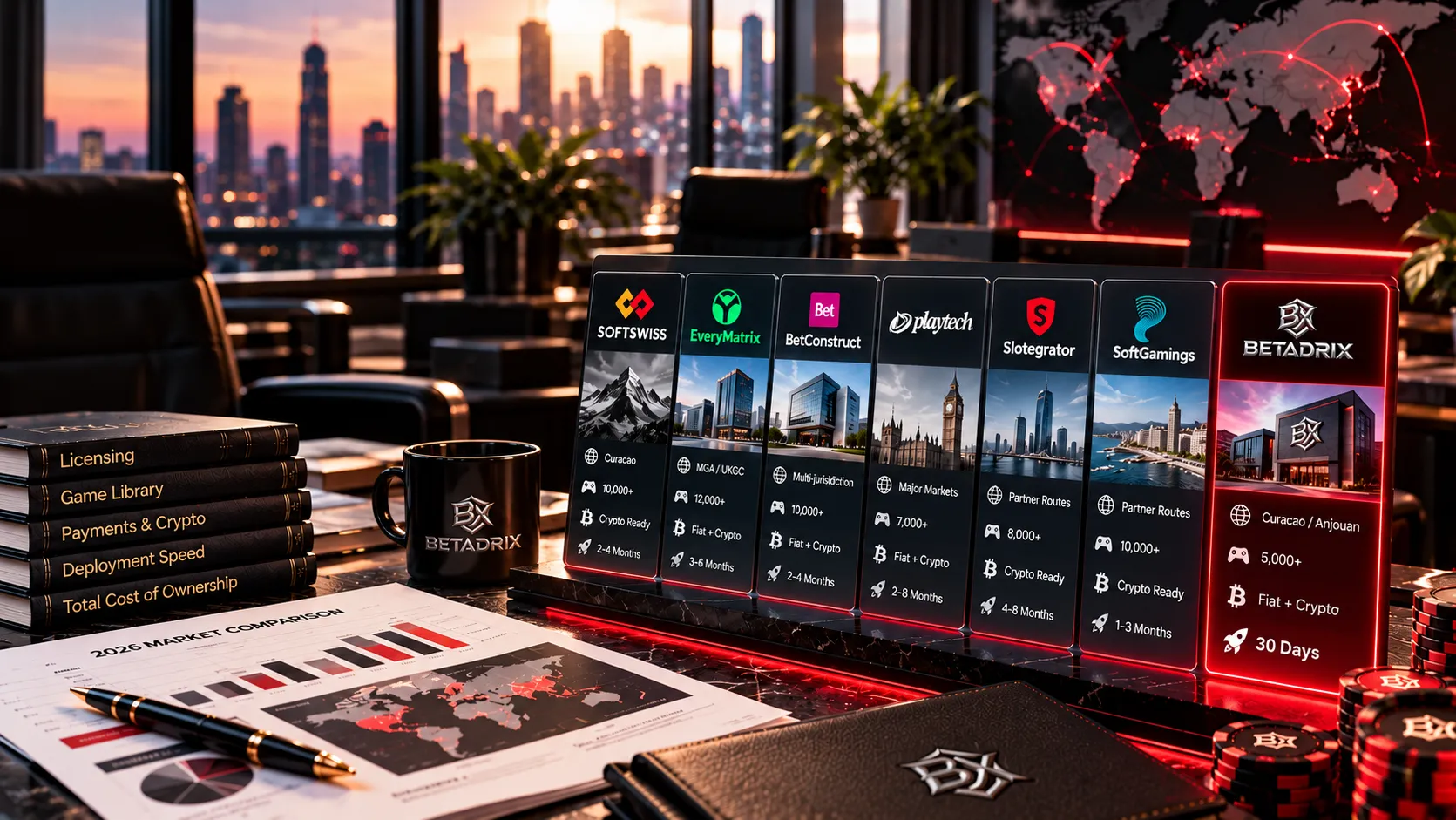
Model | Time to Launch | Upfront Cost | Ownership | Best For |
|---|---|---|---|---|
White-label / Turnkey | 4–12 weeks | $30K–$150K | Limited (skin only) | Testing a market fast, affiliate operators, minimal tech team |
Hybrid (Aggregator + Custom Core) | 4–8 months | $250K–$600K | High | Most serious startups — you own the platform, rent the games |
Full Custom Build | 10–18 months | $800K–$2.5M+ | Full | Operators with unique IP, multi-jurisdiction plans, or Series B+ funding |
Our recommendation for 2026: Start with Hybrid. You own the player wallet, the admin panel, and the brand. You rent 2,000+ games from aggregators like NetEnt, Pragmatic Play, and Evolution. Once you're cash-flow positive, you build 3–5 proprietary games that differentiate your platform.
We've guided operators through all three models. Here's how we scope each based on your budget and timeline.
Why 2026 Changes Everything for Casino Builders
Three shifts are reshaping the market right now. They affect every technical and business decision you'll make:
1. The MGA "Fast Track" Is Dead
Malta used to be the default jurisdiction for startups. In 2026, the MGA's new Technical Compliance Sandbox requires live penetration testing reports and source code audits before provisional licensing. Budget an extra $45,000–$80,000 and 4–6 months for this alone. If your architecture isn't audit-ready from day one, you're burning runway.
2. Crypto Is No Longer a Niche
About 34% of deposits on new platforms we see now come via USDT, ETH, or BTC. But integrating MetaMask isn't enough. You need provably fair algorithms on-chain, instant settlement layers, and wallet logic that handles gas spikes during live events. Players expect sub-3-second deposit confirmation. Anything slower feels broken.
3. AI-Driven Responsible Gambling Is Mandatory
The UKGC, MGA, and German GGL now require real-time behavioral monitoring. Your platform must flag at-risk players before they self-exclude. This isn't a dashboard feature. It's a streaming data pipeline that analyzes bet velocity, session length, and loss-chasing patterns in real time.
These three forces mean your platform in 2026 looks fundamentally different from what worked in 2022. Let's walk through the build.
Phase 1: Compliance Before Code (Months 1–4)
I cannot stress this enough: do not write a single line of game logic before your licensing path is clear. We've seen teams burn $200K on a beautiful React frontend only to discover their chosen jurisdiction requires a local server presence they never budgeted for.
Jurisdiction Matrix for 2026
Jurisdiction | License Cost | Timeline | Tax Rate | Best For |
|---|---|---|---|---|
Malta (MGA) | $35K–$55K | 6–9 months | 5% gaming tax | EU credibility, B2B partnerships |
Curacao | $15K–$25K | 2–4 months | 0% corporate | Speed to market, crypto focus |
Isle of Man | $50K–$70K | 8–12 months | 0–1.5% | Prestige, UK market access |
UKGC | $75K+ | 12+ months | 15–50% GGR | UK market (highest ARPU) |
Germany (GGL) | $40K–$60K | 6–8 months | 5.3% turnover | DACH market, strictest RG rules |
Our recommendation for 2026 startups: Start with Curacao for speed, run a soft launch, then parallel-track MGA for EU credibility. The dual-license strategy costs more upfront but opens every major market except the UK. We've guided three operators through this exact path — here's how we handle German compliance specifically.
What Auditors Actually Look For
When GLI or eCOGRA audits your platform, they don't care about your UI animations. They care about:
RNG isolation: Your random number generator must run on a physically separate server with no API access except through a signed, timestamped endpoint.
Transaction immutability: Every bet, win, and balance change must be append-only logged with cryptographic hashing. If an auditor finds a missing log entry, you fail.
Segregated player funds: Player balances must sit in a separate bank account or cold wallet. Commingling is an instant rejection.
Source code escrow: Most jurisdictions now require your full source code deposited with a third-party escrow agent.
We build these requirements into the architecture from sprint zero. Retrofitting them costs 3x more.
Early-stage founder? Download our Casino Licensing Roadmap (PDF) — a jurisdiction-by-jurisdiction checklist with exact document requirements, timelines, and hidden costs most consultants won't tell you about.
Phase 2: The Tech Stack That Actually Scales (Months 3–8)
Here's the stack we use for platforms targeting 10K+ concurrent users. Not because it's trendy. Because it survived a live load test where 8,000 players hit "spin" within the same 200-millisecond window during a tournament event.
Frontend: PixiJS + React/Next.js
Slot games need GPU-accelerated rendering. DOM-based animations choke at 60fps when you're animating 20 symbols across 5 reels with particle effects. We use PixiJS for the game canvas and Next.js 15 for the lobby, cashier, and admin panels.
The split matters. Game logic runs in a Web Worker to keep the main thread free. The lobby SSRs for SEO (yes, casino SEO is a thing — here's how we rank in Finland). And the cashier uses Next.js App Router with streaming for instant wallet balance updates.
Need Next.js specialists who understand iGaming performance budgets? We've got a dedicated team.
Backend: Node.js + NestJS Microservices
We run NestJS on Node.js 22 with a strict microservices boundary:
Game Service: Handles spin logic, RNG calls, and win calculation. Stateless. Horizontally scaled.
Wallet Service: Manages balances, transactions, and ledger entries. This is your most critical service. We run it on a dedicated Kubernetes node pool with PostgreSQL in synchronous replication mode.
Session Service: Tracks active players, bet velocity, and responsible gambling flags. Feeds data to a Kafka stream for real-time analytics.
Integration Service: Connects to game aggregators (SoftSwiss, EveryMatrix, Pariplay) and payment providers.
Each service communicates via gRPC internally and exposes REST/GraphQL to the frontend. We use Redis for session caching and rate limiting — a single Redis Cluster handles 120K ops/sec without breaking a sweat.
Database: PostgreSQL + TimescaleDB
Player data goes in PostgreSQL. Bet history goes in TimescaleDB (a PostgreSQL extension for time-series). Here's why this split matters:
A single slot session generates 200–400 bet events. Over a year, that's 150M+ rows per 10K MAU. Standard PostgreSQL buckles under that write load. TimescaleDB compresses historical bet data by 90% and queries a month's worth of spins in under 50ms.
We also shard by tenant for white-label platforms. If you're running multiple skin sites, our SaaS architecture handles tenant isolation at the database level.
Real-Time: WebSocket + Socket.io
Live dealer games and sportsbook odds need sub-100ms updates. We use Socket.io with Redis Adapter for multi-node broadcasting. For sportsbook specifically, we run a separate odds compiler service that pushes price changes via WebSocket the moment a market shifts.
If you're building live betting, latency is money. A 500ms delay in odds updates creates arbitrage opportunities that sharp bettors will exploit mercilessly.
DevOps: Kubernetes + GitOps
Every casino platform we build runs on Kubernetes with ArgoCD for GitOps deployment. Blue-green deployments are non-negotiable — you cannot take a casino offline for maintenance. Players are betting real money at 3 AM.
We use Prometheus and Grafana for monitoring, with custom alerts for:
RNG response time > 50ms
Wallet service error rate > 0.01%
Payment webhook failures
Responsible gambling flag queue depth
Our DevOps team handles the infrastructure setup, but we always train the client's internal team on the runbooks. Casino infrastructure is too critical for vendor lock-in.
Phase 3: Game Engine & RNG Architecture (Months 5–10)
This is where most founders get starry-eyed and blow their budget. Building proprietary slot games is expensive. A single high-quality slot with 3D assets, bonus rounds, and certified RNG costs $80K–$150K to develop.
The Smart Path: Aggregator + Proprietary Mix
We advise clients to launch with 80% aggregator content and 20% proprietary. Here's the breakdown:
Aggregator games (NetEnt, Pragmatic Play, Evolution): Instant library of 2,000+ titles. Revenue share model (10–15% GGR). Zero upfront dev cost.
Proprietary slots: 3–5 branded games that differentiate your platform. Higher margin. Better player retention.
Our slot aggregator case study walks through how we integrated 14 game providers behind a single API for a client launching in the Finnish market.
RNG: The Heart of Trust
Your RNG isn't just a `Math.random()` call. For real-money play, you need a Hardware Security Module (HSM) — a physical device that generates entropy from thermal noise. The HSM sits in a certified data center, and your game server requests random numbers via a signed API.
We use GLI-19 compliant RNGs with the following flow:
Player hits "spin."
Game server requests a random number from the HSM.
HSM returns a signed, timestamped value.
Game server maps the number to reel positions using a PAR sheet (Paytable and Reel strip).
Result is hashed and stored immutably.
Player sees the animation (client-side), but the outcome was determined server-side before the first symbol landed.
This last point is crucial. The outcome must be server-side deterministic before the client animation starts. Any client-side outcome calculation is a security vulnerability.
Provably Fair for Crypto Casinos
For crypto-native platforms, we implement provably fair using client seeds + server seeds + nonce hashing. Players can verify every bet outcome independently. We wrote a blockchain integration layer that publishes bet hashes to a public smart contract for immutable verification.
Phase 4: Payments, Crypto & Wallet Infrastructure (Months 6–10)
Payment architecture is where 40% of casino projects stumble. You need to handle:
Fiat deposits (cards, bank transfer, e-wallets)
Fiat withdrawals (with KYC verification gates)
Crypto deposits (BTC, ETH, USDT, SOL)
Crypto withdrawals (instant or batched)
Internal wallet transfers (player-to-player)
Bonus wallet segregation (wagering requirements)
Fiat Stack
We integrate Stripe for cards, Trustly for EU bank transfers, and Skrill/Neteller for e-wallets. Each has its own webhook flow, retry logic, and chargeback handling. We abstract this behind a Payment Orchestration Layer so adding a new provider is a config change, not a sprint.
Crypto Stack
Crypto payments run on a multi-sig wallet architecture. Hot wallets hold 5% of funds for instant withdrawals. Cold wallets (hardware, air-gapped) hold 95%. We use Fireblocks or Copper for institutional custody, or self-custody via Gnosis Safe for smaller operators.
Gas optimization matters. We batch small withdrawals and use EIP-1559 dynamic fee estimation to prevent transactions from getting stuck during network congestion. A stuck withdrawal is a support ticket. A thousand stuck withdrawals is a Twitter mob.
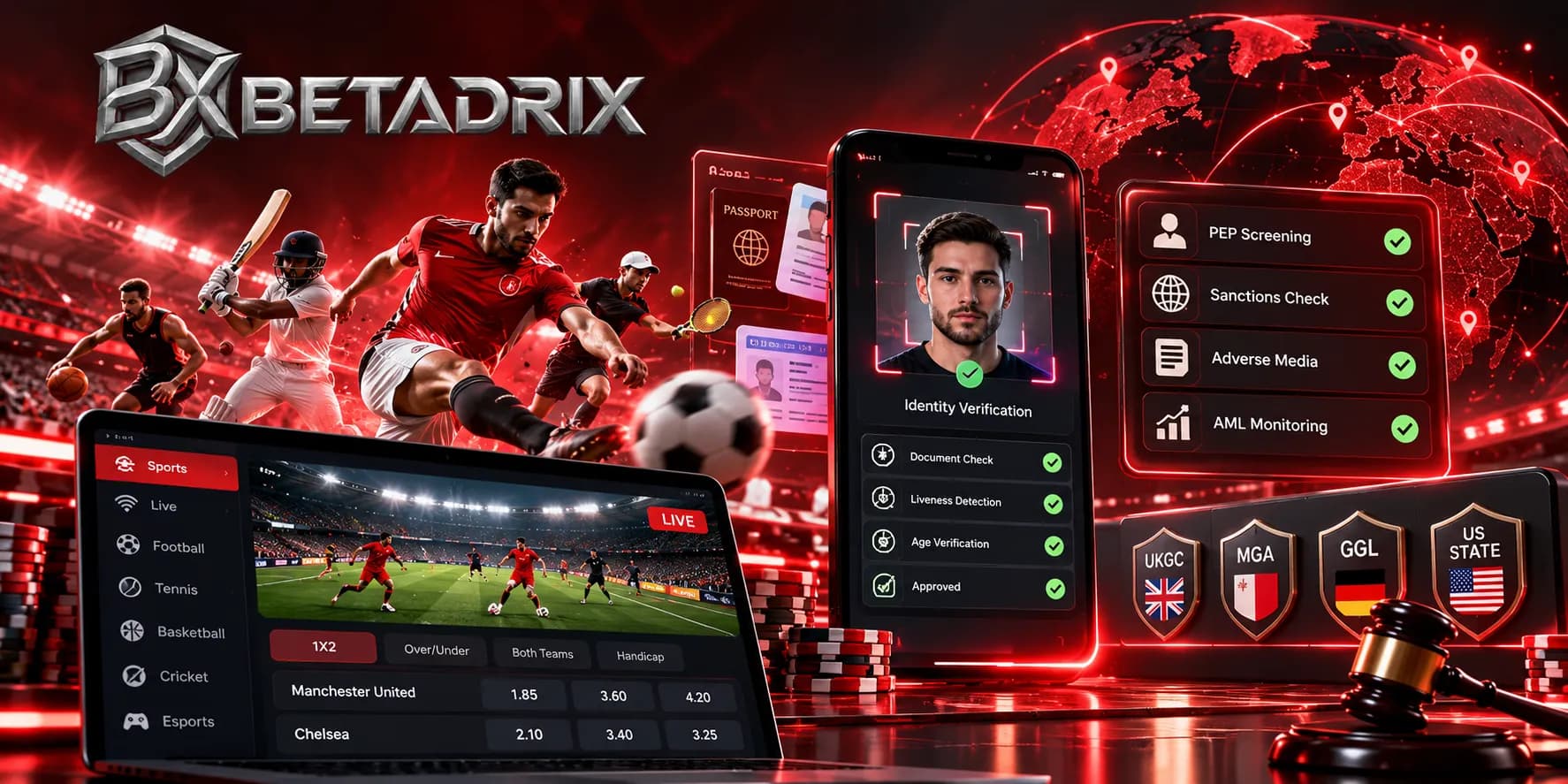
KYC & AML Automation
We integrate Sumsub or Jumio for KYC verification. The flow is:
Player uploads ID + selfie.
AI verification (liveness check, document authenticity).
PEP/sanctions screening via Refinitiv World-Check.
Manual review queue for edge cases.
On approval, fiat withdrawal limits unlock.
For crypto-only platforms, KYC thresholds vary by jurisdiction. Curacao requires KYC at $2,000 equivalent. The MGA requires it at account opening. We build the rules engine to be jurisdiction-configurable.
Phase 5: Security, Anti-Fraud & Responsible Gambling (Months 7–12)
Casino security isn't about keeping hackers out. It's about keeping insiders honest and players safe.
Anti-Fraud Layer
We run a real-time rules engine that flags:
Bonus abuse: Multiple accounts from the same device fingerprint.
Arbitrage: Odds discrepancies between your sportsbook and exchanges.
Collusion: Poker table patterns (same IP, synchronized betting).
Money laundering: Rapid deposit-play-withdraw cycles with minimal gameplay.
These rules feed a risk score (0–100). Scores above 70 trigger automatic account review. Scores above 90 freeze withdrawals pending manual investigation.
Responsible Gambling (RG) Pipeline
This is the hardest technical requirement in 2026. Your platform must:
Track every player's loss rate, session duration, and deposit velocity.
Trigger interventions at configurable thresholds (e.g., "lost $500 in 1 hour").
Enforce cooling-off periods, deposit limits, and self-exclusion instantly.
Report aggregated RG data to regulators monthly.
We built this as a stream processing pipeline using Kafka Streams. Every bet event is enriched with player history and evaluated against RG rules in < 200ms. The pipeline also generates the regulatory reports automatically — no manual CSV exports at month-end.
For German GGL compliance specifically, we implemented a 5-minute forced break after 60 minutes of play. This isn't a popup. It's a hard API gate that rejects new bets until the timer clears. Here's how we handle German RG requirements.
MVP Scope That Reaches Revenue in 90–120 Days
Founders often over-scope their MVP. You don't need live dealer, a sportsbook, and a loyalty program on day one. Here's the exact feature list that gets you to first revenue:
Core MVP (Must-Have)
Lobby: 50–100 aggregator games (slots + table games). No live dealer yet.
Wallet: One fiat payment method + one crypto option. KYC at withdrawal.
Player Account: Registration, login, balance, transaction history, basic RG settings.
Admin Panel: Player management, bonus creation, basic reporting.
CMS: Promo banners, T&Cs, FAQ.
Phase 2 (Months 4–6)
Live dealer integration (Evolution or Pragmatic Live)
Sportsbook (pre-match only, no live betting yet)
Affiliate tracking system
Advanced RG monitoring with AI flags
Phase 3 (Months 7–12)
Proprietary slot games (3–5 titles)
Live betting with sub-second odds updates
Tournament engine
VIP loyalty program
The key insight: Your first revenue comes from slots, not from being everything. A focused MVP with 100 good games and smooth payments will out-earn a bloated platform with 2,000 games and broken withdrawals.
We scope MVPs for operators launching in Finland, Germany, and Austria — each with jurisdiction-specific payment and compliance requirements baked in.
White-label vs Custom: When Each Makes Sense in 2026
This is the question we get most often. Here's the honest breakdown:
Factor | White-label / Turnkey | Hybrid | Full Custom |
|---|---|---|---|
Time to revenue | 4–12 weeks | 4–8 months | 10–18 months |
Upfront cost | $30K–$150K | $250K–$600K | $800K–$2.5M+ |
Monthly cost | $5K–$20K (revenue share) | $8K–$25K | $15K–$50K |
Game library | Instant (2,000+ titles) | Instant + custom additions | Build from scratch or aggregator |
Brand control | Limited (skin only) | Full | Full |
Data ownership | Platform provider owns data | You own everything | You own everything |
Tech team needed | None | 2–4 engineers | 8–15 engineers |
Best for | Affiliates, market testing | Serious startups, Series A | Scale-ups, unique IP |
When white-label makes sense: You have $50K, no tech team, and want to test whether your player acquisition strategy works before investing in custom build.
When hybrid makes sense: You have $300K–$600K, a small tech team, and want to own your platform while renting games. This is where 70% of our clients land.
When full custom makes sense: You have $1M+, a unique game mechanic or brand IP, and need multi-jurisdiction architecture from day one.
Not sure which bucket you fit into? Book a free 30-minute scoping call. We'll tell you honestly if white-label is the right first step.
India & Emerging Market Considerations
Our Google Search Console data shows India drives 92% of our organic clicks — and it's mostly mobile. If you're building for Indian or emerging markets, these factors change your architecture:
Payment Rails
UPI is non-negotiable in India. We integrate Razorpay and Cashfree for UPI, net banking, and wallets. For Southeast Asia, it's GCash (Philippines), DANA (Indonesia), and PromptPay (Thailand). Each requires local entity registration and compliance.
Mobile-First Design
85% of casino players in India access platforms via mobile. Your lobby, cashier, and game canvas must be thumb-optimized. We build Flutter and React Native casino apps alongside the web platform — shared backend, native frontend.
Localization
Hindi, Tamil, Telugu, and Marathi support isn't a nice-to-have. It's a conversion multiplier. We build i18n into the platform from day one, including RTL support for Middle Eastern markets.
Regulatory Gray Zones
India's gambling laws vary by state. Telangana and Andhra Pradesh have outright bans. Sikkim and Nagaland have licensing frameworks. We advise clients to structure their entity in a jurisdiction with clear iGaming law (Malta, Curacao, Isle of Man) and geoblock restricted Indian states at the DNS level.
For operators targeting India specifically, we offer a dedicated offshore team in Jaipur with iGaming experience and 24/7 overlap with European compliance teams.
The Real Cost Breakdown (2026 Numbers)
These are actual ranges from our last 8 casino builds. Your mileage will vary based on jurisdiction and game count.
Component | MVP (3–5 months) | Full Platform (8–12 months) | Enterprise (12–18 months) |
|---|---|---|---|
Licensing & Legal | $20K–$40K | $50K–$100K | $150K–$300K |
Backend Development | $60K–$90K | $150K–$250K | $400K–$700K |
Frontend & Game UI | $30K–$50K | $80K–$150K | $200K–$350K |
Game Content (proprietary) | $0 (aggregator only) | $80K–$200K | $300K–$600K |
Payment Integration | $15K–$25K | $40K–$80K | $100K–$180K |
Security & Compliance Audit | $15K–$25K | $40K–$70K | $100K–$150K |
Infrastructure (12 months) | $12K–$24K | $36K–$72K | $100K–$200K |
Total | $152K–$254K | $476K–$922K | $1.35M–$2.48M |
Hidden costs nobody talks about:
Payment provider reserves: Most PSPs hold 10% of your monthly volume for 6 months as a rolling reserve. For a $1M/month GGR operation, that's $100K locked.
Game aggregator minimums: Some providers require $5K–$10K monthly minimums regardless of player volume.
Compliance retainer: Ongoing legal and compliance advisory runs $5K–$15K/month.
Chargeback insurance: 1.5–3% of transaction volume for high-risk merchant accounts.
Our offshore development model typically reduces the development portion by 40–50% without sacrificing quality. We run the core team from Jaipur with senior architects in Malta and Estonia for compliance proximity.
Want a tailored estimate? Use our Casino Cost Calculator — input your target market, game count, and payment methods. Get a ballpark figure in 60 seconds.
What This Looks Like in Practice
Here's a real (anonymized) example from a platform we shipped in early 2025:
Client: First-time operator, $350K budget, targeting Germany and Austria.
Model: Hybrid — custom platform with 14 game aggregator integrations.
Timeline: 6 months from contract to soft launch.
Tech stack: Next.js lobby, PixiJS game canvas, NestJS microservices, PostgreSQL + TimescaleDB, Redis, Kafka, Kubernetes on AWS.
Compliance: MGA application filed in parallel with Curacao soft launch. German GGL compliance built in from sprint zero.
Result: Soft launch in Curacao at month 4 with 2,000 registered players. MGA license granted at month 9. By month 12, processing 12M+ daily spins with 99.97% uptime.
The key decision that saved them: we scoped the MVP to 80 aggregator games and zero proprietary content. They launched 4 months faster than planned, validated player acquisition costs, and only then invested in proprietary slots. That sequencing is what separates funded launches from failed ones.
Read the full technical breakdown in our slot aggregator platform case study.
5 Mistakes That Kill Casino Startups
I've seen these repeatedly. Learn from them.
1. Building the Game Engine First
Unless you have $2M+ and a 24-month runway, do not build a proprietary game engine. Use an aggregator, validate your player acquisition model, then invest in proprietary content once you're cash-flow positive.
2. Ignoring Withdrawal UX
Founders obsess over the deposit flow and treat withdrawals as an afterthought. Big mistake. A withdrawal request that takes more than 24 hours to process generates a support ticket. More than 48 hours generates a chargeback. More than 72 hours generates a Trustpilot rant that tanks your conversion rate.
3. Single-Region Launch
Launching in one country with one license is a single point of failure. A regulatory change or payment provider exit can kill your revenue overnight. We always architect for multi-jurisdiction from day one, even if you only launch one region initially.
4. Underestimating Customer Support
Casino players are anxious with their money. They will message support at 2 AM because a $20 withdrawal is "pending." Budget for 24/7 live chat from month one. AI chatbots help, but real-money players want human reassurance.
5. Treating Bonus Abuse as an Edge Case
Professional bonus hunters will cost you 15–30% of your marketing budget if you don't have automated detection. We implement device fingerprinting, behavioral clustering, and velocity checks before the first promotional campaign goes live.
Ready to Build?
If you've read this far, you're serious. Most founders stop at "I want to build a casino." You're here calculating HSM costs and Kafka partition counts. That's the difference between a launch and a successful launch.
At Betadrix, we've shipped casino backends that handle 50,000 concurrent bets, sportsbook platforms with sub-second odds updates, and crypto-wallet integrations that process $2M+ in daily volume. We don't do templates. Every architecture is custom-mapped to your jurisdiction, budget, and player profile.
Here's what happens when you reach out:
We audit your licensing path and tell you which jurisdictions make sense (and which don't).
We map a technical architecture with exact stack recommendations and cost estimates.
We scope an MVP that gets you to revenue in 90–120 days, not 12 months.
Book Your Free Architecture Review →
45 minutes. No sales pitch. Just architecture, compliance, and honest cost estimates.
Hire Dedicated Casino Developers
Node.js, PixiJS, DevOps, and full-stack engineers on monthly dedicated contracts. We've placed teams inside three iGaming startups this year.
Or explore our casino game development services, sportsbook platform builds, or crypto casino integrations to see exactly what we ship.
Last updated: August 2026. Cost figures reflect our current project rates and third-party vendor pricing. For a precise quote tailored to your jurisdiction and game requirements, contact our iGaming team.
Related Services from Betadrix
At Betadrix, we specialize in delivering enterprise-grade solutions. Explore our related services to see how we can assist with your technology goals: Custom Software Development Company | Offshore Teams, Jaipur, Casino Sportsbook Development Services | Betadrix, Custom WebRTC Application Development, Hire Dedicated WebRTC Developers.
Need Casino Developers Who've Done This Before?
Our team has built RNG-certified slot engines, sportsbook odds systems, and crypto-wallet integrations for operators in Malta, Germany, and Finland.
Still Planning? Let's Validate Your Concept
Book a free 45-minute architecture review. We'll map your compliance path, tech stack, and MVP scope.
Related Services
Series Guide
iGaming & Casino Gaming
Explore Categories
Browse More Technical Topics & Industry Guides
?Frequently Asked Questions
How much does it cost to build an online casino platform in 2026?
What is the best tech stack for an online casino platform?
How long does it take to get an online casino license?
Do I need to build my own casino games?
What is RNG certification and why does it matter?
Can I accept cryptocurrency payments on my casino platform?
White-label vs custom casino platform: which should I choose?
How long does it take to build a casino MVP that generates revenue?
Rahul Verma
Senior iGaming ArchitectRahul has led casino platform builds for operators in Malta, Curacao, and the EU. He specializes in RNG certification, sportsbook microservices, and high-throughput payment orchestration. Previously architected a slot aggregator handling 12M+ daily spins for a Finnish operator.
Build Your Custom Project
Connect with technical architects for scope and estimation.
More Articles in iGaming & Casino Gaming


Related services built to solve your specific challenges


Watch.
Learn.
Grow.
Discover how our engineered solutions transform industries and propel client operations forward.

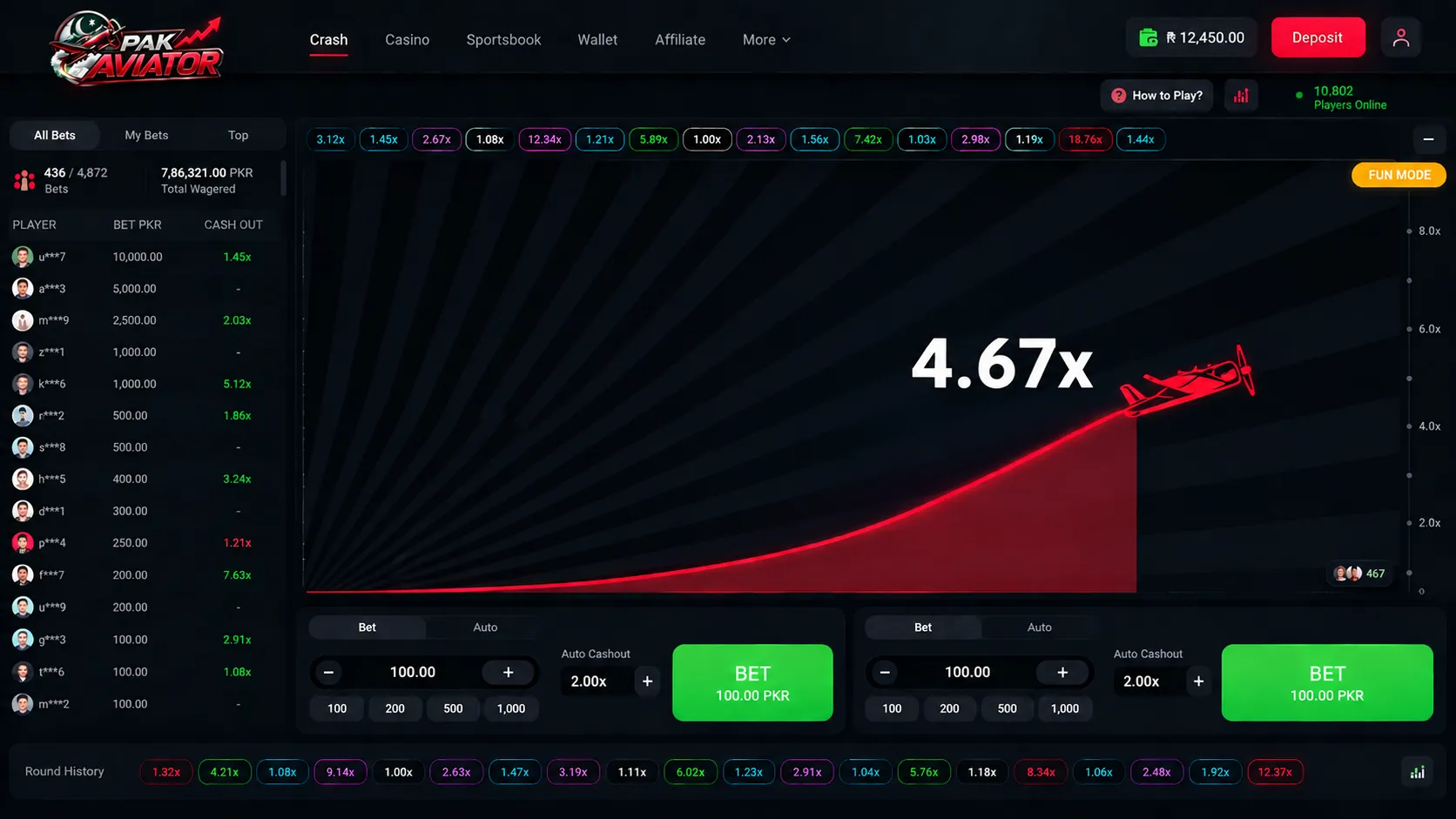
Owning the Game, Not Renting It: Custom Crash Game Development for a Lahore-Based iGaming Operator
READ CASE STUDY
Technologies & Frameworks Powering This Service





Hire Specialized Developers For Your Service Project

Nodejs Developers
Pre-vetted senior Nodejs Developers ready to deploy into your existing architecture in 3-7 days.

Python Developers
Pre-vetted senior Python Developers ready to deploy into your existing architecture in 3-7 days.
React Developers
Pre-vetted senior React Developers ready to deploy into your existing architecture in 3-7 days.
Flutter Developers
Pre-vetted senior Flutter Developers ready to deploy into your existing architecture in 3-7 days.
What Our Clients Say
“Mobile app development and cloud migration were handled smoothly. Strong technical skills, clear communication, and dependable post-launch support stood out throughout the engagement.”

Sarah Mitchell
Director of Operations, HealthFirst Clinics
Have a Project in Mind?
Let's Build It Together.
Connect directly with our senior software architects and technical leads. We evaluate your requirements and deliver an actionable technical proposal within 24 hours.
Strict NDA Protection
Your intellectual property and technical specs remain 100% confidential.
24-Hour Response Guarantee
Guaranteed evaluation and scoping reply from an engineering manager.
Zero Obligation Estimate
Get accurate cost breakdowns and tech stack recommendations free of charge.
Request Free Technical Consultation
Let's build something serious.
Diagnose your system architecture, budget ranges, and roadmap parameters with an expert.
Scoping Diagnostic
Analyze your workflows in 60 seconds. A senior AI architect reviews every parameter personally.
 4.9/5.0 Partner
 4.8/5.0 Leader
 4.9/5.0 Rated
 4.8/5.0 Excellent
Not sure where AI actually moves the needle for you?
Answer a few brief questions. We will deliver a highly concrete scoping plan within 24 hours including:
- Recommendations on automation use-cases and MVP components
- Calculations on expected ROI and engineering timelines
- A structural roadmap to make your legacy stack AI-native