
Multi-Agent Systems with LangGraph & AutoGen: Coordination Patterns, Memory & Fault Tolerance

Founder & CEO
 13 min read
Production guide to multi-agent architectures using LangGraph and AutoGen. Learn supervisor patterns, cyclic state graphs, persistent memory, and circuit breakers.
The Death of the Monolithic Prompt: Why Autonomous Agents Must Decompose
Early enterprise generative AI initiatives frequently attempted to solve complex end-to-end workflows by packing massive multi-thousand-word instructions into a single prompt. In production, these monolithic single-agent architectures consistently break down: models suffer from context window dilution, fail to prioritize conflicting constraints, hallucinate tool arguments, and lack structured mechanisms for self-correction.
To achieve commercial reliability, modern AI engineering standardizes on Multi-Agent Systems (MAS). By decomposing complex business domains into specialized, single-responsibility agent personas—orchestrated via deterministic state graphs like LangGraph—teams achieve higher task completion rates, lower token consumption, and audit-ready observability.
1. Core Coordination Patterns in Multi-Agent Systems
Selecting the appropriate coordination pattern dictates how agents exchange state and make decisions:
1. Hierarchical Supervisor Pattern
A centralized Supervisor Agent acts as a project manager, decomposing user requests into sub-tasks and delegating them to specialized workers (e.g., a WebSearcher, an SQLQueryGenerator, or a PythonExecutor). Workers return results to the supervisor, which evaluates whether the task is complete or requires additional iterations.
2. Sequential Pipeline Pattern
Agents execute in a linear conveyor belt (Agent A → Agent B → Agent C). Ideal for deterministic document processing pipelines (e.g., Raw OCR Data → Entity Normalization → Risk Scoring → Summary Generation).
3. Democratic / Consensus Voting Pattern
Multiple independent agents evaluate the same problem concurrently using distinct model providers (e.g. Claude 3.5 Sonnet, GPT-4o, and Gemini 1.5 Pro). A consensus adjudicator tallies votes or synthesizes findings, eliminating single-model cognitive bias in mission-critical applications such as fraud detection or legal contract review.
2. Production Python Implementation: LangGraph Supervisor Architecture
The following production Python application implements a resilient multi-agent team comprising a Supervisor, a ResearchAgent, and a CodeAgent, complete with a shared state schema and conditional routing edges:
from typing import Annotated, Sequence, TypedDict, Literal
import operator
from langchain_core.messages import BaseMessage, HumanMessage, AIMessage
from langchain_openai import ChatOpenAI
from langgraph.graph import StateGraph, END
from pydantic import BaseModel, Field

# 1. DEFINE SHARED AGENT STATE SCHEMA
class AgentTeamState(TypedDict):
    messages: Annotated[Sequence[BaseMessage], operator.add]
    next_worker: str
    iteration_count: int
    circuit_breaker_triggered: bool

# 2. DEFINE SUPERVISOR ROUTING SCHEMA
class SupervisorDecision(BaseModel):
    next: Literal["Researcher", "Coder", "FINISH"] = Field(
        description="The next specialized worker to invoke, or 'FINISH' if the task is complete."
    )

# 3. INITIALIZE MODELS
llm = ChatOpenAI(model="gpt-4o", temperature=0)

# 4. SUPERVISOR NODE
def supervisor_node(state: AgentTeamState):
    # Guard against infinite loops via circuit breaker
    if state["iteration_count"] >= 10:
        return {
            "next_worker": "FINISH",
            "circuit_breaker_triggered": True,
            "messages": [AIMessage(content="Circuit breaker triggered: Exceeded maximum safe iteration limit.")]
        }

    system_prompt = (
        "You are the supervisor of a specialized engineering squad consisting of: 'Researcher' and 'Coder'.\n"
        "Analyze the conversation and choose the next worker to execute. If the user's objective is fully accomplished, return 'FINISH'."
    )

    messages = [{"role": "system", "content": system_prompt}] + list(state["messages"])
    decision = llm.with_structured_output(SupervisorDecision).invoke(messages)

    return {
        "next_worker": decision.next,
        "iteration_count": state["iteration_count"] + 1
    }

# 5. SPECIALIZED WORKER NODES
def researcher_node(state: AgentTeamState):
    research_prompt = "You are an elite technical research specialist. Provide structured factual findings."
    messages = [{"role": "system", "content": research_prompt}] + list(state["messages"])
    response = llm.invoke(messages)
    return {
        "messages": [AIMessage(content=f"[Researcher Findings]: {response.content}")]
    }

def coder_node(state: AgentTeamState):
    coder_prompt = "You are a senior software architect. Implement robust, clean, well-tested code."
    messages = [{"role": "system", "content": coder_prompt}] + list(state["messages"])
    response = llm.invoke(messages)
    return {
        "messages": [AIMessage(content=f"[Coder Implementation]: {response.content}")]
    }

# 6. BUILD THE STATE GRAPH
workflow = StateGraph(AgentTeamState)

# Add nodes
workflow.add_node("Supervisor", supervisor_node)
workflow.add_node("Researcher", researcher_node)
workflow.add_node("Coder", coder_node)

# Add conditional routing edge from Supervisor
workflow.add_conditional_edges(
    "Supervisor",
    lambda state: state["next_worker"],
    {
        "Researcher": "Researcher",
        "Coder": "Coder",
        "FINISH": END
    }
)

# Connect workers back to Supervisor for evaluation
workflow.add_edge("Researcher", "Supervisor")
workflow.add_edge("Coder", "Supervisor")

# Set entry point
workflow.set_entry_point("Supervisor")

# Compile executable graph
app = workflow.compile()
3. Distributed Checkpointing and Fault Tolerance
In production enterprise deployments, multi-agent workflows may execute over minutes or hours. If a node process crashes mid-execution, re-running the entire workflow from scratch wastes API tokens and duplicates side effects.
LangGraph features native Checkpointers (such as PostgresSaver and RedisSaver) that persist a serialized snapshot of the entire graph state at every execution step:
- Time-Travel Debugging: Developers can inspect previous state snapshots, edit a message or tool output, and replay execution from any historical node.
- Fault Resilience: If a container terminates, the workflow automatically resumes from the last successfully checkpointed step upon worker restart.
- Human-in-the-Loop (HITL): The graph can pause execution immediately prior to destructive tool invocations (such as issuing SQL updates or initiating financial transfers), awaiting explicit human authorization via a REST API.
Framework Comparison: LangGraph vs AutoGen vs CrewAI
| Evaluation Metric | LangGraph (LangChain) | Microsoft AutoGen | CrewAI |
|---|---|---|---|
| Core Abstraction | Cyclic Computation Graph | Conversational Chat Actors | Role-Playing Task Teams |
| State Determinism | Strict Typed State Schema | Dynamic Chat History | Shared Memory Context |
| Persistence & Checkpointing | Built-in (Postgres/Redis) | Custom / External | Basic Memory Layer |
| Human-in-the-Loop | Native (Pause & Resume) | Console Prompts | Basic Review Gates |
| Production Readiness | High (Enterprise Grade) | Moderate (Research Focus) | Moderate (Rapid Prototypes) |
Production Best Practices for Multi-Agent Systems
- Enforce Hard Recursion Limits: Always pass
config={"recursion_limit": 25}when invoking graph executors to prevent runaway agent loops from consuming thousands of dollars in LLM API credits. - Isolate System Prompts: Never share a single monolithic prompt across workers. Each worker's prompt must focus strictly on its designated domain and available tool definitions.
- Utilize Structured Tool Calling: Force models to return strictly typed Pydantic or JSON schemas instead of freeform Markdown to eliminate downstream parsing failures.
- Implement Token Usage Throttling: Track accumulated token usage inside the shared state object and trigger graceful fallback routines when predefined operational budgets are reached.
Enterprise Agentic AI Engineering with Betadrix
Transitioning from basic chatbots to autonomous multi-agent production systems requires robust software architecture, stateful orchestration, and comprehensive security controls. At Betadrix, our AI engineering practice builds production multi-agent systems, custom LangGraph workflows, and enterprise retrieval architectures. Discover our AI development services, consult our custom software development offerings, or explore our Python development services to accelerate your autonomous agent roadmap.
Related Services from Betadrix
Coordinating multiple autonomous agents across complex workflows demands rigorous orchestration patterns and fault-tolerant message passing. Betadrix's AI & machine learning development services are purpose-built for multi-agent architectures. We also provide DevOps services to manage the containerised runtimes, observability pipelines, and CI/CD systems your agent fleet depends on.
Related Services
Series Guide
AI & Intelligent Systems
Explore Categories
Browse More Technical Topics & Industry Guides
?Frequently Asked Questions
Why are multi-agent systems superior to monolithic single-prompt LLM agents for complex workflows?
What is the core difference between LangGraph and Microsoft AutoGen?
How do you prevent infinite loops between agents debating each other?
How is shared state and conversation memory managed across independent agents in LangGraph?
What is the Human-in-the-Loop (HITL) pattern in LangGraph?
How does Betadrix help enterprises architect autonomous multi-agent systems?
Shivam Swami
Founder & CEOShivam Swami is the Founder & CEO of Betadrix, driving technical vision, distributed systems engineering, high-throughput iGaming platforms, and enterprise AI architecture.
Build Your Custom Project
Connect with technical architects for scope and estimation.
More Articles in AI & Machine Learning


Related services built to solve your specific challenges



Watch.
Learn.
Grow.
Discover how our engineered solutions transform industries and propel client operations forward.
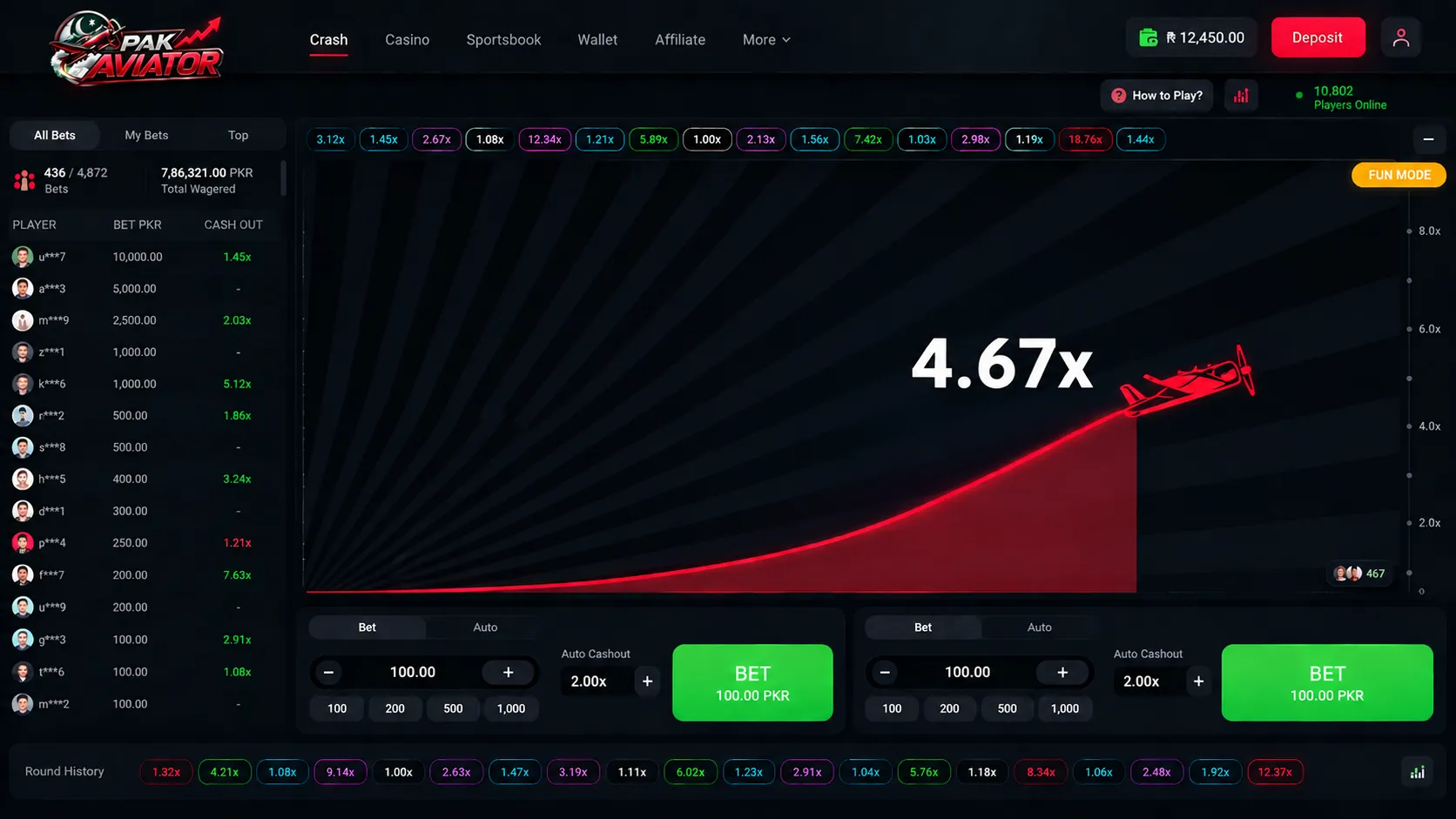
Owning the Game, Not Renting It: Custom Crash Game Development for a Lahore-Based iGaming Operator
READ CASE STUDY

Technologies & Frameworks Powering This Service


Model Context Protocol (MCP) Development | Enterprise AI Agent Infrastructure | Betadrix
ai



Hire Specialized Developers For Your Service Project

Nodejs Developers
Pre-vetted senior Nodejs Developers ready to deploy into your existing architecture in 3-7 days.

Flutter Developers
Pre-vetted senior Flutter Developers ready to deploy into your existing architecture in 3-7 days.

Python Developers
Pre-vetted senior Python Developers ready to deploy into your existing architecture in 3-7 days.

React Developers
Pre-vetted senior React Developers ready to deploy into your existing architecture in 3-7 days.
What Our Clients Say
“Mobile app development and cloud migration were handled smoothly. Strong technical skills, clear communication, and dependable post-launch support stood out throughout the engagement.”

Sarah Mitchell
Director of Operations, HealthFirst Clinics
Have a Project in Mind?
Let's Build It Together.
Connect directly with our senior software architects and technical leads. We evaluate your requirements and deliver an actionable technical proposal within 24 hours.
Strict NDA Protection
Your intellectual property and technical specs remain 100% confidential.
24-Hour Response Guarantee
Guaranteed evaluation and scoping reply from an engineering manager.
Zero Obligation Estimate
Get accurate cost breakdowns and tech stack recommendations free of charge.
Request Free Technical Consultation
Let's build something serious.
Diagnose your system architecture, budget ranges, and roadmap parameters with an expert.
Scoping Diagnostic
Analyze your workflows in 60 seconds. A senior AI architect reviews every parameter personally.
 4.9/5.0 Partner
 4.8/5.0 Leader
 4.9/5.0 Rated
 4.8/5.0 Excellent
Not sure where AI actually moves the needle for you?
Answer a few brief questions. We will deliver a highly concrete scoping plan within 24 hours including:
- Recommendations on automation use-cases and MVP components
- Calculations on expected ROI and engineering timelines
- A structural roadmap to make your legacy stack AI-native