
Implementing GitOps on Kubernetes with Argo CD: Multi-Cluster Architecture & Production Guide

Founder & CEO
 13 min read
Production guide for GitOps with Argo CD on Kubernetes. Learn multi-cluster ApplicationSet patterns, External Secrets, automated sync policies, and canary rollouts.
The Modern Kubernetes Paradigm: Why Push-Based Deployments Fail at Scale
Traditional CI/CD pipelines relying on push-based delivery (such as GitLab CI or GitHub Actions runners executing kubectl apply -f with long-lived cluster admin credentials) represent one of the most critical security liabilities and operational bottlenecks in enterprise infrastructure. If a CI runner is compromised, attackers inherit root credentials to production Kubernetes clusters. Furthermore, traditional pipelines suffer from configuration drift: when an engineer hotfixes an outage via manual kubectl edit, the modification is never captured in source control.
GitOps solves these systemic failure modes by establishing Git as the single, immutable source of truth for all declarative infrastructure and application manifests. With Argo CD, an in-cluster control loop pulls desired state from Git repositories and continuously reconciles the live cluster state, automatically repairing any unauthorized configuration drift within seconds.
1. Multi-Cluster Architecture with Argo CD ApplicationSet
While early GitOps adopters relied on the recursive "App-of-Apps" pattern, modern multi-cluster enterprise deployments standardize on the ApplicationSet controller. An ApplicationSet generates parameterized Argo CD Application custom resources dynamically across hundreds of edge or cloud clusters using declarative generators.
Production YAML: Multi-Cluster ApplicationSet with Matrix Generator
The following production manifest targets all workload clusters registered in Argo CD, deploying environment-specific Kustomize overlays based on cluster labels:
apiVersion: argoproj.io/v1alpha1
kind: ApplicationSet
metadata:
  name: enterprise-workloads
  namespace: argocd
spec:
  goTemplate: true
  goTemplateOptions: ["missingkey=error"]
  generators:
    - matrix:
        generators:
          # 1. Discover all clusters labeled with type: workload
          - clusters:
              selector:
                matchLabels:
                  type: workload
          # 2. Iterate through all application folders in Git
          - git:
              repoURL: https://github.com/betadrix-corp/k8s-platform-manifests.git
              revision: main
              directories:
                - path: apps/*
  template:
    metadata:
      name: '{{.path.basename}}-{{.name}}'
      labels:
        environment: '{{.metadata.labels.env}}'
        region: '{{.metadata.labels.region}}'
    spec:
      project: default
      source:
        repoURL: https://github.com/betadrix-corp/k8s-platform-manifests.git
        targetRevision: main
        path: '{{.path.path}}/overlays/{{.metadata.labels.env}}'
      destination:
        server: '{{.server}}'
        namespace: '{{.path.basename}}'
      syncPolicy:
        automated:
          prune: true
          selfHeal: true
          allowEmpty: false
        syncOptions:
          - CreateNamespace=true
          - ApplyOutOfSyncOnly=true
          - RespectIgnoreDifferences=true
        retry:
          limit: 5
          backoff:
            duration: 5s
            factor: 2
            maxDuration: 3m
2. Production Secret Management: External Secrets Operator (ESO)
A frequent objection to GitOps is: "How do we manage database passwords and API tokens without committing plaintext secrets to Git?"
The enterprise standard is the External Secrets Operator (ESO). Developers commit declarative ExternalSecret and SecretStore manifests to Git. At runtime, ESO connects via IAM roles (e.g. AWS IRSA or Google Workload Identity) to HashiCorp Vault, AWS Secrets Manager, or Azure Key Vault, retrieving encrypted payloads and generating native Kubernetes Secrets purely in-memory.
Production YAML: ExternalSecret with AWS Secrets Manager
apiVersion: external-secrets.io/v1beta1
kind: ExternalSecret
metadata:
  name: payment-gateway-secrets
  namespace: payments
spec:
  refreshInterval: 1h
  secretStoreRef:
    name: aws-secrets-manager
    kind: ClusterSecretStore
  target:
    name: payment-gateway-env-secret
    creationPolicy: Owner
  data:
    - secretKey: STRIPE_SECRET_KEY
      remoteRef:
        key: production/payment/stripe
        property: api_key
    - secretKey: DB_PASSWORD
      remoteRef:
        key: production/payment/aurora
        property: password
3. Progressive Canary Delivery with Argo Rollouts
Standard Kubernetes RollingUpdate strategies lack fine-grained traffic shaping and automatic rollback based on real-time application metrics. When a new container version contains a subtle memory leak or edge-case 500 error, standard rolling updates will replace 100% of healthy pods before the issue is diagnosed.
Argo Rollouts replaces standard Deployments with custom Rollout resources supporting canary traffic shifting. It integrates directly with AWS ALB, NGINX Ingress, or Istio service meshes, shifting 5%, 20%, and 50% of production traffic while querying Prometheus for HTTP error rate anomalies.
Production Rollout Specification with Automated Metric Analysis
apiVersion: argoproj.io/v1alpha1
kind: Rollout
metadata:
  name: checkout-api
  namespace: ecommerce
spec:
  replicas: 10
  strategy:
    canary:
      analysis:
        templates:
          - templateName: success-rate-metric-check
        args:
          - name: service-name
            value: checkout-api
      steps:
        - setWeight: 10
        - pause: { duration: 5m }
        - setWeight: 25
        - pause: { duration: 10m }
        - setWeight: 50
        - pause: { duration: 15m }
  template:
    metadata:
      labels:
        app: checkout-api
    spec:
      containers:
        - name: checkout-api
          image: betadrix/checkout-api:v2.4.1
          ports:
            - containerPort: 8080
GitOps Multi-Cluster Maturity Matrix
| Operational Capability | Level 1: Push CI/CD | Level 2: Basic GitOps | Level 3: Enterprise GitOps |
|---|---|---|---|
| Access Control & Credentials | CI runners possess direct cluster admin tokens | In-cluster Argo CD pulls from single repo | Zero external cluster credentials; IAM Workload Identity |
| Drift Detection & Healing | None (Manual overrides persist indefinitely) | Alerting on OutOfSync status | Automated self-healing within 30 seconds |
| Multi-Cluster Management | Separate pipeline scripts per cluster | App-of-Apps tree per environment | ApplicationSets with Matrix Generators & Label Selectors |
| Secret Handling | CI variables passed via script parameters | Bitnami SealedSecrets committed to Git | External Secrets Operator with Vault / AWS Secrets Manager |
| Release Strategy | All-at-once or crude rolling update | Blue/Green switchover | Automated Canary with Prometheus metric threshold validation |
Production Best Practices Checklist for Argo CD
- Separate Code Repos from Config Repos: Never place Kubernetes manifests in the same repository as application source code. Placing manifests in a dedicated
configrepo prevents endless CI webhook trigger loops when automated release scripts commit new container tags. - Enable Automated Prune and Self-Heal: Ensure
prune: trueandselfHeal: trueare active. Withoutprune, deleted manifests in Git remain orphaned in the cluster. WithoutselfHeal, accidental manual changes remain unchecked. - Pin Helm and Kustomize Versions: Avoid using
targetRevision: HEADorversion: latest. Always pin target revisions to specific Git commit SHAs or explicit semver tags to ensure reproducible deployments. - Restrict Argo CD RBAC: Do not grant developer teams default
adminpermissions in Argo CD. Enforce role-based access control (RBAC) integrated with Okta or Google Workspace SSO, granting developers read-only UI access and sync permissions only on non-production namespaces.
Modernize Your Cloud Infrastructure with Betadrix
Modernizing legacy deployment pipelines to enterprise GitOps transforms engineering velocity, slashes deployment risk, and eliminates configuration drift across distributed Kubernetes fleets. At Betadrix, our certified Kubernetes architects design resilient, multi-cloud cloud infrastructures for high-growth enterprises. Discover our Kubernetes development services, consult our DevOps services, or cloud consulting services to modernize your delivery pipelines.
Related Services from Betadrix
Implementing GitOps with Argo CD shifts release safety from manual push operations to automated pull reconciliation. Betadrix provides comprehensive DevOps consulting services, including multi-cluster Kubernetes orchestration, External Secrets Operator configuration, and progressive canary delivery via Argo Rollouts. Pair this with our cloud consulting services to optimize cloud cost and build automated GitOps delivery pipelines.
Related Services
Series Guide
Cloud & DevOps Automation
Explore Categories
Browse More Technical Topics & Industry Guides
?Frequently Asked Questions
What is the core difference between traditional push CI/CD and GitOps pull delivery?
How should secrets be handled securely in GitOps without committing plaintext to Git?
What is the difference between Argo CD App-of-Apps and ApplicationSet?
How does Argo CD handle progressive delivery and zero-downtime canary deployments?
Can Argo CD manage multiple Kubernetes clusters from a single management plane?
How does Betadrix assist enterprises with Kubernetes and GitOps modernization?
Shivam Swami
Founder & CEOShivam Swami is the Founder & CEO of Betadrix, driving technical vision, distributed systems engineering, high-throughput iGaming platforms, and enterprise AI architecture.
Build Your Custom Project
Connect with technical architects for scope and estimation.
More Articles in AI & Machine Learning



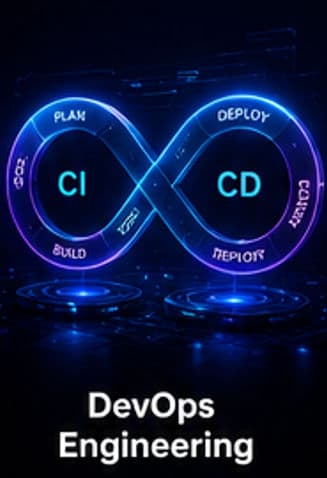
Related services built to solve your specific challenges


Watch.
Learn.
Grow.
Discover how our engineered solutions transform industries and propel client operations forward.
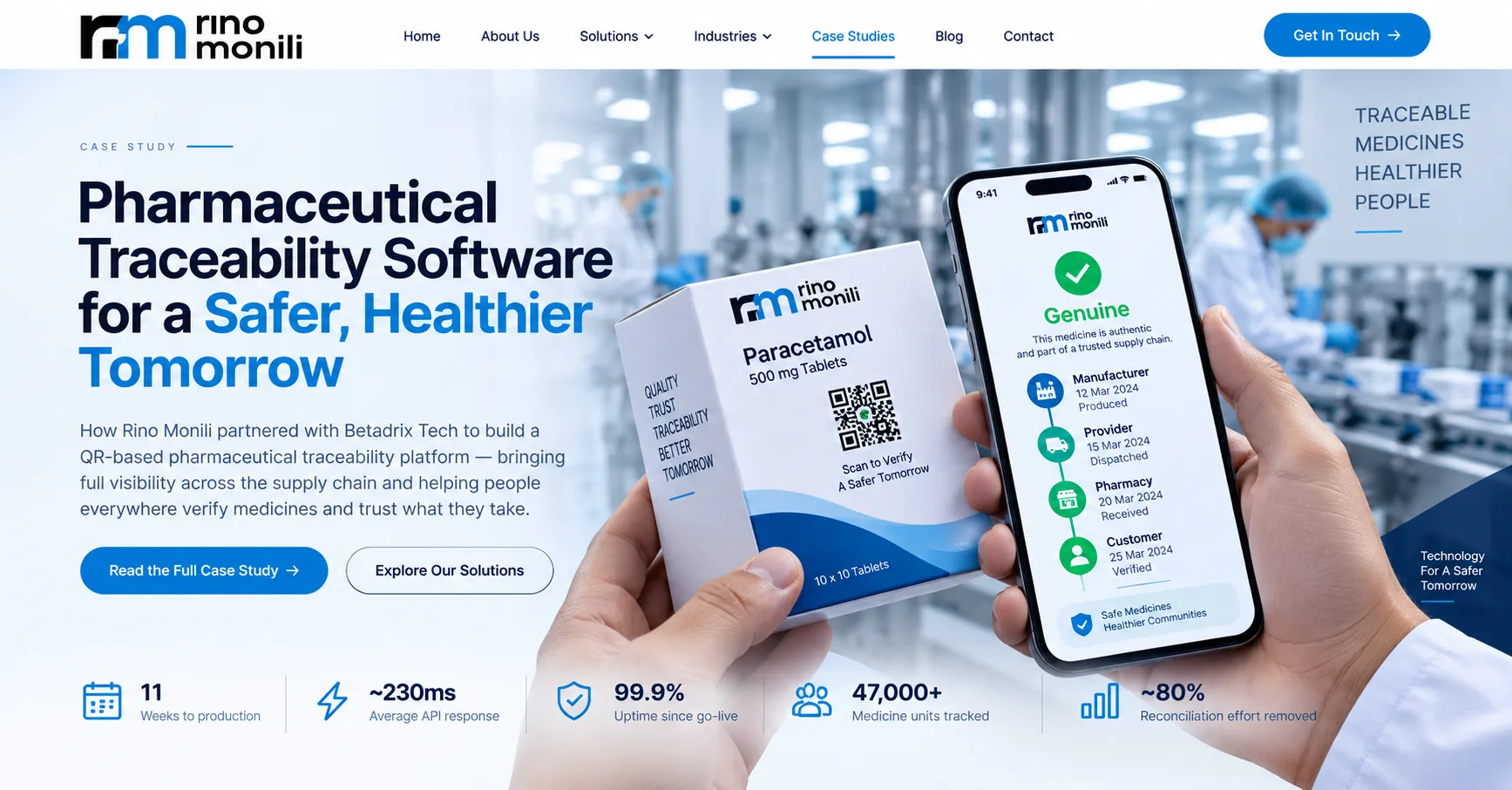
Pharmaceutical Traceability Software Built for Real-World Supply Chains
READ CASE STUDY

Technologies & Frameworks Powering This Service




Model Context Protocol (MCP) Development | Enterprise AI Agent Infrastructure | Betadrix
ai
Hire Specialized Developers For Your Service Project

React Developers
Pre-vetted senior React Developers ready to deploy into your existing architecture in 3-7 days.

Flutter Developers
Pre-vetted senior Flutter Developers ready to deploy into your existing architecture in 3-7 days.

Python Developers
Pre-vetted senior Python Developers ready to deploy into your existing architecture in 3-7 days.

Nodejs Developers
Pre-vetted senior Nodejs Developers ready to deploy into your existing architecture in 3-7 days.
What Our Clients Say
“Mobile app development and cloud migration were handled smoothly. Strong technical skills, clear communication, and dependable post-launch support stood out throughout the engagement.”

Sarah Mitchell
Director of Operations, HealthFirst Clinics
Have a Project in Mind?
Let's Build It Together.
Connect directly with our senior software architects and technical leads. We evaluate your requirements and deliver an actionable technical proposal within 24 hours.
Strict NDA Protection
Your intellectual property and technical specs remain 100% confidential.
24-Hour Response Guarantee
Guaranteed evaluation and scoping reply from an engineering manager.
Zero Obligation Estimate
Get accurate cost breakdowns and tech stack recommendations free of charge.
Request Free Technical Consultation
Let's build something serious.
Diagnose your system architecture, budget ranges, and roadmap parameters with an expert.
Scoping Diagnostic
Analyze your workflows in 60 seconds. A senior AI architect reviews every parameter personally.
 4.9/5.0 Partner
 4.8/5.0 Leader
 4.9/5.0 Rated
 4.8/5.0 Excellent
Not sure where AI actually moves the needle for you?
Answer a few brief questions. We will deliver a highly concrete scoping plan within 24 hours including:
- Recommendations on automation use-cases and MVP components
- Calculations on expected ROI and engineering timelines
- A structural roadmap to make your legacy stack AI-native