
Chaos Engineering in Production: Chaos Mesh Kubernetes CRDs, Envoy Circuit Breaking, and Blast Radius Containment

Lead Cloud Solutions Architect
 17 min read
Production guide to Chaos Engineering on Kubernetes with Chaos Mesh. Safely simulate network latency, pod failures, and stress tests.
Why Distributed Systems Must Be Tested Against Failure
Modern cloud-native microservices architectures deployed across Kubernetes clusters are inherently non-deterministic. Cascading network timeouts, DNS resolution hiccups, silent etcd leader election splits, and noisy neighbor resource starvation happen in production every day. Hope is not an engineering strategy; assuming a system is resilient simply because it passed synthetic staging tests is a guaranteed recipe for a 3:00 AM P1 outage.
Chaos Engineering is the disciplined practice of intentionally injecting controlled, hypothesis-driven failures into distributed systems to verify resilience, identify hidden coupling, and validate automated failover before customer traffic is impacted. Using Chaos Mesh—a CNCF-hosted Kubernetes-native chaos platform—engineering teams can orchestrate network faults, CPU stress, pod evictions, and disk I/O corruptions using declarative Custom Resource Definitions (CRDs).
At Betadrix, our DevOps and SRE consulting team designs automated resilience verification pipelines. In this operational whitepaper, we dissect the internal architecture of Chaos Mesh, configure L7 Envoy proxy circuit breaking, enforce multi-tenant blast radius containment, and walk through a production game day post-mortem. For infrastructure foundations, explore our guide on cloud consulting and learn how we manage multi-cluster scale in our guide on Kubernetes multi-cluster management.
Chaos Mesh Operational Topology: Controller, Daemon, and eBPF Injection
Chaos Mesh operates using an agent-controller model inside Kubernetes. The Chaos Controller Manager reconciles chaos CRDs, while the privileged Chaos Daemon runs as a DaemonSet on every node, manipulating Linux kernel cgroups, iptables, and eBPF tc (traffic control) filters directly:
+-------------------------------------------------------------------------------+
|                       CHAOS MESH KUBERNETES SYSTEM TOPOLOGY                   |
+-------------------------------------------------------------------------------+
[SRE Team / CI/CD Pipeline]
       |
       | kubectl apply -f network-delay-experiment.yaml
       v
+-------------------------------------------------------------------------------+
| [Kubernetes API Server]                                                       |
|  - Validates Chaos CRD (NetworkChaos / PodChaos / StressChaos)                 |
|  - Webhook Admission: Mutates Target Pods & Injects Sidecars                  |
+-------------------------------------------------------------------------------+
       |
       v
+-------------------------------------------------------------------------------+
| [Chaos Controller Manager]                                                    |
|  - Schedules Experiment Timers & Monitors Blast Radius SLOs                  |
|  - Resolves Target Pod Selectors (Namespaces, Tenant Labels, Annotations)     |
+-------------------------------------------------------------------------------+
       |
       | gRPC Command Stream (mTLS)
       v
+-------------------------------------------------------------------------------+
| [Chaos DaemonSet] (Privileged Agent on Every Worker Node)                     |
|  - Manipulates Linux Kernel via eBPF / tc (Traffic Control)                   |
|  - Injects Network Latency (200ms +/- 20ms) & Packet Loss (15%)              |
|  - Triggers Cgroup OOM Kills & Block Device I/O Delays                        |
+-------------------------------------------------------------------------------+
       |
       v
+-------------------------------------------------------------------------------+
| [Target Application Pods]                                                     |
|                                                                               |
|  +--------------------+       gRPC / HTTP/2       +--------------------+      |
|  | [Order Service]    | ========================> | [Payment Service]  |      |
|  | - Envoy Sidecar    |   [CHAOS: 250ms Delay]    | - Envoy Sidecar    |      |
|  | - Circuit Breaker  |                           | - Rate Limiter     |      |
|  +--------------------+                           +--------------------+      |
+-------------------------------------------------------------------------------+
Envoy Proxy Circuit Breaking: Protecting Upstream Services
When chaos experiments inject latency into downstream dependencies, unshielded microservices exhaust their connection pools waiting for stalled sockets. We configure Envoy L7 proxy circuit breaking to trip immediately and fail fast with graceful fallback responses:
# envoy-circuit-breaker.yaml
apiVersion: networking.istio.io/v1alpha3
kind: DestinationRule
metadata:
  name: payment-service-circuit-breaker
  namespace: production
spec:
  host: payment-service.production.svc.cluster.local
  trafficPolicy:
    connectionPool:
      tcp:
        maxConnections: 100
      http:
        http1MaxPendingRequests: 10
        maxRequestsPerConnection: 10
    outlierDetection:
      consecutive5xxErrors: 3
      interval: 10s
      baseEjectionTime: 30s
      maxEjectionPercent: 50
Multi-Tenant Blast Radius Containment ("Tent")
Conducting chaos experiments in shared multi-tenant clusters requires rigorous safety guardrails. An experiment designed to test Tenant A's resilient failover must never degrade performance for Tenant B. We enforce three isolation layers:
- Namespace & Label Affinity Scoping: Chaos experiments strictly target pods equipped with explicit opt-in labels:
app.kubernetes.io/chaos-enabled: "true"andtenant-tier: "canary". - SLO-Driven Automated Rollback: A Prometheus alert manager integrates directly with Chaos Mesh. If cluster-wide 5xx error rates exceed 0.5% or p99 latency spikes beyond 400ms for non-target tenants, Chaos Mesh automatically triggers an emergency abort, purging all kernel eBPF filters within 2 seconds.
- Resource Quotas & Priority Classes: Chaos daemons are assigned dedicated Linux cgroups to prevent the chaos harness itself from consuming excessive node CPU or memory.
Production Chaos Mesh CRD: Network Latency & Packet Loss Injection
Below is a production-grade NetworkChaos manifest that injects 200ms latency and 10% packet corruption into a target service while strictly protecting health check endpoints:
apiVersion: chaos-mesh.org/v1alpha1
kind: NetworkChaos
metadata:
  name: payment-latency-drill
  namespace: production
spec:
  action: delay
  mode: fixed-percent
  value: '50' # Affects exactly 50% of matching pods
  selector:
    namespaces:
      - production
    labelSelectors:
      app: payment-gateway
      tenant-tier: canary
  delay:
    latency: '200ms'
    jitter: '25ms'
    correlation: '50'
  loss:
    loss: '10'
    correlation: '25'
  direction: to
  target:
    selector:
      namespaces:
        - production
      labelSelectors:
        app: fraud-detection-engine
    mode: all
  duration: '10m' # Automatically terminates after 10 minutes
  scheduler:
    cron: '0 14 * * 2' # Executes every Tuesday at 14:00 UTC
Game Day Post-Mortem: Discovering gRPC Connection Pool Starvation
During a scheduled game day drill simulating a 250ms delay between an Order Processing service and an inventory verification service, the engineering team uncovered a critical architectural flaw:
| Observation Metric | Pre-Drill Hypothesis | Actual Game Day Result | Post-Mortem Remediation |
|---|---|---|---|
| p99 Latency | Increase by 250ms (from 45ms to 295ms) | Spiked to 18,400ms (Catastrophic tail latency) | Configured 500ms gRPC deadline context cancellation |
| Order Service Pod Health | All 6 replicas healthy | 4 of 6 replicas failed liveness probes (OOMKilled) | Bounded in-memory request buffer to max 1,000 items |
| Circuit Breaker Ejection | Envoy trips after 5 consecutive 5xx errors | Circuit breaker failed to trip (requests hung, not 5xx) | Added outlier detection on request timeout thresholds |
Real-World Production Failure Modes
- Unbounded Thread Exhaustion in Blocking Clients: Without aggressive client-side deadline propagation, downstream delays cause HTTP/gRPC threads to stack up indefinitely, exhausting worker threadpools and knocking entire services offline. Mitigation: Always enforce context deadlines (e.g.
context.WithTimeout(500 * time.Millisecond)in Go) on every outbound RPC call. - Thundering Herd on Immediate Failure Recovery: When a network partition heals, thousands of queued requests hit recovered database pods simultaneously, crashing them instantly. Mitigation: Implement exponential backoff with full jitter in client retry logic:
sleep = min(cap, base * 2^attempt) * rand(0, 1). - Chaos Daemon Permission Escalation Risks: Running privileged DaemonSets on multi-tenant nodes introduces security compliance risks if RBAC policies are misconfigured. Mitigation: Enforce strict Kubernetes Admission Controllers (Kyverno or OPA Gatekeeper) restricting Chaos Mesh CRD execution strictly to SRE staging/canary service accounts.
Series Guide
Cloud & DevOps Automation
Explore Categories
Browse More Technical Topics & Industry Guides
?Frequently Asked Questions
What is Chaos Mesh and how does it inject failures into Kubernetes?
How do you prevent chaos experiments from affecting real production customers?
What is circuit breaking in an Envoy service mesh?
What is the difference between PodChaos and NetworkChaos in Chaos Mesh?
How often should an engineering team run chaos experiments?
What metrics measure the success of a chaos engineering practice?
Shivam Sharma
Lead Cloud Solutions ArchitectShivam Sharma is an AWS Certified Solutions Architect specializing in cloud infrastructure, high-availability microservices, and database performance tuning for scalable web clients.
Build Your Custom Project
Connect with technical architects for scope and estimation.
More Articles in DevOps



Related services built to solve your specific challenges



Watch.
Learn.
Grow.
Discover how our engineered solutions transform industries and propel client operations forward.
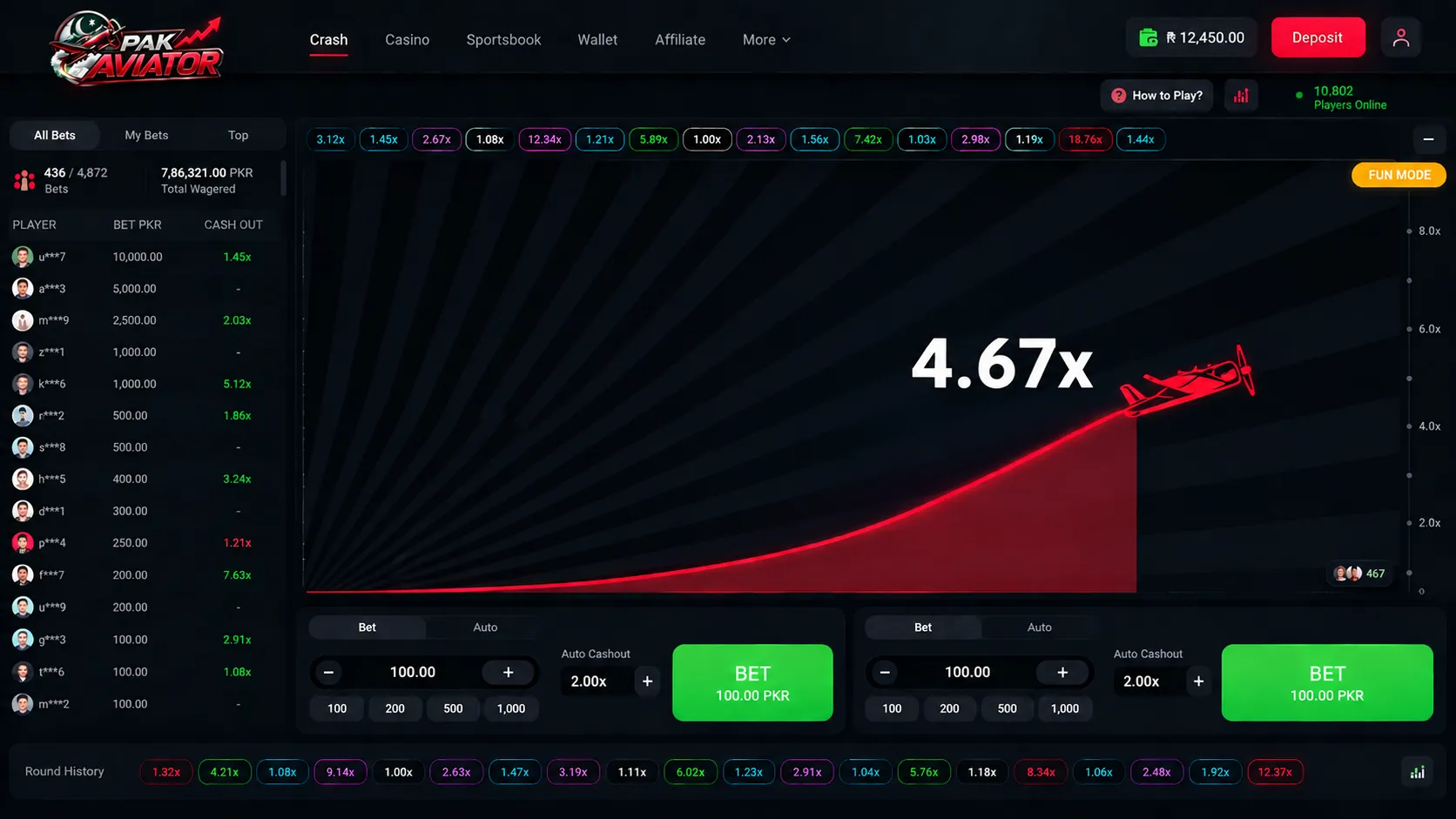
Owning the Game, Not Renting It: Custom Crash Game Development for a Lahore-Based iGaming Operator
READ CASE STUDY

Technologies & Frameworks Powering This Service

Node.js Development Services | High-Concurrency Event-Driven Architecture | Betadrix
backend

.NET Development Services | Enterprise C# & ASP.NET Core Engineering | Betadrix
backend


Hire Specialized Developers For Your Service Project

Nodejs Developers
Pre-vetted senior Nodejs Developers ready to deploy into your existing architecture in 3-7 days.

Flutter Developers
Pre-vetted senior Flutter Developers ready to deploy into your existing architecture in 3-7 days.
React Developers
Pre-vetted senior React Developers ready to deploy into your existing architecture in 3-7 days.

Python Developers
Pre-vetted senior Python Developers ready to deploy into your existing architecture in 3-7 days.
What Our Clients Say
“Mobile app development and cloud migration were handled smoothly. Strong technical skills, clear communication, and dependable post-launch support stood out throughout the engagement.”

Sarah Mitchell
Director of Operations, HealthFirst Clinics
Have a Project in Mind?
Let's Build It Together.
Connect directly with our senior software architects and technical leads. We evaluate your requirements and deliver an actionable technical proposal within 24 hours.
Strict NDA Protection
Your intellectual property and technical specs remain 100% confidential.
24-Hour Response Guarantee
Guaranteed evaluation and scoping reply from an engineering manager.
Zero Obligation Estimate
Get accurate cost breakdowns and tech stack recommendations free of charge.
Request Free Technical Consultation
Let's build something serious.
Diagnose your system architecture, budget ranges, and roadmap parameters with an expert.
Scoping Diagnostic
Analyze your workflows in 60 seconds. A senior AI architect reviews every parameter personally.
 4.9/5.0 Partner
 4.8/5.0 Leader
 4.9/5.0 Rated
 4.8/5.0 Excellent
Not sure where AI actually moves the needle for you?
Answer a few brief questions. We will deliver a highly concrete scoping plan within 24 hours including:
- Recommendations on automation use-cases and MVP components
- Calculations on expected ROI and engineering timelines
- A structural roadmap to make your legacy stack AI-native