
Evaluating LLM Performance Frameworks: Production Benchmarking, RAG Triads, and Multi-Tenant CI/CD

Co-Founder
 17 min read
Engineering guide to evaluating LLM and RAG systems. DeepEval vs RAGAS vs TruLens comparison, metric calculations, and automated CI/CD hallucination testing.
The Production LLM Evaluation Dilemma: Moving Beyond 'Vibe Checks'
Deploying Large Language Model (LLM) applications to enterprise production without quantitative evaluation is the software equivalent of disabling your test suite. While consumer prototypes can survive on subjective human "vibe checks," enterprise B2B applications require deterministic, auditable quality benchmarks. Whether powering semantic search, autonomous agents, or document synthesis, engineering teams must measure semantic drift, factual hallucination, and latency regression on every pull request.
At Betadrix, our AI development company builds enterprise evaluation pipelines integrated with CI/CD systems. In this guide, we break down the operational mechanics of the leading evaluation frameworks—DeepEval, Ragas, and TruLens—and explore how to benchmark multi-tenant systems using L7 load balancing, B2B API gateways, and distributed inference engines like vLLM. For retrieval systems, explore our RAG development solutions.
The Core Metric Foundation: The RAG Triad
Evaluating Retrieval-Augmented Generation (RAG) requires dissecting the interaction into two distinct phases: retrieval accuracy and generation faithfulness. This is measured via the RAG Triad:
- Context Relevance (Retrieval Metric): Quantifies whether the retrieved chunk corpus contains precisely the information needed to answer the user's prompt, penalizing noise, redundant tokens, and extraneous documentation.
- Groundedness / Faithfulness (Hallucination Metric): Evaluates whether the generated response is strictly derived from the retrieved context. If the model introduces claims not substantiated by the reference chunks, the groundedness score plummets.
- Answer Relevance (Semantic Alignment Metric): Assesses whether the model's final synthesis directly answers the user's inquiry without digression or incomplete instruction execution.
Enterprise Multi-Tenant Evaluation Architecture
Evaluating enterprise LLMs at scale requires dedicated test harnesses capable of executing thousands of synthetic evaluations across multiple enterprise tenants ("tent" isolation) without exceeding rate limits or leaking proprietary tenant data:
+-------------------------------------------------------------------------------+
|                    ENTERPRISE MULTI-TENANT EVALUATION HARNESS                 |
+-------------------------------------------------------------------------------+
[GitHub Actions CI/CD]  --> Triggers Evaluation Run on Pull Request
       |
       | HTTPS POST /v1/eval/batch
       v
+-------------------------------------------------------------------------------+
| [B2B API Gateway] (Kong Gateway)                                              |
|  - Rate Limiting Token Bucket (1,000 Synthetic RPM)                           |
|  - Tenant Scoped Isolation: x-tenant-id Header Validation                     |
|  - Request Signature Verification (HMAC-SHA256)                               |
+-------------------------------------------------------------------------------+
       |
       v
+-------------------------------------------------------------------------------+
| [L7 Load Balancer] (HAProxy / Envoy)                                          |
|  - Least-Connections Load Balancing across Evaluation Worker Nodes           |
|  - gRPC / HTTP/2 Streaming Support                                            |
+-------------------------------------------------------------------------------+
       |
       +-----------------------+-----------------------+
       |                       |                       |
       v                       v                       v
+--------------------+  +--------------------+  +--------------------+
| [Eval Worker 1]    |  | [Eval Worker 2]    |  | [Eval Worker 3]    |
| - DeepEval / Ragas |  | - DeepEval / Ragas |  | - DeepEval / Ragas |
| - Celery Executor  |  | - Celery Executor  |  | - Celery Executor  |
+--------------------+  +--------------------+  +--------------------+
       |                       |                       |
       +-----------------------+-----------------------+
                               |
                               | Model Context Queries
                               v
               +-------------------------------+
               | [Local Distributed vLLM Farm] |
               | - Llama 3.3 70B (Judge Model) |
               | - PagedAttention TensorRT-LLM |
               | - 4x NVIDIA A100 GPU Cluster  |
               +-------------------------------+
Framework Comparison: DeepEval vs. Ragas vs. TruLens
| Dimension | DeepEval (Confident AI) | Ragas (Exploding Gradients) | TruLens (TruEra) |
|---|---|---|---|
| Primary Focus | CI/CD unit testing for LLMs & Pytest native integration | RAG pipeline component mathematical evaluation | Instrumentation, observability & live feedback functions |
| Judge Model Support | Any LiteLLM endpoint, Ollama, custom vLLM judge | OpenAI, LangChain model wrappers, local HF models | LiteLLM, HuggingFace transformers, Bedrock |
| Testset Generation | Synthetic data generation based on vector store chunks | Advanced evolutions (multi-hop, reasoning, conditional) | Limited; primarily relies on pre-recorded telemetry |
| Enterprise CI/CD | Exceptional (native exit codes, pass/fail assertion thresholds) | Moderate (requires custom pandas assertion wrapper) | Moderate (optimized for dashboard UI exploration) |
Production Implementation: DeepEval Async Evaluator with Custom vLLM Judge
Below is a production evaluation script that benchmarks a multi-tenant RAG pipeline using DeepEval, communicating with a self-hosted vLLM judge model to eliminate external API vendor costs:
import os
import pytest
from deepeval import assert_test
from deepeval.test_case import LLMTestCase
from deepeval.metrics import (
    FaithfulnessMetric,
    AnswerRelevancyMetric,
    ContextualPrecisionMetric,
    GEval,
)
from deepeval.models.base_model import DeepEvalBaseLLM
from openai import OpenAI

# Custom vLLM Judge Wrapper behind L7 Load Balancer
class EnterpriseVLLMJudge(DeepEvalBaseLLM):
    def __init__(self, model_name: str = "meta-llama/Llama-3.3-70B-Instruct"):
        self.model_name = model_name
        self.client = OpenAI(
            base_url="http://vllm-judge.internal.net:8000/v1",
            api_key="internal-cluster-token",
        )

    def load_model(self):
        return self.client

    def generate(self, prompt: str) -> str:
        client = self.load_model()
        response = client.chat.completions.create(
            model=self.model_name,
            messages=[{"role": "user", "content": prompt}],
            temperature=0.0,
            max_tokens=1024,
        )
        return response.choices[0].message.content

    async def a_generate(self, prompt: str) -> str:
        return self.generate(prompt)

    def get_model_name(self) -> str:
        return self.model_name

# Initialize Judge and Metrics
judge_model = EnterpriseVLLMJudge()
faithfulness = FaithfulnessMetric(threshold=0.85, model=judge_model)
answer_relevancy = AnswerRelevancyMetric(threshold=0.80, model=judge_model)
contextual_precision = ContextualPrecisionMetric(threshold=0.75, model=judge_model)

# Custom G-Eval Metric for Enterprise Compliance & Multi-Tenancy
tenant_compliance_metric = GEval(
    name="Tenant Isolation Compliance",
    criteria="Determine whether the generated response strictly pertains to the target tenant without cross-tenant entity leakage.",
    evaluation_params=["actual_output", "expected_output"],
    model=judge_model,
    threshold=0.95,
)

@pytest.mark.asyncio
async def test_multi_tenant_financial_rag():
    test_case = LLMTestCase(
        input="What were the Q3 operational expenditures for Tenant AcmeCorp?",
        actual_output="AcmeCorp incurred $1.42M in Q3 OPEX, primarily driven by cloud computing infrastructure.",
        expected_output="AcmeCorp Q3 OPEX was $1.42 million.",
        retrieval_context=[
            "Document 104: AcmeCorp Q3 Financial Summary reveals $1.42M OPEX in cloud services."
        ],
    )

    # Run evaluations with strict CI assertions
    assert_test(test_case, [faithfulness, answer_relevancy, tenant_compliance_metric])
The Latency vs. Accuracy Pareto Frontier
When selecting evaluation models and inference strategies, engineering teams must evaluate trade-offs between evaluation latency, accuracy, and operational compute overhead:
| Judge Model Configuration | p95 Eval Latency / Query | Agreement with Human Gold Labels | Cost per 10k Test Cases |
|---|---|---|---|
| OpenAI GPT-4o (Public API) | 1,850ms | 92.4% | $140.00 |
| Claude 3.5 Sonnet (Public API) | 2,100ms | 94.1% | $180.00 |
| Self-Hosted Llama 3.3 70B (vLLM TensorRT) | 340ms | 89.8% | $12.50 (Compute amortized) |
Operational Failure Modes & Post-Mortem Insights
- Judge Model Semantic Drift & Non-Determinism: Frontier models (such as GPT-4o) receive silent server-side weights updates from providers, causing evaluation scores on identical test suites to fluctuate by 5–10% over time. Mitigation: Pin temperature to 0.0, use self-hosted open-weights models (Llama 3.3 70B) in vLLM for baseline regression tracking, and compute Fleiss' Kappa inter-rater reliability scores.
- Synthetic Testset Distribution Bias: Generating synthetic queries using standard LLM prompting creates simplistic, unrepresentative questions that fail to mimic real user typos, domain acronyms, or multi-turn conversational nuance. Mitigation: Use Ragas evolutionary algorithms to synthesize complex queries (reasoning, conditioning, multi-context hops) seeded from actual production telemetry.
- API Gateway Rate Limiting Bottlenecks in CI/CD: Running 5,000 automated evaluation test cases during peak PR hours exhausts API gateway token buckets, causing evaluation pipelines to fail intermittently with HTTP 429. Mitigation: Implement an asynchronous message queue (RabbitMQ / Redis) with token-aware backoff and dedicated batch evaluation quotas.
Series Guide
AI & Intelligent Systems
Explore Categories
Browse More Technical Topics & Industry Guides
?Frequently Asked Questions
What is the RAG Triad in LLM performance evaluation?
Why should companies avoid using public LLM APIs as evaluation judges in CI/CD?
How do you automate LLM regression testing on pull requests?
What is the difference between Ragas and DeepEval?
How does multi-tenancy impact LLM evaluation pipelines?
What is G-Eval and how does it work?
Harshita Vaishnav
Co-FounderHarshita Vaishnav heads global operations, client strategy, and business growth, aligning Betadrix's technical capabilities with client success.
Build Your Custom Project
Connect with technical architects for scope and estimation.
More Articles in Technology



Related services built to solve your specific challenges



Watch.
Learn.
Grow.
Discover how our engineered solutions transform industries and propel client operations forward.
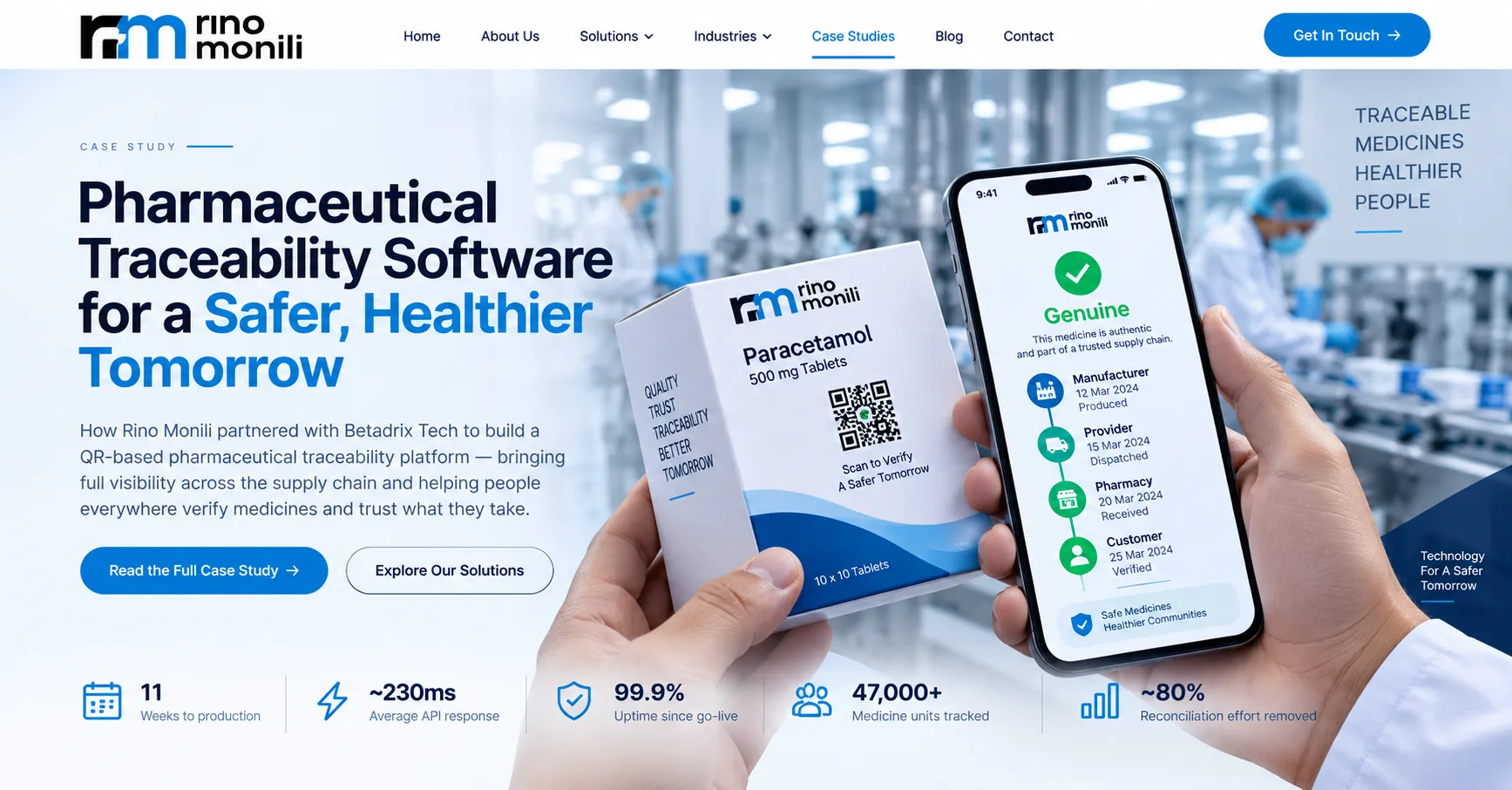
Pharmaceutical Traceability Software Built for Real-World Supply Chains
READ CASE STUDY

Technologies & Frameworks Powering This Service





Hire Specialized Developers For Your Service Project

Python Developers
Pre-vetted senior Python Developers ready to deploy into your existing architecture in 3-7 days.

Nodejs Developers
Pre-vetted senior Nodejs Developers ready to deploy into your existing architecture in 3-7 days.

Flutter Developers
Pre-vetted senior Flutter Developers ready to deploy into your existing architecture in 3-7 days.

React Developers
Pre-vetted senior React Developers ready to deploy into your existing architecture in 3-7 days.
What Our Clients Say
“Mobile app development and cloud migration were handled smoothly. Strong technical skills, clear communication, and dependable post-launch support stood out throughout the engagement.”

Sarah Mitchell
Director of Operations, HealthFirst Clinics
Have a Project in Mind?
Let's Build It Together.
Connect directly with our senior software architects and technical leads. We evaluate your requirements and deliver an actionable technical proposal within 24 hours.
Strict NDA Protection
Your intellectual property and technical specs remain 100% confidential.
24-Hour Response Guarantee
Guaranteed evaluation and scoping reply from an engineering manager.
Zero Obligation Estimate
Get accurate cost breakdowns and tech stack recommendations free of charge.
Request Free Technical Consultation
Let's build something serious.
Diagnose your system architecture, budget ranges, and roadmap parameters with an expert.
Scoping Diagnostic
Analyze your workflows in 60 seconds. A senior AI architect reviews every parameter personally.
 4.9/5.0 Partner
 4.8/5.0 Leader
 4.9/5.0 Rated
 4.8/5.0 Excellent
Not sure where AI actually moves the needle for you?
Answer a few brief questions. We will deliver a highly concrete scoping plan within 24 hours including:
- Recommendations on automation use-cases and MVP components
- Calculations on expected ROI and engineering timelines
- A structural roadmap to make your legacy stack AI-native