
Top Programming Languages for Blockchain Development (2026): Solidity, Rust, Move, Go & Cairo

Founder & CEO
 11 min read
Compare Solidity, Rust, Move, Go, and Cairo for 2026 blockchain development. Architectural analysis of EVM, Solana Anchor, Sui/Aptos Move, and ZK rollups.
The 2026 Web3 Engineering Landscape: Beyond Single-Chain Dominance
Selecting the optimal programming language for a blockchain initiative in 2026 is no longer a matter of simply defaulting to Solidity. The decentralized computing landscape has fractured into specialized execution environments: EVM Layer 2 rollups optimizing for bytecode compatibility, parallel non-EVM execution engines (Solana and Monad) prioritizing sub-50ms finality, resource-oriented state machines (Sui and Aptos), and Zero-Knowledge proving runtimes (Starknet).
Every language choice dictates critical technical tradeoffs across smart contract audit vulnerability surfaces, runtime execution gas efficiency, parallel transaction throughput, and developer hiring velocity. In this technical architectural guide, we dissect the five foundational blockchain programming languages of 2026, complete with production code patterns, execution models, and benchmark comparisons.
1. Solidity: The Uncontested Standard for EVM and Layer-2 Rollups
Solidity remains the foundational language of decentralized finance, securing over 80% of total decentralized Total Value Locked (TVL) across Ethereum, Arbitrum, Base, Optimism, and Avalanche. Designed specifically for the Ethereum Virtual Machine (EVM), Solidity is a contract-oriented, high-level language with syntax syntactically influenced by C++, Python, and JavaScript.
Key Architectural Strengths
- Ecosystem Tooling Dominance: The Foundry toolchain (written in Rust) provides blazing-fast fuzz testing, differential testing, and in-line assembly debugging. OpenZeppelin contracts provide battle-tested, pre-audited implementations of ERC-20, ERC-721, ERC-1155, and ERC-4337 Account Abstraction standards.
- Yul Assembly & Gas Optimization: Advanced Solidity engineers leverage inline assembly (Yul) for custom memory manipulation, bypassing compiler overhead to reduce execution gas by up to 35% on Layer 1.
- Universal L2 Portability: Any contract compiled for the EVM deploys seamlessly across Arbitrum, Optimism, Polygon zkEVM, Scroll, and Base without code modification.
Production Code Example: CEI Pattern & Reentrancy Guard in Solidity 0.8.26
The following contract demonstrates the modern Checks-Effects-Interactions (CEI) pattern combined with custom transient storage (EIP-1153) to eliminate reentrancy vulnerabilities while minimizing gas consumption:
// SPDX-License-Identifier: MIT
pragma solidity 0.8.26;

error TransferFailed();
error InsufficientBalance();
error ReentrancyGuardTriggered();

contract SecureVault {
    mapping(address => uint256) private s_balances;

    // Transient storage lock flag (EIP-1153, enabled in Cancun hard fork)
    bytes32 private constant LOCK_SLOT = keccak256("vault.reentrancy.lock");

    modifier nonReentrant() {
        assembly {
            if tload(LOCK_SLOT) {
                // Revert with ReentrancyGuardTriggered()
                mstore(0x00, 0x3b04c868)
                revert(0x1c, 0x04)
            }
            tstore(LOCK_SLOT, 1)
        }
        _;
        assembly {
            tstore(LOCK_SLOT, 0)
        }
    }

    event Deposited(address indexed user, uint256 amount);
    event Withdrawn(address indexed user, uint256 amount);

    function deposit() external payable {
        if (msg.value == 0) revert InsufficientBalance();
        s_balances[msg.sender] += msg.value;
        emit Deposited(msg.sender, msg.value);
    }

    function withdraw(uint256 amount) external nonReentrant {
        // 1. CHECKS
        uint256 userBalance = s_balances[msg.sender];
        if (userBalance < amount) revert InsufficientBalance();

        // 2. EFFECTS (Update state prior to external call)
        unchecked {
            s_balances[msg.sender] = userBalance - amount;
        }

        // 3. INTERACTIONS (External transfer after state mutation)
        (bool success, ) = msg.sender.call{value: amount}("");
        if (!success) revert TransferFailed();

        emit Withdrawn(msg.sender, amount);
    }
}
2. Rust: High-Concurrency Systems for Solana, Near, and Polkadot
Rust has emerged as the definitive systems programming language for modern high-performance blockchains. Unlike the EVM, which processes transactions sequentially on a single thread, the Solana Virtual Machine (SVM) and Substrate (Polkadot) utilize Rust's zero-cost abstractions, fearless concurrency, and memory safety to achieve massive parallelization.
Key Architectural Strengths
- Sealevel Parallel Execution: On Solana, smart contracts (called Programs) are stateless code libraries compiled to eBPF/LLVM. State is stored in discrete external "Accounts". By requiring transactions to declare all accounts they will read and write upfront, Solana schedules non-overlapping transactions simultaneously across multiple CPU cores.
- Compile-Time Memory Safety: Rust's borrow checker enforces ownership and lifetime constraints at compile time, eliminating null pointer dereferences and buffer overflow vulnerabilities without requiring a runtime garbage collector.
- Anchor Framework: Anchor simplifies Solana program engineering by abstracting manual account serialization, instruction routing, and Program Derived Address (PDA) validation into expressive procedural macros.
Production Code Example: Solana Anchor 0.30 Program
The following example illustrates a thread-safe token staking account allocation using Anchor's declarative account constraints:
use anchor_lang::prelude::*;

declare_id!("Stk11111111111111111111111111111111111111111");

#[program]
pub mod secure_staking {
    use super::*;

    pub fn initialize_stake(ctx: Context, lock_period_seconds: i64) -> Result<()> {
        let stake_record = &mut ctx.accounts.stake_record;
        let clock = Clock::get()?;

        stake_record.owner = ctx.accounts.user.key();
        stake_record.deposited_amount = 0;
        stake_record.locked_until = clock.unix_timestamp.checked_add(lock_period_seconds)
            .ok_or(StakingError::MathOverflow)?;
        stake_record.bump = ctx.bumps.stake_record;

        Ok(())
    }
}

#[derive(Accounts)]
pub struct InitializeStake<'info> {
    #[account(mut)]
    pub user: Signer<'info>,

    #[account(
        init,
        payer = user,
        space = 8 + 32 + 8 + 8 + 1, // Discriminator + Pubkey + u64 + i64 + u8
        seeds = [b"stake", user.key().as_ref()],
        bump
    )]
    pub stake_record: Account<'info, StakeRecord>,

    pub system_program: Program<'info, System>,
}

#[account]
pub struct StakeRecord {
    pub owner: Pubkey,
    pub deposited_amount: u64,
    pub locked_until: i64,
    pub bump: u8,
}

#[error_code]
pub enum StakingError {
    #[msg("Arithmetic calculation resulted in overflow.")]
    MathOverflow,
}
3. Move: The Asset-Centric Revolution (Aptos & Sui)
Originally engineered by Meta for the Diem blockchain project, Move represents a paradigm shift in how digital assets are modeled. In traditional EVM programming, a token balance is merely a dynamic hash-table integer entry inside a single monolithic smart contract. If an attacker bypasses approval checks, the integer can be manipulated.
In contrast, Move treats digital assets as First-Class Resources with strict linear typing. Resources can never be implicitly copied, dropped, or reused; they can only be explicitly moved between account modules or stored within capabilities.
Key Architectural Strengths
- Bytecode Verifier: Before a Move package is published to the network, the Move bytecode verifier mathematically proves that the code adheres to all typing, resource safety, and borrow-checking rules, eliminating an entire class of reentrancy and asset duplication bugs by design.
- Object-Centric Execution (Sui Move): In Sui, every piece of data is an immutable or mutable Object. Transactions operating on non-shared objects skip traditional consensus entirely, achieving sub-second finalized settlement via Byzantine Consistent Broadcast.
4. Go (Golang): The Backbone of Blockchain Infrastructure and Nodes
While Solidity and Rust dominate smart contract authorship, Go powers the underlying network infrastructure of the blockchain industry. More than 70% of Ethereum consensus nodes run Geth (Go-Ethereum), while the entire Cosmos SDK ecosystem (including Celestia, Osmosis, and dYdX v4) is built natively in Go.
Why Go Dominates Node Infrastructure
- Lightweight Concurrency with Goroutines: Blockchain nodes must continuously handle thousands of inbound P2P gossip peer connections, validate mempool transactions, and execute blocks. Go's runtime scheduler distributes lightweight goroutines across OS threads with sub-microsecond context switching.
- Battle-Tested Networking Primitives: Go's standard library provides robust TCP/UDP networking, cryptographic primitives, and HTTP/gRPC libraries ideal for high-throughput RPC endpoints.
5. Cairo: The Zero-Knowledge Proving Powerhouse (Starknet)
With the rise of Zero-Knowledge Rollups, Cairo has become the specialized language for verifiable computation. When code compiles to Cairo, the execution trace is converted into a polynomial equation system (AIR - Algebraic Intermediate Representation). A remote prover server computes an execution proof, which is subsequently verified on Ethereum Mainnet using minimal gas.
Cairo 2.x adopts a syntax heavily inspired by Rust, featuring pattern matching, traits, generics, and strong static typing, making the transition straightforward for systems engineers.
Blockchain Language Architectural Comparison (2026)
| Language | Primary Target | Execution Model | Vulnerability Surface | Tooling Maturity | Avg Developer Salary |
|---|---|---|---|---|---|
| Solidity | Ethereum, Arbitrum, Base, Polygon | EVM Bytecode / Stack Machine | Medium (Reentrancy, Logic Flaws) | Very High (Foundry, Slither, Tenderly) | $130k – $220k |
| Rust | Solana, Polkadot, Near, Aptos/Sui | BPF / Native Machine Code | Low–Medium (Account Validation Flaws) | High (Anchor, Cargo, Tracing) | $150k – $260k |
| Move | Aptos, Sui | Move Bytecode / Object Graph | Very Low (Strict Linear Resource Types) | Medium (Move CLI, Sui SDK) | $140k – $240k |
| Go | Cosmos SDK, Ethereum Geth Nodes | Native Binaries / Goroutines | Low (Infrastructure Network Layer) | Very High (Golang Ecosystem) | $140k – $210k |
| Cairo | Starknet (ZK-Rollup Layer 2) | Sierra / Algebraic IR (STARK) | Very Low (Verifiable Execution Proofs) | Medium (Scarb, Starknet Foundry) | $160k – $280k |
Production Decision Matrix: Which Language Should You Choose?
- Choose Solidity if: You are launching a decentralized finance (DeFi) protocol, NFT platform, or governance token targeting the deepest liquidity pools on Ethereum Layer 1, Base, or Arbitrum, and require access to pre-audited OpenZeppelin smart contract primitives.
- Choose Rust if: Your product demands sub-second transaction finality, thousands of concurrent operations per second, high-frequency trading (DEX order books), or on-chain gaming where EVM gas costs and block times would be prohibitive.
- Choose Move if: You are engineering novel asset management systems, complex token vaults, or high-throughput financial infrastructure requiring mathematical guarantees against double-spending and reentrancy.
- Choose Go if: You are architecting a custom Appchain with sovereign consensus using the Cosmos SDK, or building high-concurrency RPC indexers and node telemetry pipelines.
Enterprise Blockchain Delivery with Betadrix
At Betadrix, our Web3 engineering practice designs, develops, and audits mission-critical decentralized infrastructure. From EVM smart contracts and Solana Anchor programs to sub-second indexers and cross-chain messaging bridges, we deliver secure, production-grade solutions tailored to your operational scale. Explore our dedicated blockchain development services, consult our custom software development offerings, or hire dedicated Web3 engineers to accelerate your roadmap.
Related Services from Betadrix
The choice of programming language for a blockchain project — Solidity for EVM chains, Rust for Solana and Polkadot, Move for Aptos and Sui — directly influences smart contract security, gas efficiency, and auditing toolchain availability. Betadrix's blockchain development services span Ethereum, Solana, and EVM-compatible L2 ecosystems. For teams building token-gated products or DeFi protocols, we also offer custom software development services to deliver the off-chain backend, admin dashboards, and wallet-connect UX layers.
Series Guide
AI & Machine Learning
Explore Categories
Browse More Technical Topics & Industry Guides
?Frequently Asked Questions
Which programming language is best for beginner smart contract developers in 2026?
Why is Rust preferred over Solidity on high-performance blockchains like Solana?
What makes the Move programming language safer than Solidity?
Is Go (Golang) used for writing smart contracts or blockchain core infrastructure?
What language should developers learn for Zero-Knowledge (ZK) rollup development?
How does Betadrix support enterprises building decentralized applications?
Shivam Swami
Founder & CEOShivam Swami is the Founder & CEO of Betadrix, driving technical vision, distributed systems engineering, high-throughput iGaming platforms, and enterprise AI architecture.
Build Your Custom Project
Connect with technical architects for scope and estimation.
More Articles in AI & Machine Learning


Related services built to solve your specific challenges


Watch.
Learn.
Grow.
Discover how our engineered solutions transform industries and propel client operations forward.

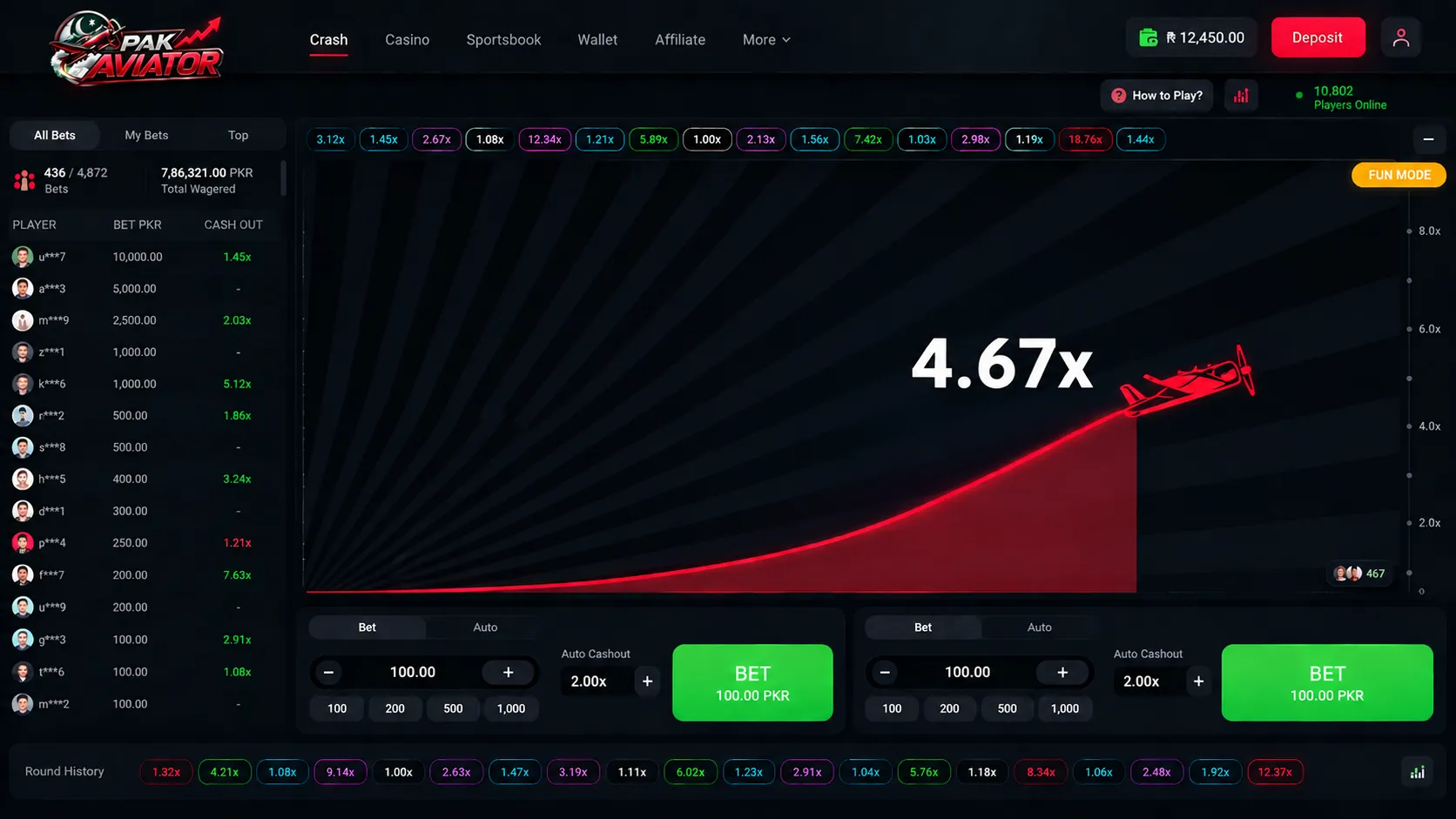
Owning the Game, Not Renting It: Custom Crash Game Development for a Lahore-Based iGaming Operator
READ CASE STUDY
Technologies & Frameworks Powering This Service

Model Context Protocol (MCP) Development | Enterprise AI Agent Infrastructure | Betadrix
ai




Hire Specialized Developers For Your Service Project

Python Developers
Pre-vetted senior Python Developers ready to deploy into your existing architecture in 3-7 days.

React Developers
Pre-vetted senior React Developers ready to deploy into your existing architecture in 3-7 days.

Flutter Developers
Pre-vetted senior Flutter Developers ready to deploy into your existing architecture in 3-7 days.

Nodejs Developers
Pre-vetted senior Nodejs Developers ready to deploy into your existing architecture in 3-7 days.
What Our Clients Say
“Mobile app development and cloud migration were handled smoothly. Strong technical skills, clear communication, and dependable post-launch support stood out throughout the engagement.”

Sarah Mitchell
Director of Operations, HealthFirst Clinics
Have a Project in Mind?
Let's Build It Together.
Connect directly with our senior software architects and technical leads. We evaluate your requirements and deliver an actionable technical proposal within 24 hours.
Strict NDA Protection
Your intellectual property and technical specs remain 100% confidential.
24-Hour Response Guarantee
Guaranteed evaluation and scoping reply from an engineering manager.
Zero Obligation Estimate
Get accurate cost breakdowns and tech stack recommendations free of charge.
Request Free Technical Consultation
Let's build something serious.
Diagnose your system architecture, budget ranges, and roadmap parameters with an expert.
Scoping Diagnostic
Analyze your workflows in 60 seconds. A senior AI architect reviews every parameter personally.
 4.9/5.0 Partner
 4.8/5.0 Leader
 4.9/5.0 Rated
 4.8/5.0 Excellent
Not sure where AI actually moves the needle for you?
Answer a few brief questions. We will deliver a highly concrete scoping plan within 24 hours including:
- Recommendations on automation use-cases and MVP components
- Calculations on expected ROI and engineering timelines
- A structural roadmap to make your legacy stack AI-native