Flutter State Management in 2026: BLoC vs Riverpod vs Signals — Production Architecture Comparison

Founder & CEO
 12 min read
Compare Flutter BLoC, Riverpod 2.5+, and Signals for enterprise mobile apps. Benchmark memory overhead, reactivity, testing, and production Dart architectures.
The State Management Dilemma in Modern Flutter (Flutter 3.24+)
State management in Flutter is not merely a question of syntax; it is the architectural backbone that governs application testability, memory allocation overhead, concurrency safety, and long-term codebase maintainability. With the stabilization of Riverpod 2.5+, the enduring enterprise dominance of BLoC, and the emergence of fine-grained Dart Signals, choosing the right paradigm in 2026 requires looking past dogma and evaluating concrete engineering trade-offs.
In this technical deep-dive, we compare BLoC, Riverpod, and Signals through the lens of production engineering: memory profiler footprints, asynchronous error handling, unit testing ergonomics, and code architecture.
1. Flutter BLoC: The Enterprise Standard for Unidirectional Predictability
Developed by Felix Angelov, BLoC (Business Logic Component) enforces strict separation between business logic and presentation. It relies on reactive Dart Streams to convert incoming Events into an immutable stream of States.
Why Enterprise Teams Standardize on BLoC
- Total Architectural Determinism: In a team of 30+ mobile engineers, BLoC ensures that every feature follows the exact same three files:
feature_event.dart,feature_state.dart, andfeature_bloc.dart. Junior developers cannot arbitrarily inject mutable state into widget build trees. - Global Observability (BlocObserver): Every dispatched event, state transition, and error across the entire application passes through a centralized
BlocObserver. This enables seamless integration with Datadog, Sentry, and New Relic for automated breadcrumb tracking. - HydratedBloc: Provides out-of-the-box persistent state storage across app restarts using local encrypted key-value stores.
Production Dart Code: Authentication Flow with Flutter BLoC
import 'package:flutter_bloc/flutter_bloc.dart';
import 'package:equatable/equatable.dart';

// 1. EVENTS
abstract class AuthEvent extends Equatable {
  const AuthEvent();
  @override
  List get props => [];
}

class LoginRequested extends AuthEvent {
  final String email;
  final String password;
  const LoginRequested({required this.email, required this.password});
  @override
  List get props => [email, password];
}

class LogoutRequested extends AuthEvent {}

// 2. STATES
abstract class AuthState extends Equatable {
  const AuthState();
  @override
  List get props => [];
}

class AuthInitial extends AuthState {}
class AuthLoading extends AuthState {}
class AuthAuthenticated extends AuthState {
  final String userId;
  final String token;
  const AuthAuthenticated({required this.userId, required this.token});
  @override
  List get props => [userId, token];
}
class AuthFailure extends AuthState {
  final String errorMessage;
  const AuthFailure(this.errorMessage);
  @override
  List get props => [errorMessage];
}

// 3. BLOC IMPLEMENTATION
class AuthBloc extends Bloc {
  final AuthRepository authRepository;

  AuthBloc({required this.authRepository}) : super(AuthInitial()) {
    on(_onLoginRequested);
    on(_onLogoutRequested);
  }

  Future _onLoginRequested(LoginRequested event, Emitter emit) async {
    emit(AuthLoading());
    try {
      final session = await authRepository.authenticate(event.email, event.password);
      emit(AuthAuthenticated(userId: session.userId, token: session.token));
    } catch (e) {
      emit(AuthFailure(e.toString()));
    }
  }

  Future _onLogoutRequested(LogoutRequested event, Emitter emit) async {
    await authRepository.clearSession();
    emit(AuthInitial());
  }
}
2. Riverpod 2.5+: Compile-Safe Dependency Injection & AsyncNotifier
Authored by Remi Rousselet, Riverpod solves the inherent limitations of standard InheritedWidgets and the legacy Provider package. In Riverpod, providers are declared as top-level compile-time constants, meaning ProviderNotFoundException is rendered mathematically impossible.
Why High-Velocity Teams Choose Riverpod
- No BuildContext Requirement: Providers can be read, watched, and mutated outside the widget tree—inside services, repositories, and background compute isolates.
- AsyncNotifier & Auto-Caching: Asynchronous operations return an
AsyncValue<T>containing built-in.when(data: ..., loading: ..., error: ...)pattern matching. Riverpod caches query results, deduplicates parallel HTTP calls, and cleans up memory automatically via.autoDispose. - Family Modifiers: Parameterized providers allow passing dynamic arguments (such as a
userIdororderId) with automatic per-parameter caching.
Production Dart Code: Riverpod AsyncNotifier Pattern
import 'package:flutter_riverpod/flutter_riverpod.dart';

// User Profile Model
class UserProfile {
  final String id;
  final String name;
  final int loyaltyPoints;
  UserProfile({required this.id, required this.name, required this.loyaltyPoints});
}

// AsyncNotifier Implementation
class UserProfileNotifier extends AsyncNotifier {
  @override
  Future build() async {
    // Automatically invoked when provider is first watched
    final apiService = ref.watch(apiServiceProvider);
    return await apiService.fetchCurrentUserProfile();
  }

  Future updateName(String newName) async {
    state = const AsyncValue.loading();
    state = await AsyncValue.guard(() async {
      final apiService = ref.read(apiServiceProvider);
      final updated = await apiService.updateProfile(newName);
      return updated;
    });
  }
}

// Provider Declaration
final userProfileProvider = AsyncNotifierProvider(() {
  return UserProfileNotifier();
});

// Presentation Layer Widget
class ProfileView extends ConsumerWidget {
  const ProfileView({super.key});

  @override
  Widget build(BuildContext context, WidgetRef ref) {
    final profileAsync = ref.watch(userProfileProvider);

    return profileAsync.when(
      loading: () => const Center(child: CircularProgressIndicator()),
      error: (err, stack) => Center(child: Text('Error: $err')),
      data: (profile) => Column(
        children: [
          Text('Welcome, ${profile.name}'),
          Text('Points: ${profile.loyaltyPoints}'),
          ElevatedButton(
            onPressed: () => ref.read(userProfileProvider.notifier).updateName('New Name'),
            child: const Text('Update'),
          )
        ],
      ),
    );
  }
}
3. Dart Signals: The Future of Fine-Grained Micro-Reactivity
Inspired by the reactivity revolution in modern web frameworks (SolidJS, Svelte 5, Angular 17), Signals brings fine-grained reactive primitives to Dart. Unlike BLoC and Riverpod, where a state change triggers a rebuild of the entire enclosing BlocBuilder or ConsumerWidget, Signals tracks dependencies at the micro-property level.
When using Watch((context) => Text(counter.value.toString())), only the single Text widget is scheduled for repaint during a Flutter frame. This delivers extraordinary performance in high-frequency data pipelines such as real-time financial trading tickers, IoT sensor monitors, and crypto order books.
Production Comparison Matrix: BLoC vs Riverpod vs Signals
| Evaluation Metric | Flutter BLoC | Riverpod 2.5+ | Dart Signals |
|---|---|---|---|
| Architectural Model | Unidirectional Event-State Streams | Declarative Scoped DI & Providers | Fine-Grained Reactive Primitives |
| Boilerplate Overhead | High (Events, States, Blocs) | Low–Medium (With CodeGen) | Minimal (Zero Setup) |
| Rebuild Granularity | Subtree (Controlled via buildWhen) | Subtree (Controlled via ref.watch) | Micro-Element (Single Leaf Widget) |
| Compile-Time Safety | Medium (Runtime Event Handlers) | Very High (Zero Context Lookups) | High (Type-safe Signatures) |
| Learning Curve | Moderate (Requires Stream/Rx mental model) | Moderate (Notifier lifecycles) | Very Low (Intuitive getters/setters) |
| Automated Testing | Exceptional (bloc_test declarative streams) | Exceptional (Pure Dart Container tests) | High (Standard Unit Tests) |
| Primary Enterprise Fit | Fintech, Banking, Regulated Enterprise | High-Velocity Startups & Scale-ups | High-FPS Real-Time Telemetry & Gaming |
Architectural Migration: When Should You Refactor?
- Migrating from Provider to Riverpod: If your codebase relies on legacy
Provider, migrating to Riverpod is strongly recommended. Riverpod is the official evolutionary successor designed by the same author, completely eliminatingProviderNotFoundExceptionand introducing compile-safe asynchronous handling. - Staying with BLoC: If your team has already built an enterprise app with BLoC, there is almost no technical justification to rewrite into Riverpod. BLoC remains actively maintained, exceptionally stable, and favored by enterprise security auditors.
- Introducing Signals for Specific Hotspots: You do not need to replace your entire architecture to leverage Signals. You can seamlessly embed Signals inside an existing BLoC or Riverpod architecture specifically for high-frequency rendering components (e.g. animated graphs, sliders, or real-time counters).
Enterprise Flutter Engineering with Betadrix
Building high-concurrency cross-platform mobile applications demands disciplined architecture from day one. At Betadrix, our dedicated mobile architects engineer scalable Flutter applications with 120 FPS Impeller native performance, robust state management, and bank-grade offline-first security. Explore our Flutter app development services, consult our mobile app development offerings, or hire dedicated Flutter developers for your next milestone.
Related Services from Betadrix
Mastering state management is fundamental to building responsive, testable Flutter applications. Betadrix's Flutter app development services include architecture consulting to help your team choose and implement the right state management approach from day one. For teams that need both iOS and Android coverage with shared logic, our hybrid app development services offer an additional path to cross-platform efficiency.
Related Services
Series Guide
Mobile Engineering
Explore Categories
Browse More Technical Topics & Industry Guides
?Frequently Asked Questions
Which Flutter state management library is best for large enterprise engineering teams in 2026?
Why do many modern Flutter teams prefer Riverpod over BLoC?
What is Dart Signals and how does it compare to BLoC and Riverpod?
Can BLoC and Riverpod be used together in the same Flutter application?
How do you test BLoC vs Riverpod state in automated CI/CD pipelines?
How does Betadrix assist companies architecting Flutter mobile applications?
Shivam Swami
Founder & CEOShivam Swami is the Founder & CEO of Betadrix, driving technical vision, distributed systems engineering, high-throughput iGaming platforms, and enterprise AI architecture.
Build Your Custom Project
Connect with technical architects for scope and estimation.
More Articles in Mobile Development


Related services built to solve your specific challenges

Watch.
Learn.
Grow.
Discover how our engineered solutions transform industries and propel client operations forward.
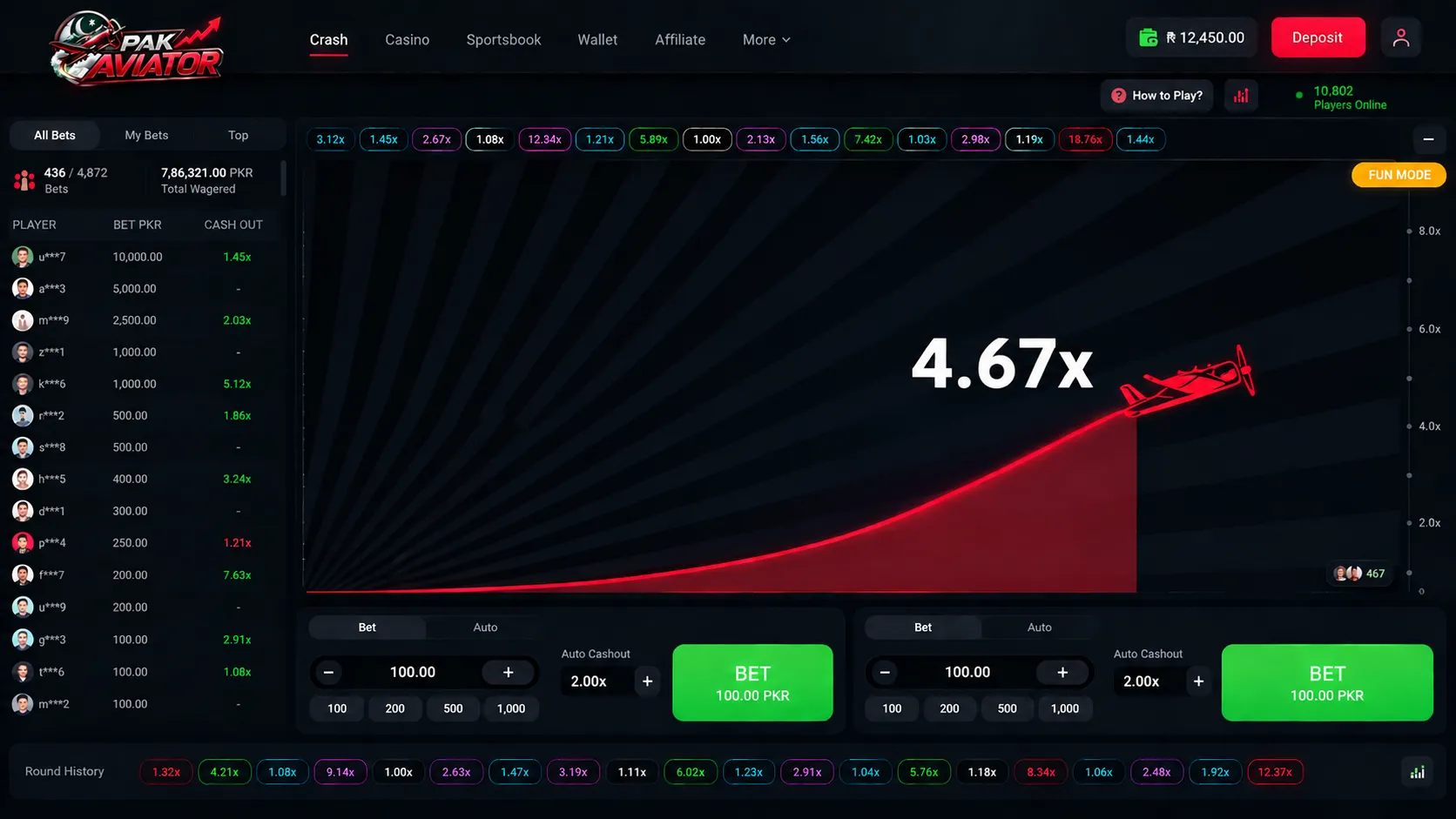
Owning the Game, Not Renting It: Custom Crash Game Development for a Lahore-Based iGaming Operator
READ CASE STUDY
Technologies & Frameworks Powering This Service


Hire Specialized Developers For Your Service Project
React Developers
Pre-vetted senior React Developers ready to deploy into your existing architecture in 3-7 days.

Python Developers
Pre-vetted senior Python Developers ready to deploy into your existing architecture in 3-7 days.

Nodejs Developers
Pre-vetted senior Nodejs Developers ready to deploy into your existing architecture in 3-7 days.
Flutter Developers
Pre-vetted senior Flutter Developers ready to deploy into your existing architecture in 3-7 days.
What Our Clients Say
“Mobile app development and cloud migration were handled smoothly. Strong technical skills, clear communication, and dependable post-launch support stood out throughout the engagement.”

Sarah Mitchell
Director of Operations, HealthFirst Clinics
Have a Project in Mind?
Let's Build It Together.
Connect directly with our senior software architects and technical leads. We evaluate your requirements and deliver an actionable technical proposal within 24 hours.
Strict NDA Protection
Your intellectual property and technical specs remain 100% confidential.
24-Hour Response Guarantee
Guaranteed evaluation and scoping reply from an engineering manager.
Zero Obligation Estimate
Get accurate cost breakdowns and tech stack recommendations free of charge.
Request Free Technical Consultation
Let's build something serious.
Diagnose your system architecture, budget ranges, and roadmap parameters with an expert.
Scoping Diagnostic
Analyze your workflows in 60 seconds. A senior AI architect reviews every parameter personally.
 4.9/5.0 Partner
 4.8/5.0 Leader
 4.9/5.0 Rated
 4.8/5.0 Excellent
Not sure where AI actually moves the needle for you?
Answer a few brief questions. We will deliver a highly concrete scoping plan within 24 hours including:
- Recommendations on automation use-cases and MVP components
- Calculations on expected ROI and engineering timelines
- A structural roadmap to make your legacy stack AI-native